You dig last summer's bottle out of the beach bag. The label's gone sandy, the cap's crusted shut, and when you finally squeeze it, a thin clear liquid comes out first, then something white and grainy behind it. The printed date says 09/2024. The kids are already in the water. The nearest shop is fifteen minutes away. So does sunscreen actually expire, and is this bottle still worth putting on?
Does sunscreen expire, and when should you toss it?
- Yes. In the US, sunscreen counts as an over-the-counter drug, and it has to carry an expiry date unless the maker has stability data proving it holds full strength for at least 3 years.[15]
- No date on the bottle? The FDA's rule of thumb: treat it as expired 3 years after purchase.[1]
- Once you're past the date, replace it. Looking at the bottle won't tell you how much protection is left.
- If it's separated, grainy or smells off, bin it even when the date checks out.[8]
- Used the way it's meant to be used, a bottle rarely survives long enough to expire: one adult needs 1 oz, about a shot glass, every 2 hours.[3]
Does sunscreen expire? Yes, and the date is a legal requirement
Most people don't realize this: in the US, sunscreen isn't a cosmetic. It's a drug. That's why the bottle carries a black-boxed "Drug Facts" panel listing active ingredients and percentages, the same as a bottle of ibuprofen.
That classification is what gives the expiry date its teeth. Under 21 CFR 211.137, drug products must carry an expiration date set by stability testing. The FDA doesn't enforce that requirement against OTC products "if their labeling does not bear dosage limitations and they are stable for at least 3 years as supported by appropriate stability data."[15] An undated bottle isn't undated because it lasts forever. It's undated because the manufacturer ran three years of stability data and took the exemption. A bottle that does carry a date is only guaranteed to that date, which might arrive sooner.
The FDA's guidance is direct on this: "a sunscreen product that doesn't have an expiration date should be considered expired three years after purchase."[1] The American Academy of Dermatology's advice for that case is simple: if there's no date, write your purchase date on the bottle yourself.[3]
A "best before" stamped on a bag of flour is a quality guess. A drug expiry date is a tested guarantee of potency. Knowing which one you're reading matters, and it's a distinction worth carrying into foods that never expire and does protein powder expire.
How long sunscreen lasts, at a glance
| Situation | Usable life | What to do |
|---|---|---|
| Unopened, expiry date printed | Until that date | Store cool and dark. |
| Unopened, no expiry date | 3 years from purchase[1] | Write the purchase date on it now. |
| Opened, stored indoors | Until the printed date | Keep the cap clean. |
| Lived in a hot car all summer | Until the date, if texture looks normal | Heat alone does less damage than assumed.[6] |
| Left in direct sun on the sand | Shortened, unpredictable | Sun degrades the filters. Replace if unsure.[1] |
| Separated, grainy or smelly | Zero — it's done | Discard regardless of date.[8] |
Why sunscreen stops working
Three things go wrong, at different speeds.
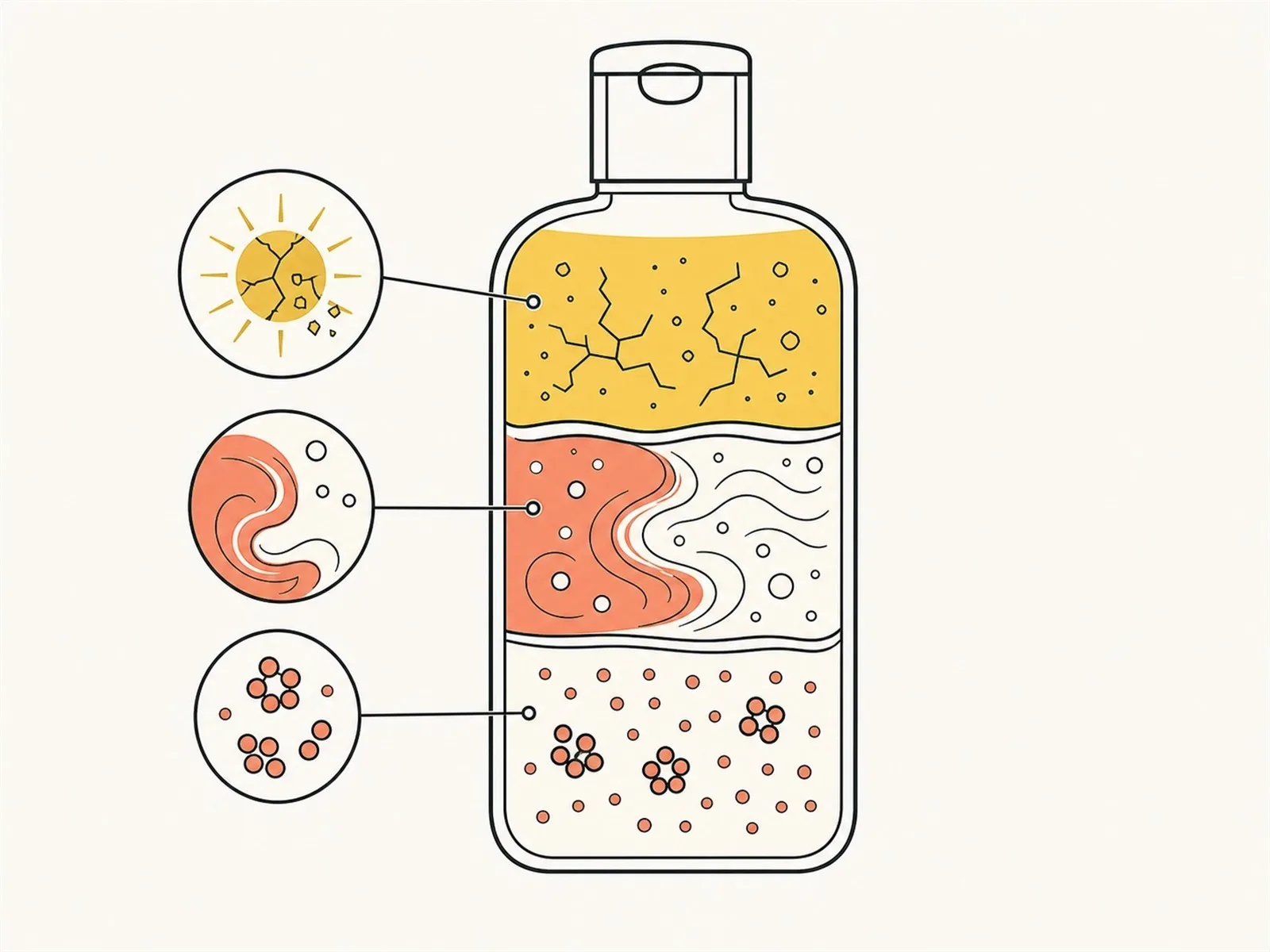
The UV filters break down. Avobenzone, the workhorse UVA filter in most US sunscreens, is notoriously unstable in light. Under UV exposure it flips from a stable enol form into an unstable keto form, then fragments apart. One review found unprotected avobenzone degrading by 38.6%, a figure that dropped to around 15% once it was encapsulated.[5] That's why it's usually paired with stabilisers like octocrylene and Tinosorb S.[5] Mineral filters behave differently: zinc oxide and titanium dioxide are photostable, and they're the only two filters the FDA has proposed as generally recognized as safe and effective, at concentrations up to 25%.[2] They got company in June 2026, when bemotrizinol was cleared as the first new US filter in over twenty years.[11]
The emulsion collapses. Sunscreen is oil and water held together in an uneasy truce by emulsifiers. Repeated heating and cooling breaks that truce down, and the filters stop being evenly spread through the formula. What ends up on your skin is patchy. It's the same underlying chemistry that separates old oil, as covered in does olive oil expire.
The preservatives give out. A 2025 review of 320 sampled cosmetic products found 56.6% carried microbial contamination, most often Pseudomonas, with documented consequences including folliculitis and eczema flares.[7]
Does heat ruin sunscreen? The hot-car question
Be careful here. The internet is a lot more confident about this than the evidence is.
The most direct test on this tracked real vehicle cabin conditions over six months: 378 hours above 100°F (37.8°C), another 292 hours at 90–100°F (32–38°C), and 3,454 hours at 80–90°F (27–32°C). Researchers checked six common filters across SPF 30 and 50 products against controls, and found no important differences.[6]
So the bottle in your boot is probably fine. What that study didn't test was direct sunlight hitting the container itself, and UV striking the product does degrade the filters. The FDA requires labels to carry the warning "Protect the product in this container from excessive heat and direct sun," and its own advice is to try "wrapping the containers in towels or keeping them in the shade."[1]
That's one study, on six filters, measuring the filters rather than finished SPF or UVA performance, preservative integrity or every formula on the shelf — so treat it as reassurance about a hot boot, not a guarantee. The labelled warning stands either way: keep the bottle in the bag, not on the towel.
Signs your sunscreen has gone off
| Sign | What it means | Verdict |
|---|---|---|
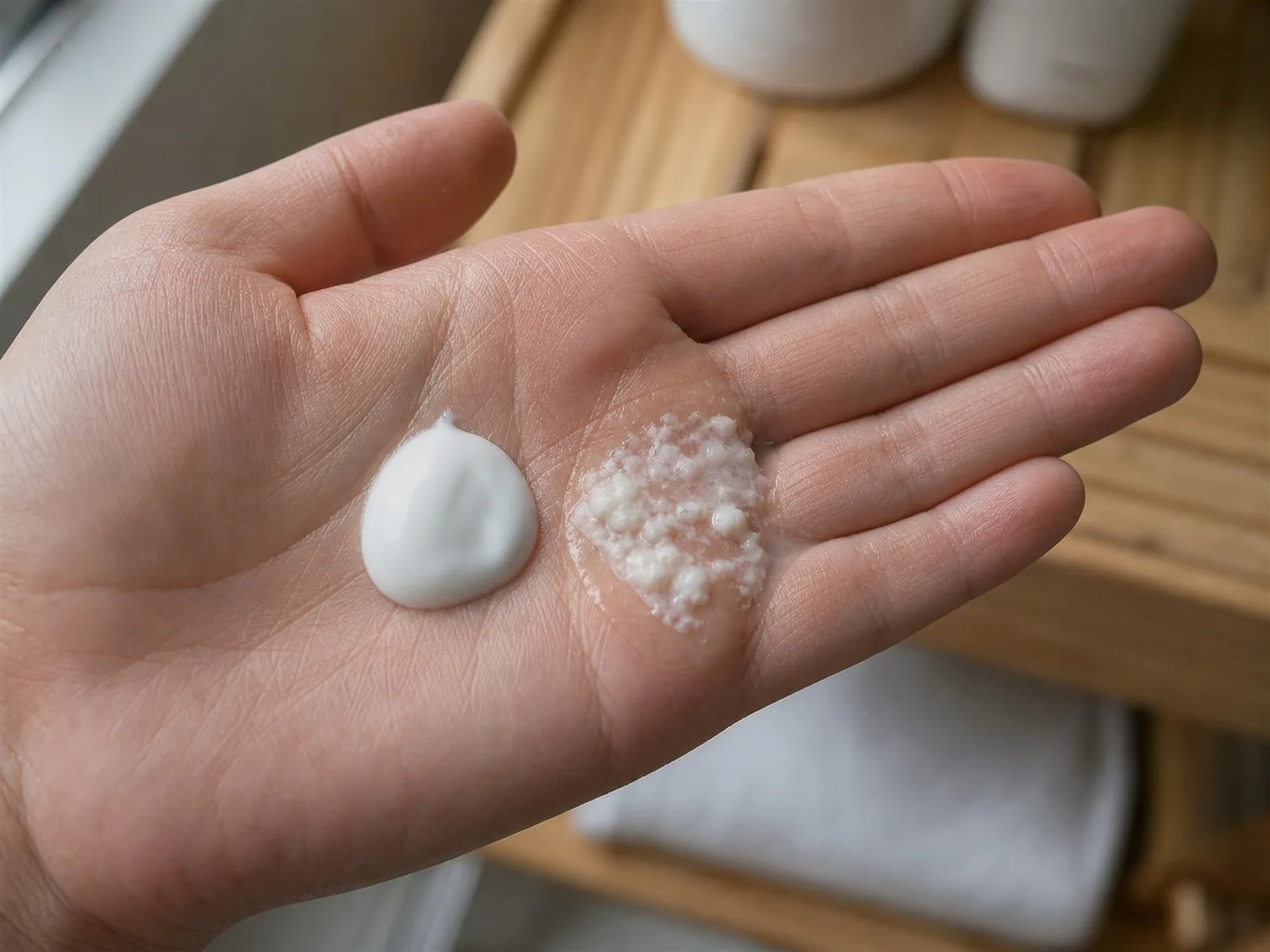
| Watery liquid separating out | Emulsion has broken; filters uneven | Discard |
| Grainy or gritty texture | Mineral particles have aggregated[8] | Discard |
| Yellowing or colour change | Oxidation of chemical filters[8] | Discard |
| Sour or rancid smell | Oil oxidation or microbial growth | Discard |
| Looks normal, date passed | Filters may be degraded invisibly | Replace anyway |
That last row is the one to remember. Degraded sunscreen doesn't give you a reliable sensory tell the way spoiled food often does — you can't run anything like the egg float test on it. A bottle can look and feel completely normal while delivering a fraction of the SPF printed on the label.
What happens if you use expired sunscreen
Usually it's not a disaster. It's a quiet failure. The likely outcome is less protection than the number on the bottle promises, and a sunburn you weren't expecting.
Nobody has published a figure for how much SPF an expired bottle actually retains, and anyone who quotes you a number is guessing. Three years is a floor the manufacturer tested to. Past that point, potency is unverified. One Skin Cancer Foundation expert put it plainly: "I have seen numerous sunburns on patients who realized too late that their sunscreen was expired."[4]
Oxidised chemical filters can also trigger a reaction that resembles a blistering burn, and contaminated product can cause breakouts.[8][7] Neither is common. Both are avoidable.
Expiry date vs the open-jar symbol
If your sunscreen came from Europe, you may be hunting for a date that isn't there.
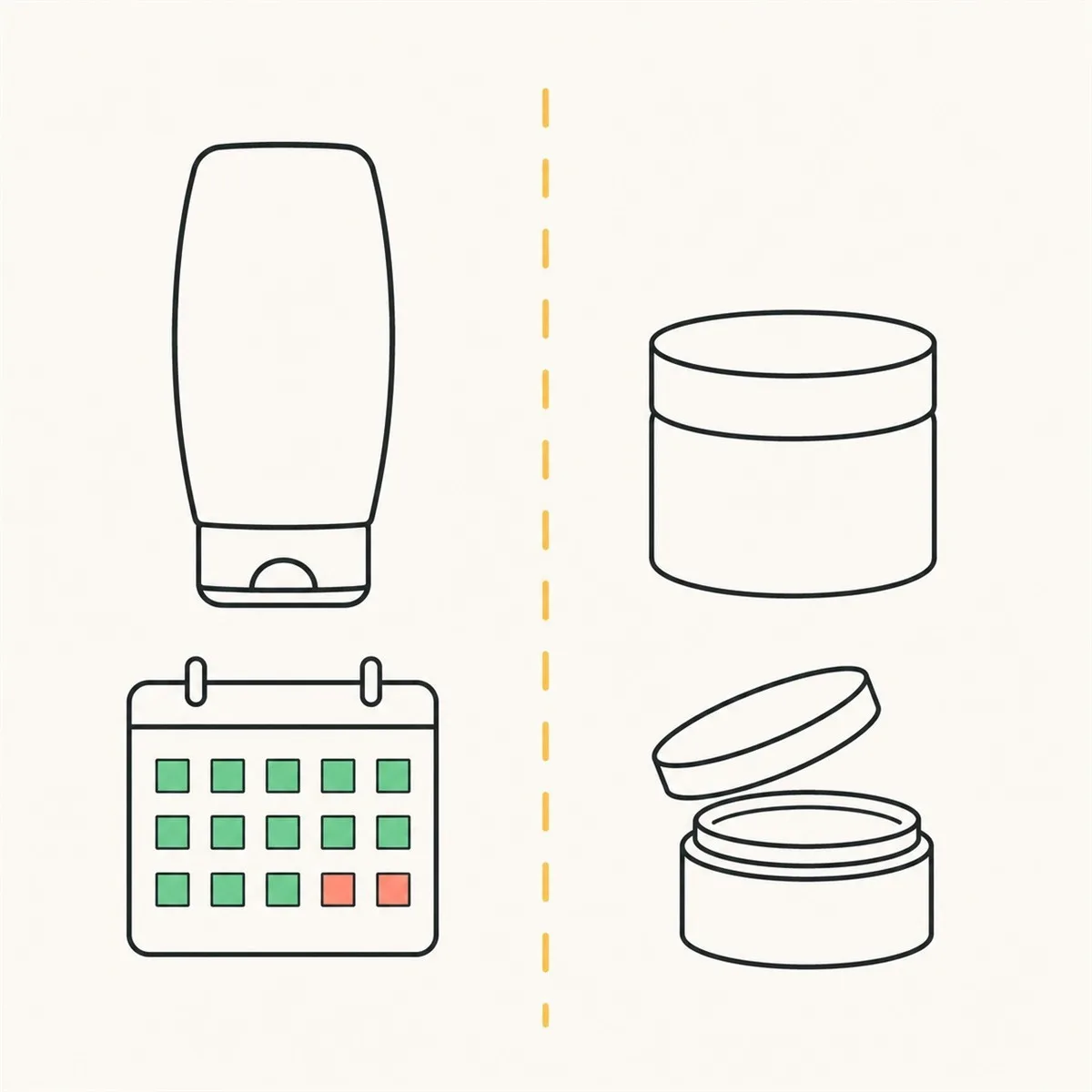
Under EU Regulation (EC) No 1223/2009, cosmetics that last more than 30 months don't need a best-before date at all. Instead they carry the PAO symbol, Period After Opening: a small open jar marked 12M, meaning twelve months of safe use once you've opened it.[12] Products expected to degrade sooner still have to show a durability date.
Think of them as two separate clocks. A "12M" jar opened last week is fine even after two years sitting in a warehouse, while a US expiry date runs from the manufacture date whether you've opened the bottle or not.
How to store sunscreen so it lasts
- Cool, dark, dry. A bathroom cabinet works. A windowsill doesn't.
- Keep it out of direct sun. This is the single habit that matters most.[1]
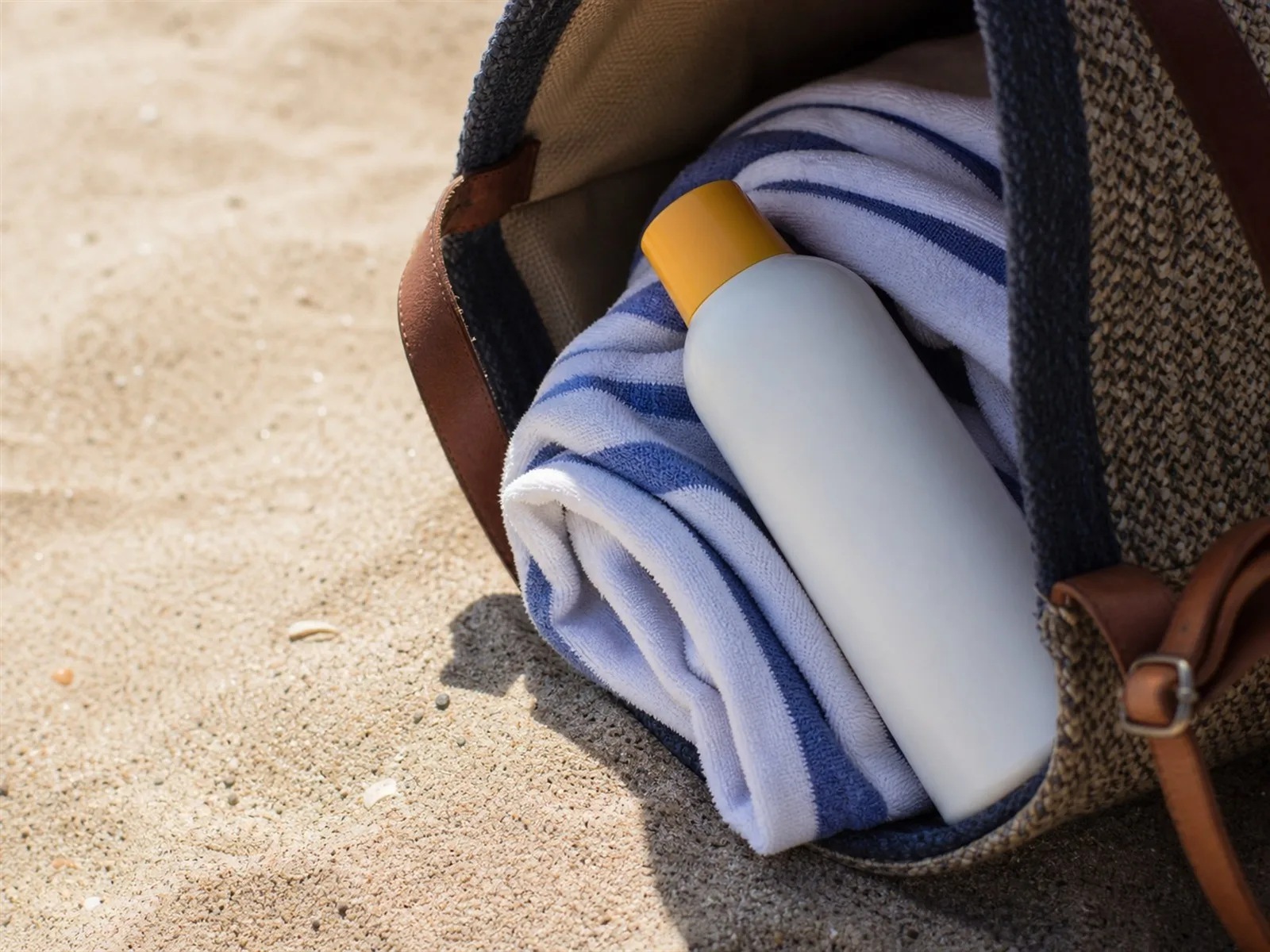
- Wrap it in a towel, or just bury it in your bag at the beach.[1]
- Close the cap properly. Air and fingers both introduce contamination.[8]
- Don't decant it into travel pots. You're adding contamination the preservatives were never designed to handle.
- Skip the fridge. No health authority recommends refrigerating it, and the condensation may undo whatever benefit you were hoping for.
It's the same principle that governs the rest of the house, covered in store food better, waste less.
Myth vs fact
| Myth | Fact |
|---|---|
| "Expired sunscreen just stops working — it can't hurt you." | Mostly true of the filters. But a broken-down formula can irritate skin, and preservative systems do fail with age — contamination surveys of cosmetics generally find Pseudomonas the usual culprit.[7][8] |
| "You don't need sunscreen on cloudy days." | Up to 80% of UV penetrates cloud.[3] |
| "Dark skin doesn't need sunscreen." | Everyone needs it — 1 in 5 Americans develop skin cancer.[3] Melanoma's five-year survival is 70% in Black patients versus 94% in white patients.[14] |
| "One application in the morning lasts all day." | Reapply every 2 hours, and after swimming or sweating.[3] |
| "SPF 100 is twice SPF 50." | SPF 30 already blocks 97% of UVB.[3] Gains above that are marginal — even FDA's proposal would lift the maximum labelled value only to SPF 60+.[2] |
| "Waterproof sunscreen exists." | It doesn't. Labels may only claim 40 or 80 minutes of water resistance.[1] |
Hot-climate and India-specific advice
Two things change in a hot country, and neither is the one people expect.
The regulation is different. India handles sunscreen through the cosmetics framework rather than the drug one: the Drugs and Cosmetics Act 1940 and Cosmetics Rules 2020, administered by the CDSCO, with UV filters restricted under IS 4707 (Part 4): 2022.[13] There's no Indian counterpart to the US three-year stability exemption, so go by the printed use-before date on the pack rather than assume you get a three-year window.
The conditions are harsher, but in a specific way. Summer highs of 95–113°F (35–45°C) sound alarming, and shop shelves often sit close to that range. Yet the vehicle-cabin evidence suggests warmth alone doesn't wreck the active ingredients.[6] The real damage comes from direct sun on the bottle and monsoon humidity working on a formula whose preservatives are already under strain. Buy from a high-turnover retailer, keep bottles away from the window, and don't stretch one tube across two summers. It's the same logic laid out in the Indian pantry storage guide.
Asian-market sunscreens often carry a PA rating, from PA+ to PA++++, for UVA protection, measured by persistent pigment darkening. It's a useful number, but it isn't FDA-regulated. The nearest US equivalent is the "broad spectrum" label.[1]
Frequently asked questions
Does sunscreen expire if unopened?
Yes. The clock starts at manufacture, not at opening. A bottle with a printed date is good until that date, and one without a date should be treated as expired three years after purchase.[1] Storage matters more than whether the seal is broken: an unopened bottle left on a sunny windowsill will degrade faster than an opened one kept in a cupboard.
Can I use expired sunscreen in an emergency?
Reach for shade, clothing, a hat and sunglasses first — those work whatever the date says, and an expired bottle gives you no way to know how much protection is actually left. If you apply it anyway because nothing else is available, treat it as unknown strength rather than the SPF on the label, don't stretch your time in the sun on the strength of it, and replace it the same day. Skip it entirely if it's separated, discoloured or smells off.
How long does sunscreen last after opening?
In the US, opening the bottle doesn't change the clock. The printed expiry date still governs.[1] On an EU product you might instead see an open-jar PAO symbol such as "12M", meaning twelve months from the day you first open it.[12] In practice, a bottle used at the recommended rate rarely lasts a single season anyway.
How can I tell if sunscreen has gone bad?
Look for separation into watery and thick layers, graininess, yellowing, clumping, or a sour smell.[8] Any one of those means bin it. But the reverse isn't true: sunscreen can look and smell completely normal while its UV filters have quietly degraded underneath, so trust the date over your senses.
Does sunscreen go bad in a hot car?
Less than you'd think. A six-month study of real vehicle cabin exposure, including 378 hours above 100°F (37.8°C), found no meaningful degradation across six common UV filters in SPF 30 and 50 products.[6] Direct sunlight hitting the bottle is the bigger threat. Keep it in the glovebox, not sitting on the dashboard.
How much sunscreen should I actually use?
Most adults need about 1 ounce, a shot glass full, for full-body coverage, plus at least 1 teaspoon for the face alone, roughly enough to run the length of your index and middle fingers. Apply it 15 minutes before you go out, then reapply every two hours, or straight after swimming or sweating.[3]
Why does my sunscreen never seem to run out?
Because you're almost certainly under-applying. At the correct dose, an 8 oz bottle covers about two to three beach days for one person.[4] If a bottle lasts you several summers, the expiry date isn't really your problem. You're getting a fraction of the SPF printed on the label.
Is expired mineral sunscreen safer than expired chemical sunscreen?
Zinc oxide and titanium dioxide are photostable, so those filters don't break down the way avobenzone does.[5][2] But the formula holding them still fails: the suspension separates and turns gritty, and the preservatives expire regardless.[8] Expired mineral sunscreen fails in a different way. It isn't more reliable for longer.
Was sunscreen recalled for benzene?
Yes. In July 2021, Johnson & Johnson voluntarily recalled five NEUTROGENA and AVEENO aerosol sunscreens after internal testing turned up benzene.[9] In July 2022, Edgewell recalled specific lots of Banana Boat Hair & Scalp Sunscreen Spray, tracing the contamination to the propellant.[10] Both cases involved aerosols, and neither had anything to do with the product ageing.
Has anything changed in sunscreen regulation recently?
Yes. On 10 June 2026, the FDA issued a final order adding bemotrizinol to the OTC sunscreen monograph as safe and effective at up to 6%, effective 9 August 2026. It's the first new US filter in over twenty years.[11] Zinc oxide and titanium dioxide remain the only other filters carrying that status.[2]
Bottom line
Sunscreen does expire — not because a chemical switch flips at midnight, but because a legal date backed by manufacturer stability testing runs out. An unopened bottle without a printed date should be treated as expired three years after purchase; one with a date is only good until then. Ordinary storage heat appears to do less damage to the filters than people assume, on the limited evidence available — but direct sunlight on the container, a split emulsion or a failed preservative system are all real, and none of them announce themselves before you've relied on the bottle.
Trust separation, grit, discolouration or an off smell over the date — any one of those means bin it immediately. But don't trust a normal-looking bottle past its date either: the UV filters can degrade with no visible sign, so replacing it on schedule is the only way to know you're getting the SPF printed on the label.
Related WillItExpire guides
Sources
- U.S. Food and Drug Administration — Sunscreen: How to Help Protect Your Skin from the Sun. Last updated 9 June 2026.
- U.S. Food and Drug Administration — Questions and Answers: FDA posts deemed final order and proposed order for over-the-counter sunscreen.
- American Academy of Dermatology — Sunscreen FAQs.
- The Skin Cancer Foundation — Ask the Expert: Does a Sunscreen Stay Effective After Its Expiration Date? (Rutledge Forney, MD). Last updated 2 December 2020.
- Gholap, A.D. et al. — Drug Delivery Strategies for Avobenzone: A Case Study of Photostabilization. Pharmaceutics, 15(3):1039, 2023.
- Dennis, L.K., Jung, A.M., Reynolds, K.A., Hsu, C.-H. & Abrell, L. — Stability of Chemical UV Filters in Sunscreens Exposed to Vehicle Cabin Temperatures. American Journal of Dermatological Research and Reviews, Vol. 4, 2021.
- Duarte da Silva, J., Silva, F.A.M. & Rodrigues, C.F. — Microbial Contamination in Cosmetic Products. Cosmetics, 12(5):198, 2025.
- Cleveland Clinic — Yes, Your Sunscreen Can Expire (Kathryn Anderson Sutton, MD). Published 27 August 2025.
- Johnson & Johnson — Voluntary Recall of Specific NEUTROGENA and AVEENO Aerosol Sunscreen Products Due to the Presence of Benzene. 14 July 2021.
- U.S. Food and Drug Administration — Edgewell Personal Care Issues Voluntary Nationwide Recall of Banana Boat Hair & Scalp Sunscreen Due to the Presence of Benzene. 29 July 2022.
- U.S. Food and Drug Administration — Final Administrative Order OTC000039: Bemotrizinol (PDF), announced in the Federal Register of 10 June 2026. Effective 9 August 2026.
- European Commission — Regulation (EC) No 1223/2009 of the European Parliament and of the Council on cosmetic products (Article 19).
- ChemLinked — India Cosmetic Regulation (Drugs and Cosmetics Act 1940; Cosmetics Rules 2020; CDSCO; IS 4707 Part 4:2022).
- The Skin Cancer Foundation — Ask the Expert: Is There a Skin Cancer Crisis in People of Color? (Andrew Alexis, MD, MPH). Last updated 6 February 2025.
- U.S. Code of Federal Regulations — 21 CFR 211.137: Expiration dating (see paragraph (h)).
This article provides general information using a U.S. baseline, with separate EU and India context. It is not medical advice and does not replace the instructions on your sunscreen's product label. If you have a skin condition, a history of skin cancer, or a reaction to a sunscreen, speak to a dermatologist or your doctor.