Foods That Never Expire (and Why): A Science-Backed Guide
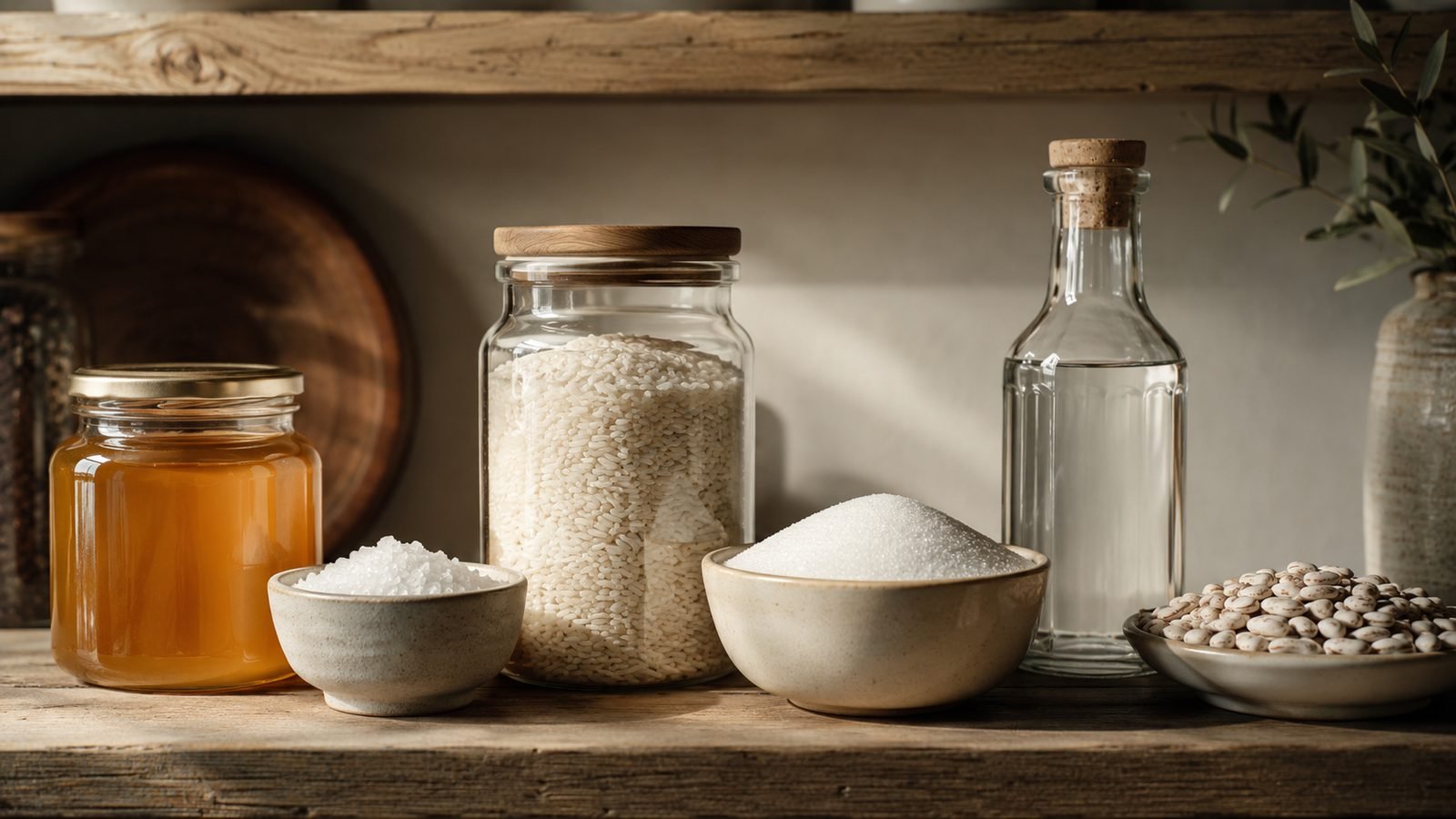
In 1922, when Howard Carter's team opened the tomb of Tutankhamun, they found jars of honey sealed for roughly 3,000 years — and the sugars inside were still chemically intact. In the peat bogs of Ireland, archaeologists have pulled out lumps of dairy butter radiocarbon-dated to around 1750 BCE, still recognisably fat. And the U.S. Department of Agriculture quietly states something most "expiration date" panic ignores: most shelf-stable foods are safe indefinitely when their packaging is intact and they're stored properly.
So which foods genuinely never expire — and why? This guide separates the real "forever foods" from the viral myths, explains the food science in plain English, and includes the Indian-kitchen staples (ghee, jaggery, whole spices, achar) that most listicles ignore.
One thing first, because it matters for everything below.
What "never expires" actually means. It means microbiologically safe to eat indefinitely under proper storage — not tastes perfect forever. A jar of honey from a decade ago is safe; it may just be darker and crystallised. Throughout this guide we keep "safe forever" and "best quality" as two different lines, because conflating them is how people get hurt.
How a food can "never expire": the science in plain English
Spoilage is mostly a living process. Bacteria, yeasts and moulds need certain conditions to grow, and if you remove even one of those conditions, they can't multiply. A handful of foods are naturally hostile to microbial life. Here's what's actually going on.
Water activity (the single most important idea). Microbes don't need moisture so much as available water — free water they can actually use. Food scientists measure this as "water activity" (written aw), on a scale from 0 to 1. Most pathogenic bacteria need aw above ~0.85; moulds and yeasts are mostly shut down below ~0.60. Foods like sugar, salt and dried rice sit far below that line, so microbes simply have nothing to drink.
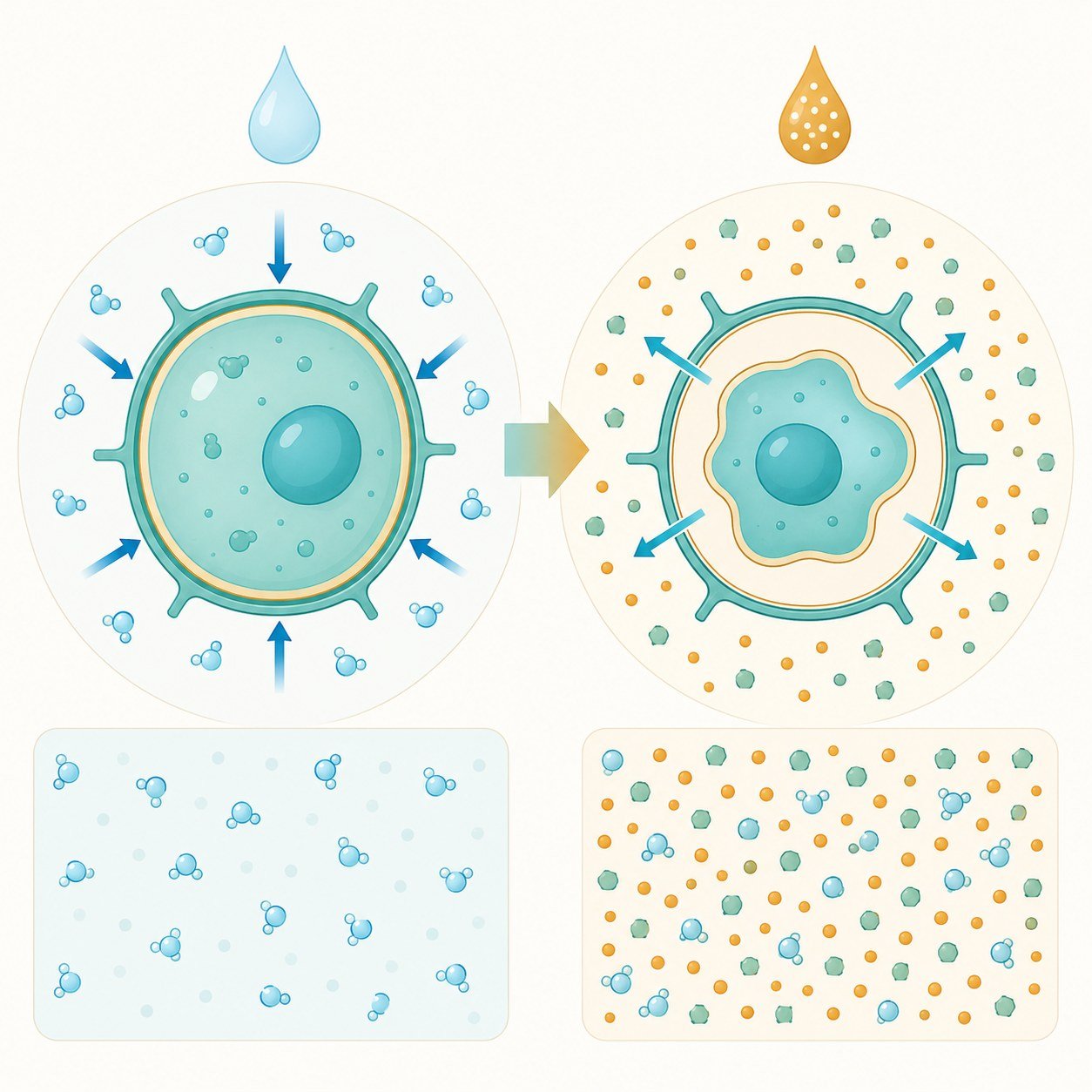
Osmotic pressure (how sugar and salt fight back). This is why low water activity works. Surround a bacterial cell with a concentrated solution of sugar or salt and water rushes out of the cell, across its membrane, to balance the concentration. The cell shrivels and pulls away from its wall — a process called plasmolysis — which stops the microbe growing or multiplying and, over time, can kill it. Honey and salt don't just deny microbes water; they actively pull water out of them. (A dormant cell isn't always dead — which is exactly why these foods still need to stay sealed and dry.)
Acidity (pH). Most spoilage and pathogenic microbes like a near-neutral environment (pH 6.5–7.5). Push the pH below about 4.6 and you stop dangerous organisms from growing — including Clostridium botulinum, the bacterium behind botulism. Its heat-resistant spores can still survive in an acidic food; what high acidity prevents is their germination and the toxin production that actually makes you ill. This is why distilled vinegar (pH ~2.4) and properly acidified pickles preserve themselves.
Alcohol. High concentrations of ethanol denature microbial proteins and dehydrate cells. That's why spirits at ~40% ABV and pure vanilla extract (≥35% alcohol) resist spoilage.
The exception that catches people out — fats and rancidity. Removing water and acidifying food stops microbes. But fats can still go bad through a non-living, chemical process: oxidation. Oxygen, light and heat slowly turn fats rancid, producing stale, paint-like, metallic off-flavours. This is the reason ghee, nuts and brown rice are not on the "forever" list even though they're dry — their oils, not microbes, set the clock.
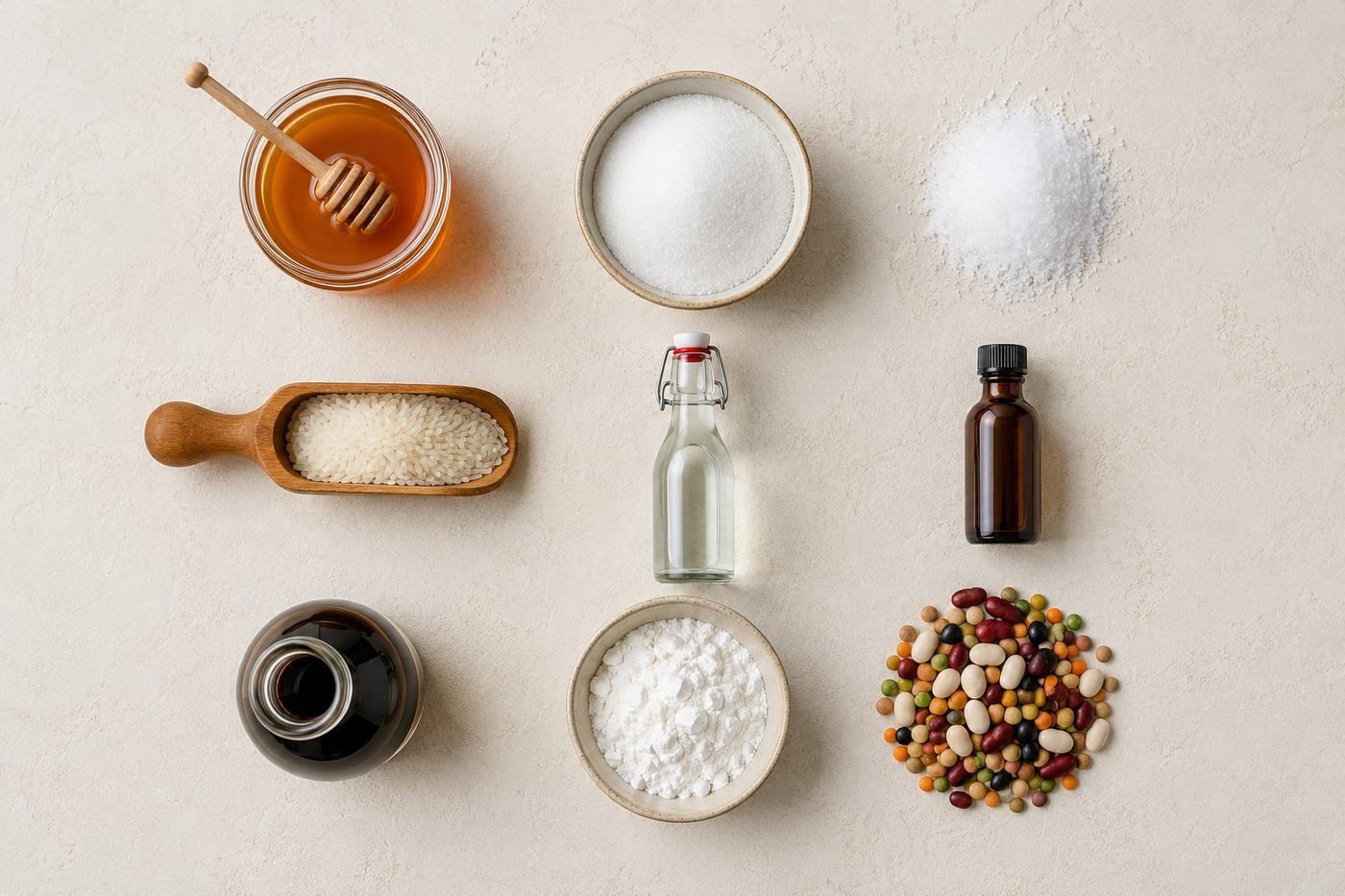
Quick answer: foods that never expire
- Honey — low water activity + acidity + H₂O₂
- White sugar — almost zero available water
- Salt — a mineral with nothing for microbes to eat
- White rice — bran milled away, no fat to go rancid
- Distilled white vinegar — too acidic to survive
- Pure vanilla extract — high alcohol content
- Soy sauce — very high salt + fermentation acids
- Hard liquor (≥40% ABV) — alcohol lethal to microbes
- Cornstarch — pure dry starch, no moisture
- Pure maple syrup (unopened) — high sugar concentration
- Dried beans and lentils — too dry to spoil
- Instant coffee — freeze-/spray-dried to very low moisture
The deep dive: foods that never expire, one by one
Honey
Pure honey is one of the few foods that genuinely lasts indefinitely. It holds very little free water (~17–18%), it's acidic (pH ~3.4–4.5), and bee enzymes generate small amounts of hydrogen peroxide — a triple lock against microbes. Utah State University Extension lists honey among foods with an indefinite shelf life.
Infant safety: Never feed honey to infants under 12 months because it can contain spores that cause infant botulism.
Read more: Does honey expire?White sugar
Refined white sugar has a water activity of roughly 0.2–0.3 — far below anything microbes can use. Sucrose binds water so tightly that bacteria, yeast and mould are locked out entirely.
Salt
Salt is a mineral — sodium chloride — not an organic food. It contains no intrinsic water and offers nothing for microbes to feed on. We've used it to preserve other foods for millennia precisely because it draws water out of everything around it.
White rice (not brown rice)
Milling strips away rice's oil-rich bran and germ, leaving the low-fat, low-moisture starchy endosperm. With the oils gone, there's nothing to go rancid and nothing for microbes to grow on. Studies from Utah State University found polished white rice still acceptable after 25–30 years in cool, oxygen-free storage.
Distilled white vinegar
Vinegar is essentially self-preserving. Its acetic acid drops the pH to around 2.4, an environment where pathogens simply cannot survive. The Vinegar Institute states that distilled white vinegar keeps virtually unchanged indefinitely and doesn't need refrigeration.
Pure vanilla extract
Real vanilla extract is at least 35% alcohol by law, and that ethanol acts as a preservative while the low water activity blocks microbes. It stays microbiologically safe more or less forever.
Read more: Does vanilla extract expire?Soy sauce
Naturally brewed soy sauce carries a very high salt load plus organic acids from fermentation, both of which suppress microbial growth. Its shelf life is essentially indefinite when unopened.
Read more: Does soy sauce expire?Hard liquor (spirits ≥40% ABV)
Vodka, whisky, rum and gin are too alcoholic for microbes to survive, and their sealed glass bottles keep oxygen out. Any change over time is oxidative, not microbial.
Cornstarch
Cornstarch is nearly pure starch with very low moisture and no fat — chemically inert and unable to support microbial growth when kept dry.
Pure maple syrup (unopened)
The high sugar concentration limits free water enough to resist microbial spoilage. Utah State University and the Massachusetts Maple Producers Association both note that unopened pure maple syrup keeps indefinitely.
Read more: Does maple syrup expire?Dried beans and lentils
Dehydration leaves so little available water that microbes can't grow, and the protein and starch stay stable for decades. BYU-linked research found pinto beans stored up to 30 years were still rated acceptable for emergency use by over 80% of tasters.
Whole spices (safety, not potency)
Whole spices — peppercorns, cumin seeds, cardamom, cloves — are low-moisture and carry antimicrobial essential oils (like eugenol in cloves, piperine in pepper). They don't spoil; they fade.
Instant coffee
Freeze- or spray-drying takes instant coffee to very low moisture, leaving it microbiologically stable for years. What changes over time is flavour, not safety.
Near-eternal Indian pantry heroes
These South Asian staples last impressively long — but it would be wrong (and, for a safety guide, irresponsible) to call them "never expires." Here's the honest science.
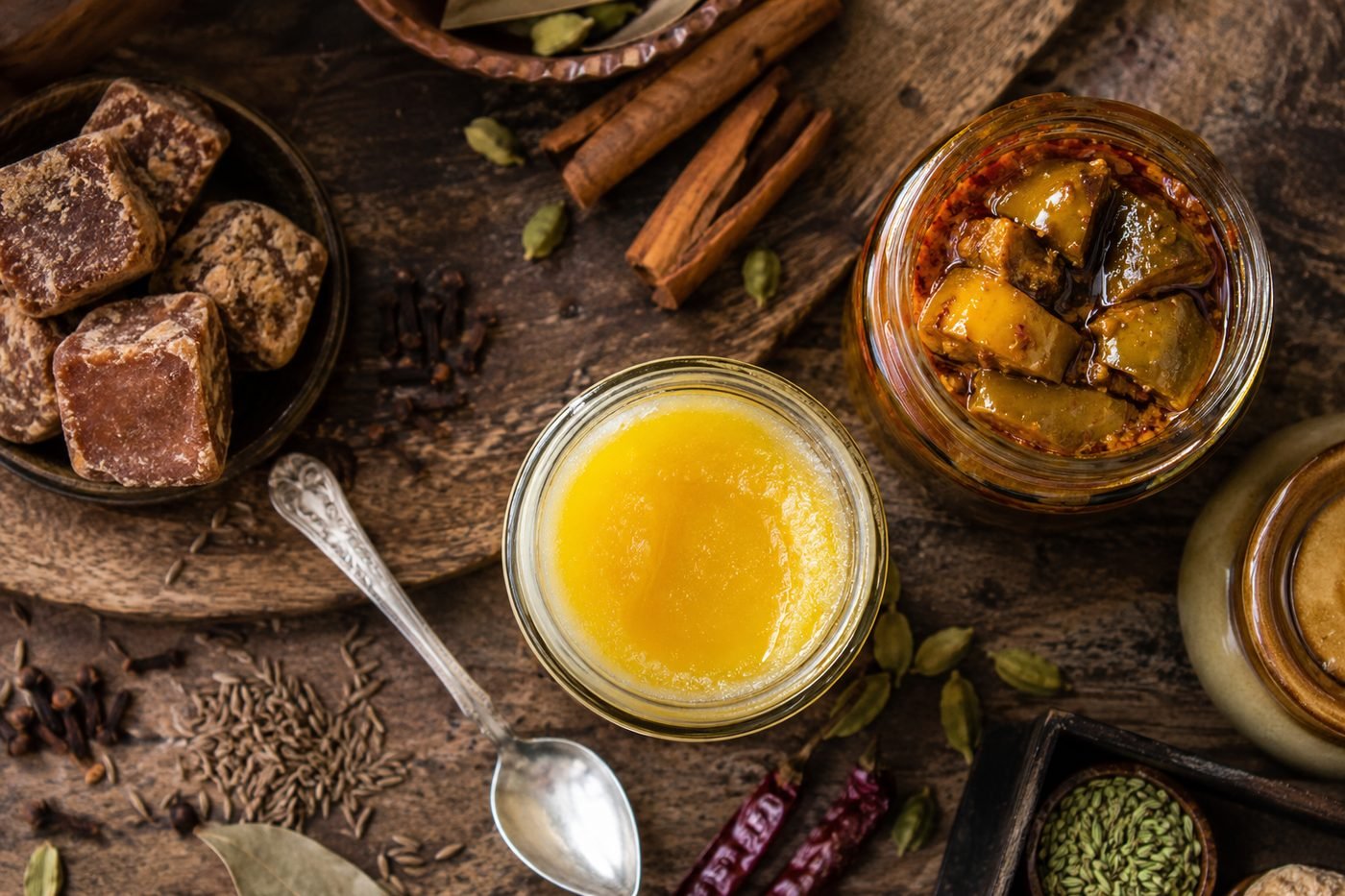
Ghee: almost forever, until rancidity hits
Properly made ghee is nearly pure milk fat with under ~0.3% moisture — no water and no milk solids means microbes can't grow, which is why it outlasts butter so dramatically. But ghee is rancidity-limited, not microbe-limited. Over time, oxygen and light oxidise the fat into sour, metallic off-flavours. Unopened ghee keeps for roughly 9–12 months in a cool, dark pantry; once opened, use it within a few months. The single biggest mistake: a wet spoon. One drop of water can trigger hydrolytic rancidity and mould, ruining the whole jar.
Read more: Does ghee expire?Jaggery (gur) vs refined sugar
Unlike refined white sugar, jaggery keeps some of its molasses, minerals and residual moisture — and those impurities make it more fragile. Its sugars are hygroscopic, so in humid weather (think monsoon) it pulls water from the air, its surface water activity climbs past the danger line, and yeasts and moulds move in. Vacuum or high-barrier packaging dramatically extends its life; loose jaggery left out can spoil in a few months. Treat it as long-lasting (months to a couple of years), not eternal.
Achar (Indian pickles): hurdle technology in a jar
A good achar survives at room temperature for one to two years because it stacks several barriers at once: high salt (lowers water activity), acid from fermentation, citrus or vinegar (drops pH below 4.6), a sealing layer of oil (cuts off oxygen), and antimicrobial spices like mustard and turmeric. Remove any one barrier and it becomes vulnerable. The classic failure point is a wet spoon introducing moisture to the surface — that's where mould starts. Discard if you see fuzzy mould, gas/bubbling or sliminess.
Read more: Does achar / pickle expire?The whole-masala box
Whole sabut spices in an Indian kitchen are a perfect example of "safe almost indefinitely, but flavourful for a limited time." Buy whole, grind in small batches, store airtight and away from the stove's heat, and you'll keep their aroma for years longer than pre-ground powders.
Myths, half-truths and dangerous assumptions
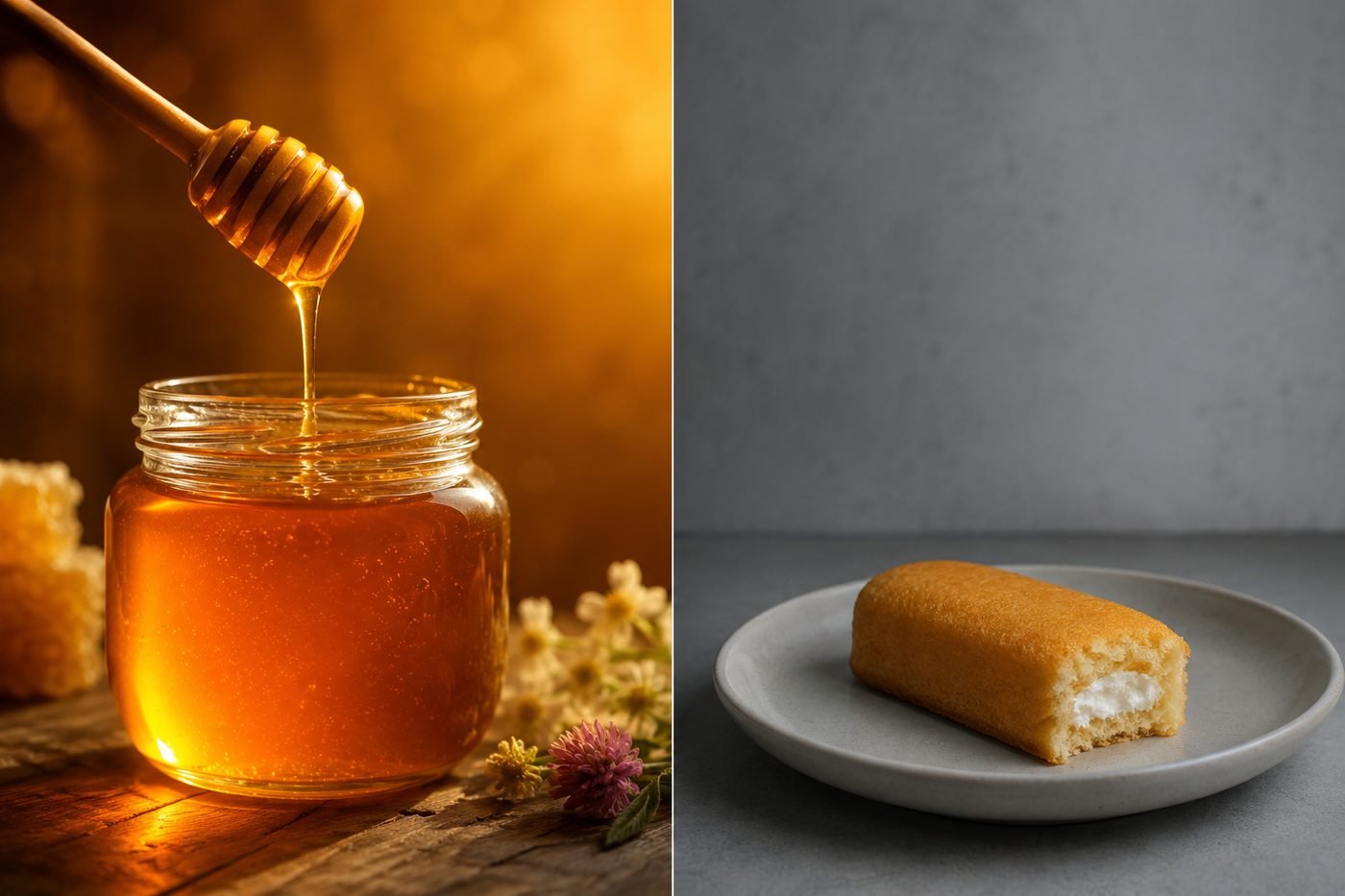
The internet is full of "foods that last forever" lists that quietly mislead. Here's where they go wrong.
Hostess Twinkies have an official shelf life measured in days — roughly 25–45 depending on the recipe. Stabilisers and mould inhibitors stretch that window, but real-world eight-year-old Twinkies turn grey, shrink and harden. Ultra-processed does not mean immortal.
Brown rice still has its oil-rich bran, which goes rancid in about 3–6 months at room temperature. The milling that makes white rice last 30 years is exactly what brown rice lacks.
Fats are vulnerable to oxidative rancidity, sped up by heat, light and oxygen. Even bone-dry ghee eventually turns. Nuts and nut butters typically develop off-flavours within months to a year.
Non-fat dry milk ranges from about 3 months to 3–5 years depending heavily on temperature and oxygen exposure. It's a long-life pantry item, not a forever food.
Most undamaged cans stay safe for years, but quality declines — and any can that's bulging, leaking, badly rusted or deeply dented should be thrown out, no taste test.
Honey crystals and the cloudy cellulose "mother" in vinegar are harmless physical changes. Warm the honey; filter the vinegar if you prefer. Neither is a spoilage signal.
Safety vs quality: how to actually read your pantry
Date labels confuse people because they mostly aren't about safety. A "best before" date is a quality date — the food is often fine long after. A "use by" date, reserved for genuinely perishable, higher-risk foods, is the one to respect. For the shelf-stable foods in this guide, your senses are a better guide than the printed date:
Look — mould, discolouration, swelling cans, rusted or leaking lids, insects.
Smell — rancid, sour, chemical or "off" odours (especially in anything fatty).
Feel — caking from moisture, sliminess, or a gassy, bubbling jar.
When in doubt with low-acid or protein-rich foods, throw it out. The forever-foods above earn their status only because they remove the conditions spoilage needs — and only as long as you keep them sealed, cool, dark and dry.
How to store pantry staples so "never expires" actually holds
The rules are boringly universal, and they're the whole game.
For humid climates like much of India, a few extra habits pay off: keep staples out of cabinets directly above the stove, use desiccant sachets in spice and flour jars, favour glass or food-grade HDPE over thin plastic, and decant into smaller containers so you're not repeatedly exposing a large supply to air.
If you only do three things: seal it airtight, keep it dry, and keep a clean dry spoon out of anything stored in oil or sugar.
Frequently asked questions
Does honey expire?
Does salt expire?
Does sugar go bad?
Does white rice expire?
Do dried beans go bad?
Does maple syrup expire?
Does ghee expire?
Is it safe to eat food past its expiration date?
The bottom line
"Never expires" is a privilege reserved for a small group of foods — the very dry, very salty, very sweet, very acidic and very alcoholic — and only when we respect the storage rules that keep them that way. Everything else is on a clock, even if it's a slow one.
For food-specific guidance, check our deep-dive pages on honey, vanilla extract, soy sauce, maple syrup, ghee and achar — each with the real numbers for how long it lasts and exactly when to let it go.
Sources
- Centers for Disease Control and Prevention — Foods and Drinks to Avoid or Limit (do not give honey to children under 12 months because of infant botulism risk).
- U.S. Department of Agriculture — Before You Toss Food, Wait. Check It Out! (most shelf-stable foods are safe indefinitely; canned-food guidance).
- Utah State University Extension — Storing Sugars (indefinite shelf life of commercial sugars and honey).
- Utah State University Extension — Storing White Rice (25–30 year shelf life in oxygen-free storage).
- Utah State University Extension — Storing Dried Milk (≈3 months–5 years depending on temperature).
- The Vinegar Institute — FAQs: shelf life and safety of vinegar (white distilled vinegar keeps almost indefinitely).
- Purdue Extension FoodLink — Honey (storage and harmless crystallisation).
- UF/IFAS Extension (EDIS FS225) — Shopping for Health: Herbs and Spices (dates indicate quality, not safety).
- Massachusetts Maple Producers Association — FAQ: storing maple syrup (unopened keeps indefinitely; handling surface mould).
- National Center for Home Food Preservation (University of Georgia) — Botulism: Think Outside the Jar (C. botulinum spores survive but cannot germinate or produce toxin at pH ≤ 4.6).
- Food Safety and Standards Authority of India (FSSAI) — food storage and labelling guidance (spice and milk-product handling).
- Smyth et al., Scientific Reports (2019) — radiocarbon dating and isotope analysis of Irish bog butter (Bronze Age; oldest samples ~1700–1750 BCE).
- NPR, The Salt — The Science of Twinkies (Hostess sets the shelf life at ~45 days — not forever).
This article is for general information and is not a substitute for professional food-safety advice. When a low-acid or protein-rich food shows any sign of spoilage, discard it.