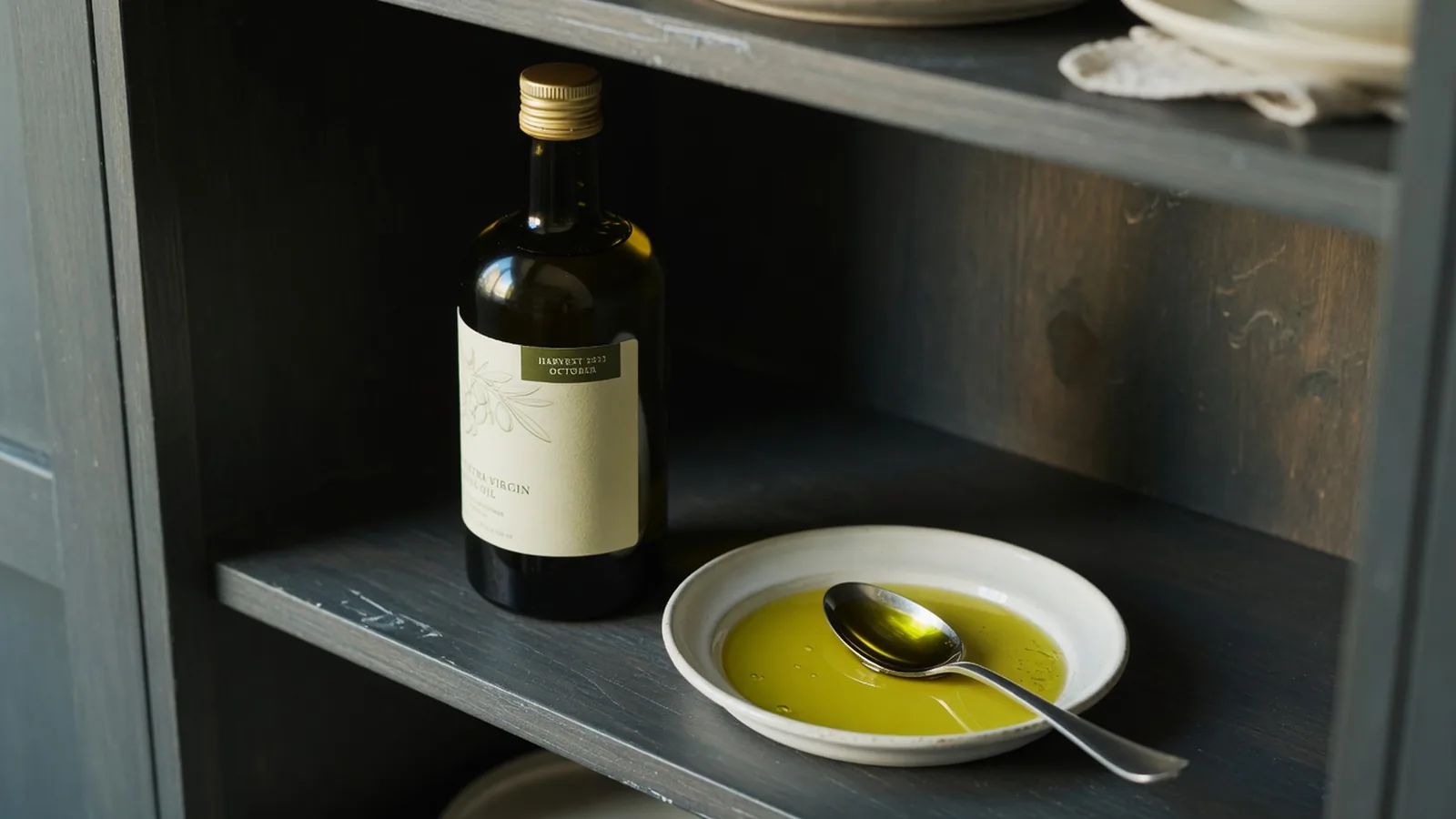
You reach past the good bottle at the back of the cupboard and find one you opened months ago. It still pours, still looks golden — but you can't quite remember when you bought it, and there's a faint waxy smell you're trying to ignore. So does olive oil actually go off?
Does olive oil expire, and when should you bin it?
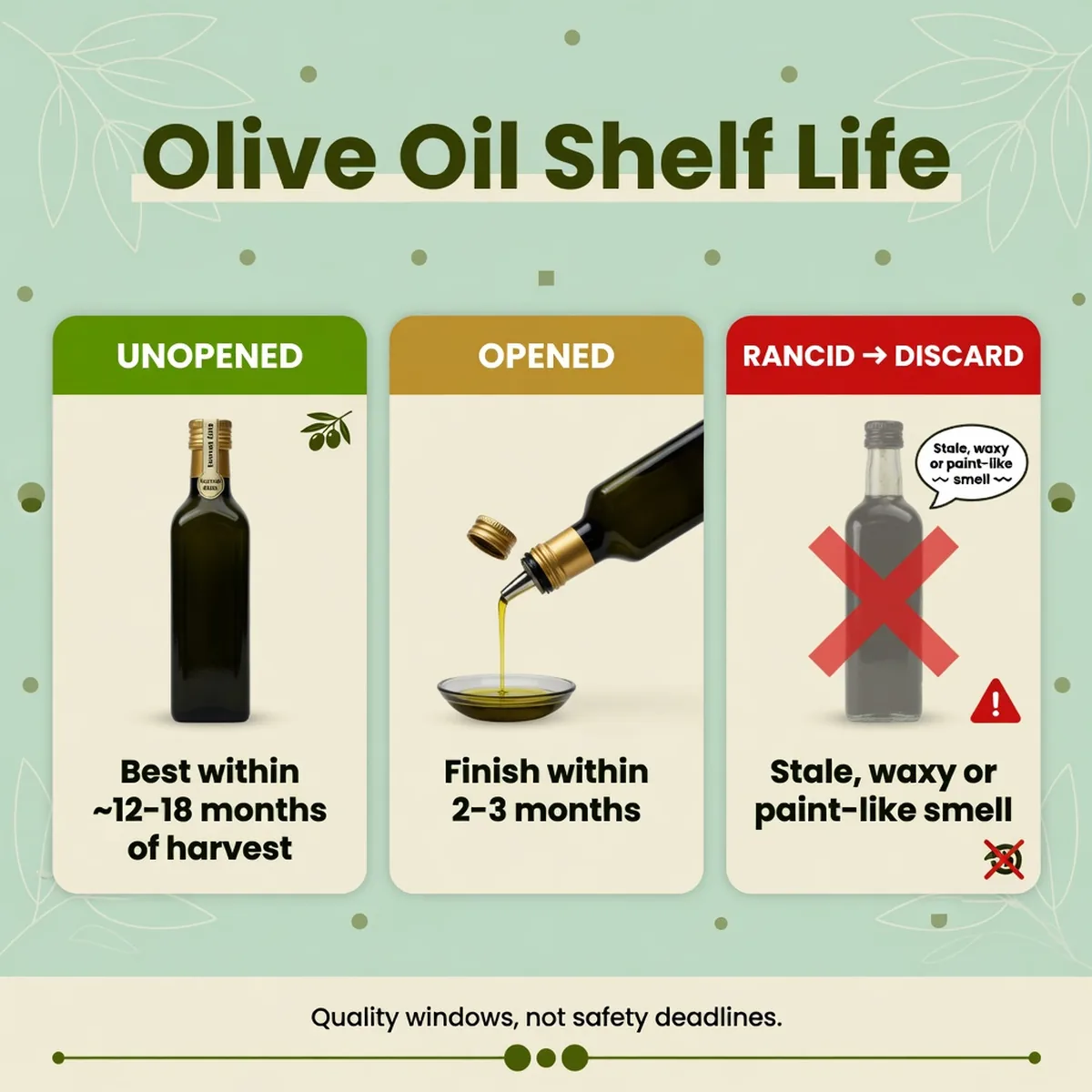
Yes — olive oil expires, but usually by going rancid through oxidation, not by becoming unsafe on a specific date.[1][6] For the best flavour and antioxidants, choose extra virgin olive oil within about 15 months of its harvest date and use it within roughly 12–18 months of harvest.[2] Once opened, aim to finish it within 2–3 months. Store it tightly closed in a cool, dark cupboard away from the stove and sunlight. The USDA FoodKeeper gives a broader quality estimate of 6–12 months unopened and 3–5 months after opening for olive or vegetable oil.[1] These are quality windows, not universal safety deadlines.
Olive oil shelf life at a glance
| Situation | Best-quality guidance | Quality or safety? | What to do |
|---|---|---|---|
| Extra virgin with a harvest date | Use within ~12–18 months of harvest[2] | Quality | Buy the newest harvest available |
| Plain olive oil, unopened | Follow the package date; FoodKeeper estimates 6–12 months[1] | Quality | Store sealed in a cool, dark cupboard |
| Plain olive oil, opened | Best within 2–3 months; FoodKeeper estimates 3–5 months[1] | Quality | Close the cap tightly after every use |
| Bottle kept by the stove or a sunny window | Can deteriorate much sooner | Quality | Move it somewhere cooler and darker |
| Unfiltered, cloudy new-season oil | Often a shorter useful life | Quality | Buy small amounts and use promptly |
| Oil cloudy after refrigeration | Usually harmless crystallisation[3] | Neither | Let it return to room temperature |
| Homemade fresh garlic or herb oil | Not shelf-stable | Safety | Refrigerate or freeze using tested guidance[5] |
These windows aren't promises. A robust, high-phenol oil in dark glass can outlast a delicate oil left in heat, light and air — storage history often tells you more than the printed date.
Is the date on olive oil a safety deadline?
Usually, no. A "best before" or "best if used by" date tells you when the maker expects the oil to still taste and perform as intended — U.S. regulators are explicit that this wording is about quality, not an automatic safety cut-off.[6][7]
But the date isn't meaningless. Olive oil is freshest soon after production and slowly loses flavour, aroma, antioxidants and oxidative stability. A bottle can even turn rancid before its printed date if it sat under hot warehouse conditions, strong retail lighting, or in clear glass — or if it's been opened repeatedly and left half-empty for months. Conversely, a well-stored, unopened bottle may still be usable after its date, just past its best. Unlike some wines, olive oil does not improve with age.
Why olive oil eventually goes rancid
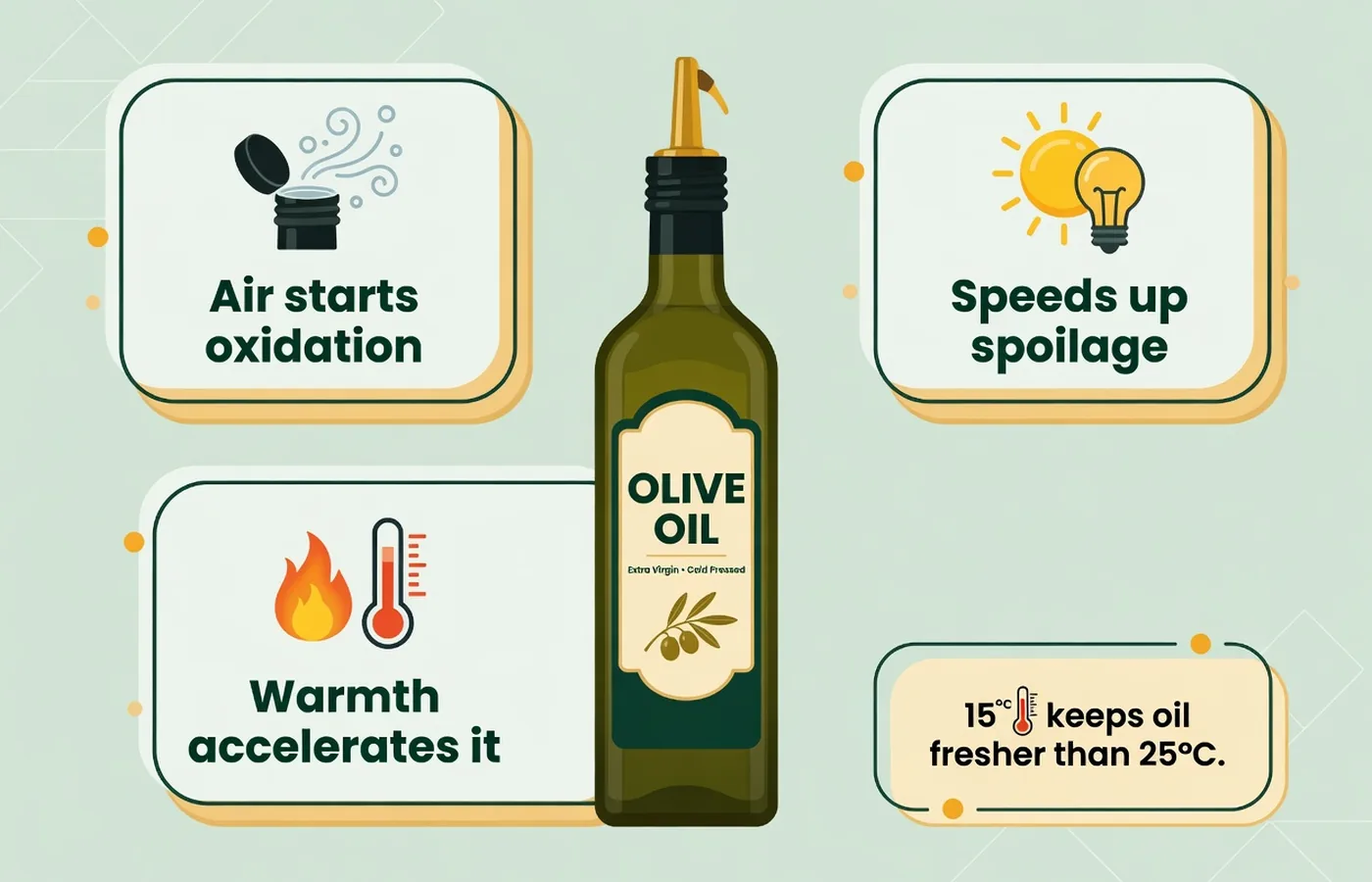
Olive oil is mostly oleic acid, a stable monounsaturated fat, with smaller amounts of more vulnerable polyunsaturated fats. Three everyday factors drive most of the decline:
Oxygen. Every time you open the bottle, fresh air reaches the oil and starts a chain of oxidation reactions. The unstable first products eventually break down into the aldehydes and other compounds behind stale, waxy, paint-like smells.
Light. Pigments in olive oil can act as photosensitisers, and under light they generate highly reactive oxygen that oxidises the oil faster than it would in the dark. This is why dark glass, tins and closed cupboards genuinely help — UC Davis specifically recommends protecting oil from light and storing it cool and dark.[2][8]
Heat. Warmth speeds up oxidation. UC Davis reports that extra virgin olive oil keeps its quality longer at about 15°C (59°F) than at 25°C (77°F).[2] You don't need lab-grade control at home, but it explains why a bottle above a hot oven fades far faster than one in a cool interior cupboard.
Olive oil's natural phenols, tocopherols and other protective compounds slow all of this down — but they're gradually used up as the oil ages.
How to tell if olive oil is rancid
Rancid oil develops a stale, oxidised aroma. People describe it as crayons or candle wax, old putty, stale nuts, wet cardboard or old paint — or simply flat, with no fresh olive character.
Fresh extra virgin olive oil, by contrast, may smell grassy, fruity, leafy or peppery. Natural bitterness and a peppery finish can be normal positive attributes of virgin olive oil; by themselves, they do not mean spoilage or establish freshness or safety.[9] Colour alone cannot establish freshness either.[2]
To check a suspect bottle: pour a little into a clean glass or spoon, let it reach room temperature, and smell it away from cooking fumes. An obvious crayon, paint, putty or stale-nut smell means don't use it for food. Don't taste it to decide — an aroma check can catch clear rancidity, but it can't confirm safety or rule out adulteration.
Does rancid olive oil make you sick?
Ordinary rancidity in plain olive oil is mainly a quality problem, not the rapid bacterial spoilage you get in moist, protein-rich foods. Still, rancid oil isn't something to keep using — oxidation wrecks the flavour and destroys beneficial compounds. And heating it doesn't reverse the damage.
Stop using oil for food when it has a strong rancid or paint-like smell; when water, crumbs or other contaminants have got into the bottle; when the container is leaking or the seal was broken before purchase; when there's mould around the cap; or when it's a homemade infusion that wasn't stored safely. When you can't account for how a bottle was stored, discard it.
Clever uses for rancid olive oil
Oil that's too far gone for cooking doesn't have to go straight down the drain — and pouring oil down the sink is bad for your pipes anyway. A few practical ways to use up a rancid bottle around the house:
- Lamp oil. Olive oil burns cleanly in a simple oil lamp and gives off roughly as much light as a candle.
- Leather conditioner. Worked into shoes, bags or leather furniture with a soft cloth, it restores suppleness and adds a little protection. A drop of citrus or lavender oil makes it smell nicer.
- Hand cleaner for paint. Rub a little into painty skin, leave it about five minutes to loosen the paint, then wash off thoroughly with soap.
- Rattan and wicker care. Gently rub a little warmed oil into baskets and cane furniture to stop them drying out, cracking or splitting.
- Soap-making. Older oil works perfectly well as a base oil in homemade soap.
Do not use rancid olive oil to condition wooden chopping boards or butcher blocks. Follow your board maker’s care instructions and use its recommended food-contact-safe conditioner.[10][11]
Keep a clearly labelled "not for cooking" bottle for these jobs so it never finds its way back into the pan.
How to store olive oil so it lasts
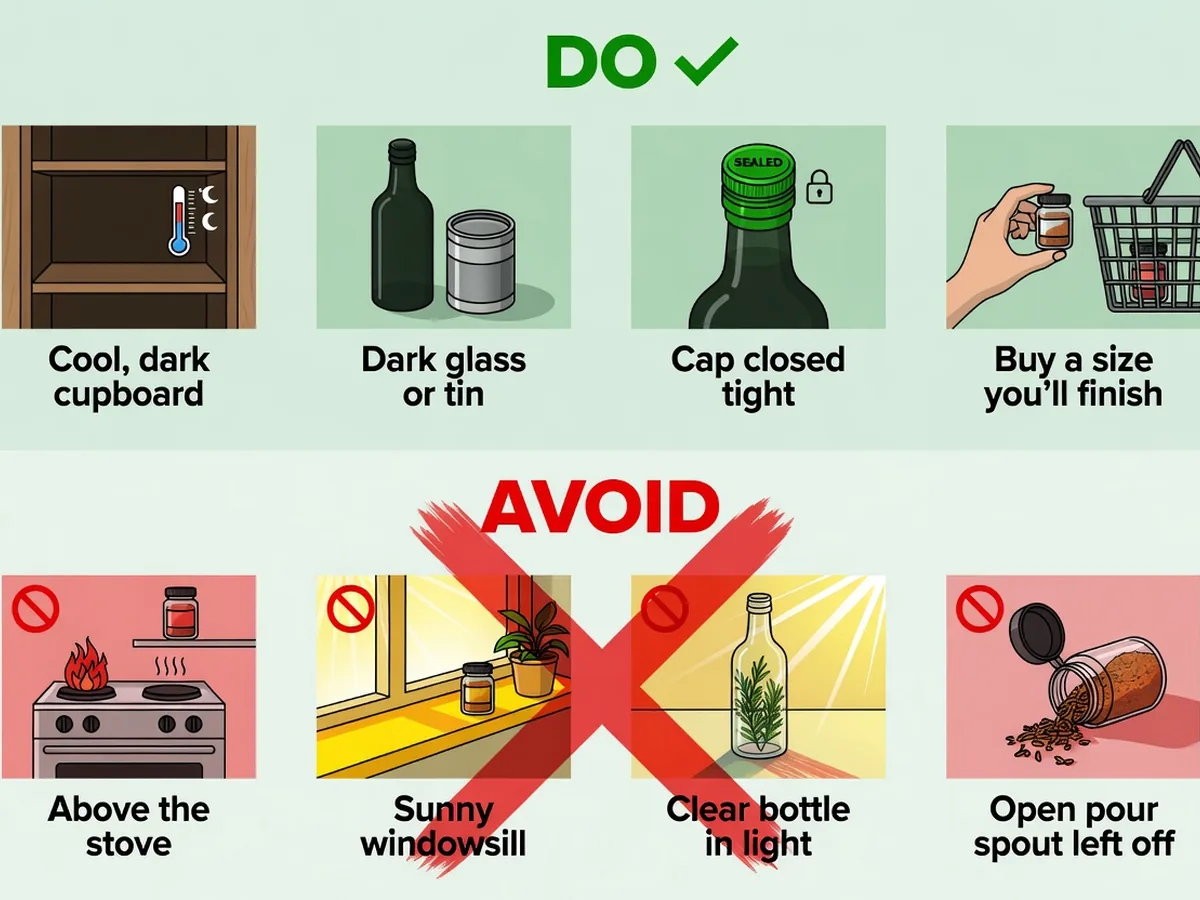
Keep it dark. Store the bottle in a closed cupboard, not on an open shelf or windowsill. Dark glass, green glass, tins and opaque containers protect far better than clear bottles.[8]
Keep it cool. Avoid spots above or beside the stove, oven, dishwasher, kettle or air fryer, and out of direct sun and hot garages. A stable, cool cupboard is ideal — you don't need an exact temperature, just to avoid prolonged warmth.
Close the cap immediately. Don't leave a pour spout open while you cook. Every open minute exposes the oil to air.
Buy a size you'll finish. A large tin isn't a bargain if half of it goes rancid. For occasional use, buy 250–500 ml rather than a big container; keep any reserve sealed.
Don't top up a dirty cruet. Old residue at the bottom of a dispenser may already be oxidised. Empty it, wash it, and dry it completely before refilling — moisture accelerates decline.
Keep the label. It carries the harvest date, best-before date, origin, lot number and storage notes. If you decant, note the opening date and keep the original label until the oil is gone.
How to choose a fresher bottle
Look for a harvest date — it's a better guide to an oil's real age than a best-before date calculated from bottling. UC Davis advises choosing oil within about 15 months of harvest.[2] Prefer protective packaging (dark glass, tins, opaque or bag-in-box). Don't judge by colour: a deep green shade doesn't prove freshness or authenticity — professional tasters even use blue glasses so colour can't bias them.[2] Credible certification seals (for example from the California Olive Oil Council or the North American Olive Oil Association) offer some assurance the oil met International Olive Council standards when tested, though they can't protect against poor storage afterwards.[4] And read the origin statement — "packed in Italy" doesn't necessarily mean the olives were grown there.
The refrigerator "purity test" doesn't work
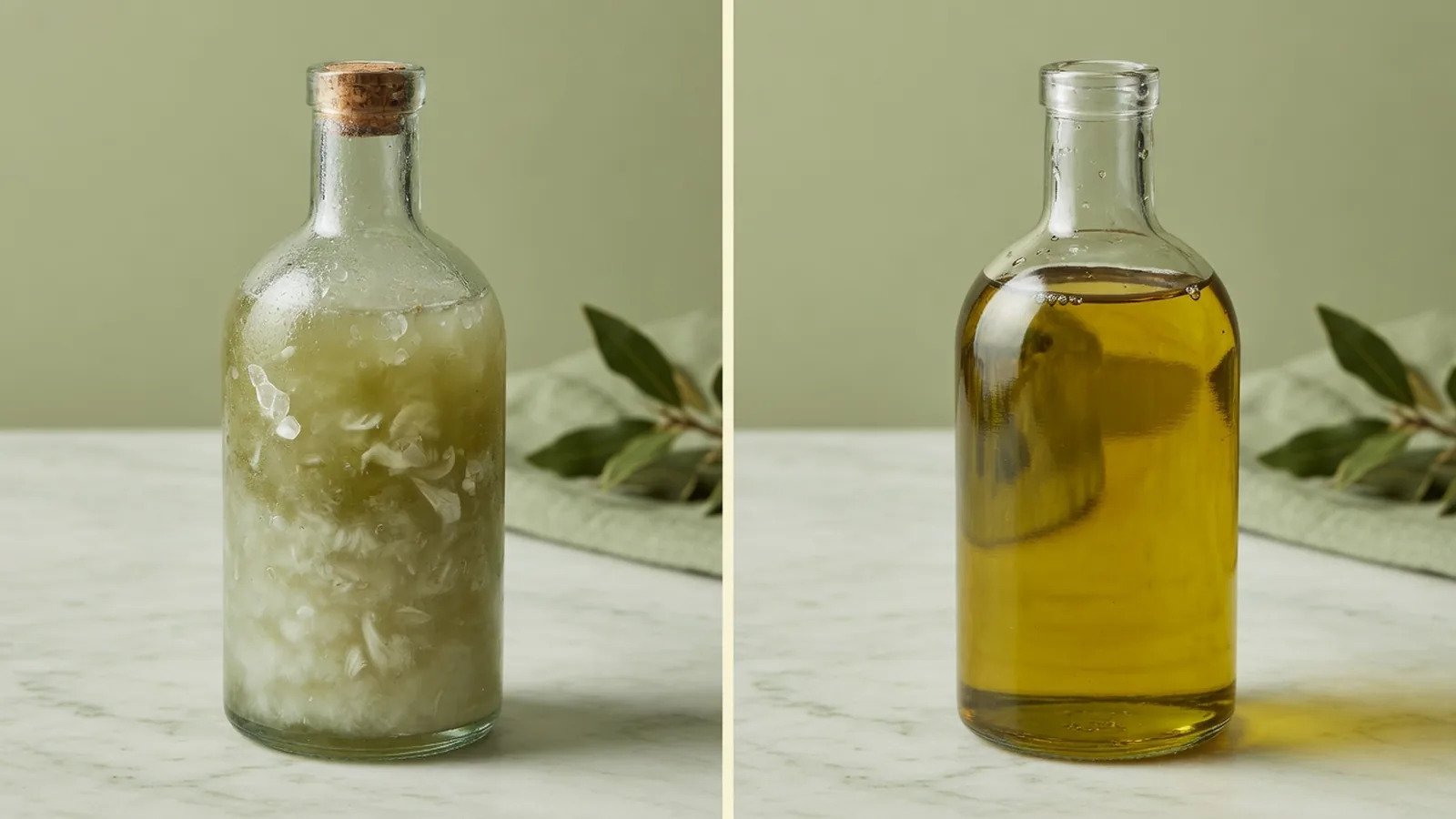
You may have heard that real olive oil solidifies in the fridge. It's unreliable. Whether an oil congeals depends on its fat and wax composition and the fridge temperature — not on whether it's authentic or extra virgin. In UC Davis testing, none of the oils examined became completely solid, and the researchers concluded home refrigeration is not a reliable purity test.[3] Cold-induced cloudiness or partial solidifying is normal, harmless and reverses as the oil warms up.[2]
Hot-climate and India-specific advice
Olive oil deteriorates faster in kitchens that regularly sit above 25°C, so Indian summers call for extra care. Buy smaller bottles you can finish in two or three months; choose dark glass, tins or opaque packaging; keep the bottle in an interior cupboard rather than on the counter or above the stove; and don't leave oil in a parked car after shopping. Check imported bottles for a harvest date and origin statement, and skip dusty bottles sitting in direct sunlight. Refrigeration isn't normally needed for plain olive oil; in a very hot home with no cool cupboard it can slow oxidation, but expect cloudiness, and avoid letting condensation into the bottle.
Frequently asked questions
How long does extra virgin olive oil last after opening?
For the best aroma and phenolic quality, aim for two to three months. The USDA FoodKeeper's broader estimate for opened oil is three to five months.[1]
Does unopened olive oil expire?
Yes — quality declines even sealed, as oxygen in the headspace, heat and light take their toll. Extra virgin is generally best within about 12–18 months of harvest.[2]
Can I use olive oil after the best-before date?
Is cloudy olive oil spoiled?
Not necessarily. Natural waxes crystallise at low temperatures; the oil normally clears again at room temperature.[3]
Should extra virgin olive oil be refrigerated?
Usually not. A cool, dark cupboard is enough for most homes, and refrigeration can make oil cloudy without proving anything about freshness.[2]
Can rancid olive oil be used for frying?
No — it shouldn't be used for food. Frying may mask some off-smells, but heat can't reverse oxidation or restore what's been lost.
Is homemade garlic olive oil shelf-stable?
No. Fresh garlic in oil can support botulism toxin if stored wrong. Use a tested method and refrigerate or freeze it.[5]
Bottom line
Olive oil does expire, but there's no single universal number. Buy the freshest harvest you can, choose protective packaging, keep it away from oxygen, light and heat, close the cap tightly, and only buy as much as you'll use soon. Finish opened extra virgin within two to three months, and stop using any oil for food once it smells clearly rancid. The best-before date helps — but the harvest date, packaging and storage history usually tell you more.
For the pantry quality periods and a plain-oil storage checker, see the olive oil shelf-life guide. Cold-storage choices do not supply a new expiry timer.
Related WillItExpire guides
Sources
- USDA / FoodSafety.gov — FoodKeeper storage guidance for oils.
- UC Davis — Olive Oil Myths and Facts (storage temperature, harvest date, colour, refrigeration).
- UC Davis Olive Center — Refrigeration is not reliable in detecting olive oil adulteration.
- International Olive Council — Trade Standard Applying to Olive Oils and Olive-Pomace Oils (free acidity, UV absorbance, sensory grading).
- National Center for Home Food Preservation — Freezing Garlic-in-Oil / garlic-in-oil safety.
- USDA FSIS — Food Product Dating.
- U.S. FDA — Confused by Date Labels on Packaged Foods?
- UC Davis — Olive Oil Packaging (light protection and headspace oxygen).
- International Olive Council — Virgin Olive Oil Sensory Assessment (2024), page 2 (bitterness, pungency and rancidity).
- Broinwood — Cutting Board Care Instructions (avoid olive oil for board maintenance).
- Hardwood Lumber Company — Cutting Board Care & Maintenance (follow the maker's board-oil or conditioner guidance).
This article provides general information using a U.S. guidance baseline with clearly labelled hot-climate context. Shelf-life ranges reflect quality estimates and manufacturer/expert guidance, not guarantees for any specific bottle. Follow stricter package, manufacturer or local instructions. It is not medical advice.