Quick answer
Yes, if raw meat, poultry, or seafood thawed in a refrigerator at 4°C (40°F) or below, was handled safely, and is still within its item-specific refrigerator window. USDA FSIS says it can be refrozen without cooking, although thawing can reduce quality. Meat thawed in cold water or a microwave should be cooked immediately; once fully cooked, the cooked food can be frozen. Food thawed on the counter or held too warm should not be refrozen. [1] [2]
The thawing method matters more than whether the middle still feels cold. Use the matching row below, then act promptly.
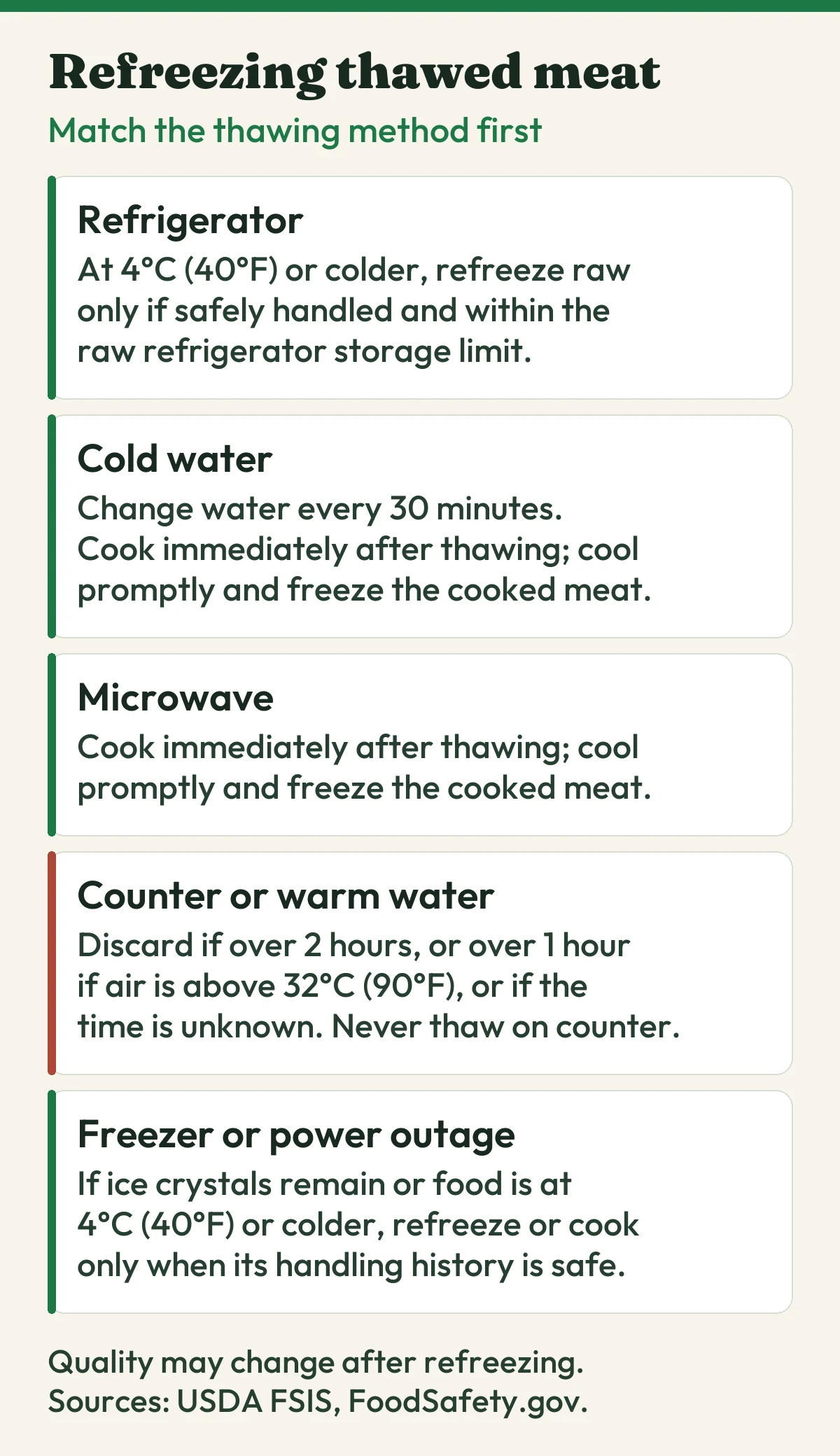
Refreezing decision chart by thawing method
| How it thawed | Refreeze raw? | Next safe action | What the rule means |
|---|---|---|---|
| Refrigerator at 4°C (40°F) or below | Yes, within its holding window | Refreeze or cook only while still within the item’s refrigerator window and with a safe handling history | USDA FSIS guidance; quality may decline |
| Cold water, changed every 30 minutes | No | Cook immediately; cool and freeze cooked food if needed | Faster thawing requires immediate cooking |
| Microwave | No | Cook immediately; freeze after fully cooking | Some areas may begin to cook during thawing |
| Kitchen counter or warm water | No | Discard if exposure exceeded 2 hours, 1 hour when the surrounding air is above 32°C (90°F), or is unknown | Unsafe exposure cannot be repaired by freezing |
| Freezer partly thawed, still with ice crystals or at 4°C (40°F) or below | Yes | Refreeze or cook promptly | Power-outage guidance; quality may suffer |
These rows assume the food was sound before thawing and stayed protected from contamination. Freezing pauses growth; it does not kill every harmful germ. [2] [3]
Refrigerator thawing is the refreezing route
The refrigerator is the only everyday thawing method that leaves raw meat eligible for direct refreezing. Keep the package covered on a tray so juices cannot reach ready-to-eat food. Refreeze it as soon as you decide not to cook it, or keep it refrigerated only within the product-specific window.
That window is not one number for every meat. Illinois Extension lists raw ground meat and poultry at 1–2 days after refrigerator thawing. USDA gives beef steaks, chops, and roasts 3–5 days. Follow the actual item guidance instead of turning the longer beef range into a promise for ground turkey or chicken. [5] [8]
Refreezing can make meat drier or change its texture because thawing releases moisture. That is a quality change, not proof that the food became unsafe. Use airtight freezer packaging, press excess air from solid-food bags, and label the new freezing date.
Cold water and microwave thawing change the next step
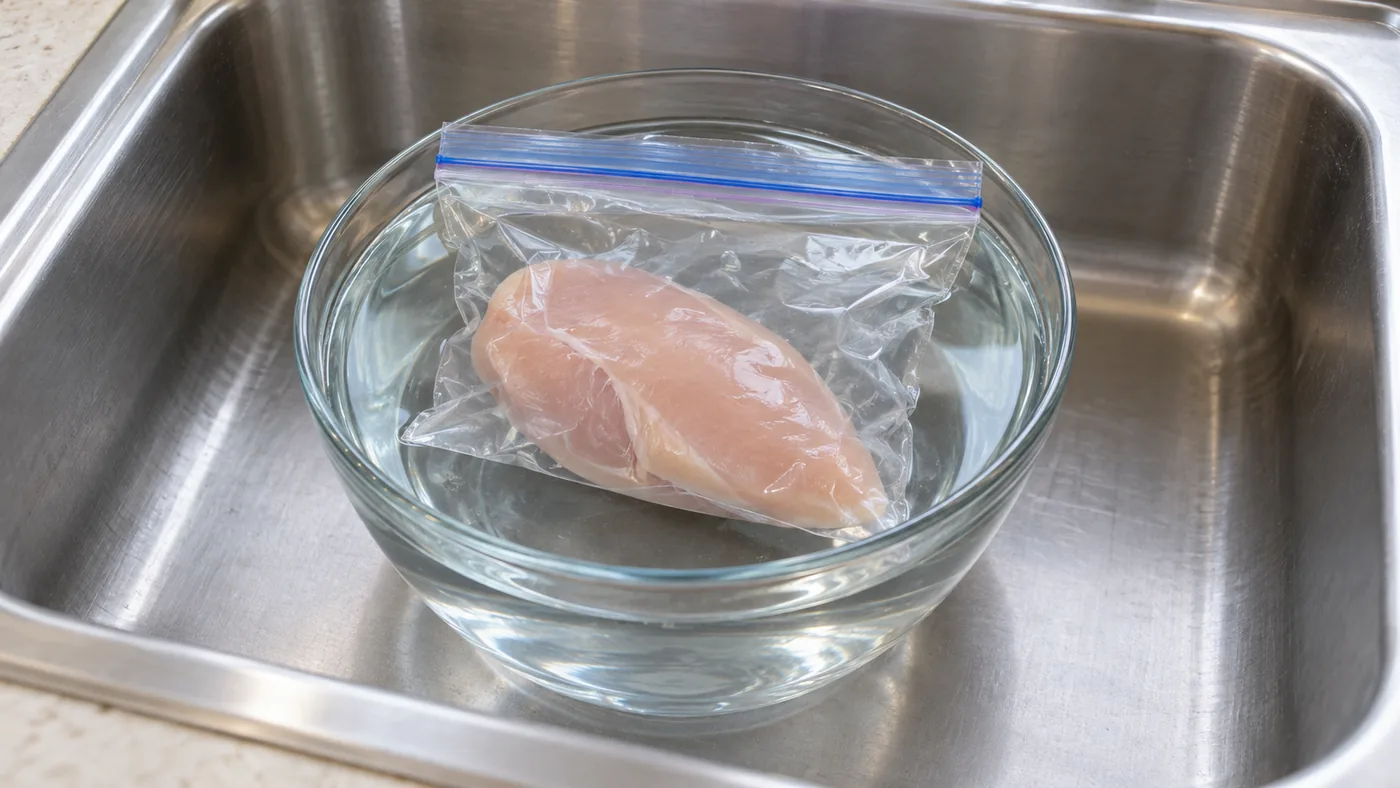
Cold-water thawing is safe only when the package stays leakproof, the water is changed every 30 minutes, and cooking follows immediately. It is not a method for thawing meat today and refreezing it raw tomorrow. If you need to save it, cook it fully first, cool the cooked food promptly in shallow portions, and then freeze it. [2]
Microwave thawing has the same immediate-cooking requirement because some edges can warm or start cooking before the center is ready. USDA says microwave-thawed meat may be refrozen after it is fully cooked. Use the microwave manufacturer’s method, remove packaging that is not microwave-safe, and do not hold partly cooked meat while deciding what to do. [6]
When the food thawed during a power problem
If a freezer lost power, a package may be refrozen when it still contains ice crystals or is 4°C (40°F) or below and feels as cold as refrigerated food. FoodSafety.gov says meat, poultry, seafood, soups, and stews can be refrozen in that condition, although quality may suffer. If the food was above 4°C (40°F) for 2 hours, or 1 hour when the surrounding air is above 32°C (90°F), discard it. A cold reading later cannot prove an earlier warm period was safe. [3] [4]
Do not use smell or a taste test to decide. An off odor or visible spoilage is a reason to discard, but normal appearance cannot prove safe handling. When the time or temperature history is uncertain, discard the food. [7]
A clean refreezing routine
First, write down the thawing method and the time you noticed the food was thawed. That small note prevents a common holiday mistake: treating a package moved from the freezer to the fridge, a cold-water bath, and the counter as if all three had the same clock.
Next, keep raw meat separate from ready-to-eat food. Place it on a tray on a low refrigerator shelf, wash hands and surfaces after handling it, and check that the refrigerator is holding 4°C (40°F) or below. If you are refreezing, use a tight freezer wrap or bag and press out excess air. A new package date records the refreezing event; it does not erase the original thawing history.
If cooking is the required next step, cook the food fully before deciding whether to freeze it. Let the cooked food cool in shallow portions and refrigerate or freeze it promptly. Do not leave a large hot pot on the counter while you wait for it to become room temperature. [4]
For a shared meal or a guest’s cooler, keep the cold chain intact through packing and transport. If you cannot establish how long the food was warm, discard it. This is a storage-history decision, not a judgment about whether the meat still looks normal.
FAQs
Can I refreeze turkey thawed in the refrigerator?
Can I refreeze chicken thawed in cold water?
Not while raw. Cook it immediately after cold-water thawing. After it is fully cooked and cooled promptly, freeze the cooked chicken in portions. [2]
What if the package still has ice crystals?
If it was in a freezer or power outage and remains at 4°C (40°F) or below, it may be refrozen or cooked. This exception does not turn counter-thawed meat into a safe food. [3]
Does refreezing make meat unsafe?
Refreezing safely handled refrigerator-thawed meat is allowed, but moisture loss can reduce quality. Refreezing cannot undo unsafe warm exposure, contamination, or an unknown storage history. [1]
Bottom line
Write down how the meat thawed before you put it back. Refreeze safely handled refrigerator-thawed food within its item-specific window; cook cold-water or microwave-thawed food immediately; discard food with unsafe or uncertain storage history.
Search another food in the WillItExpire directory
Sources
- USDA FSIS — Is it safe to refreeze food that has thawed?
- USDA FSIS — How do you thaw food safely?
- FoodSafety.gov — Food Safety During Power Outage
- FoodSafety.gov — 4 Steps to Food Safety
- USDA FSIS — How long does it take for beef to thaw?
- USDA FSIS — Is it safe to thaw meat or poultry in the microwave?
- FDA — Are You Storing Food Safely?
- Illinois Extension — Thawing
This guide uses US household food-safety guidance. Follow stricter local, package, or appliance instructions. General information is not medical advice. When storage history is uncertain, discard the food.