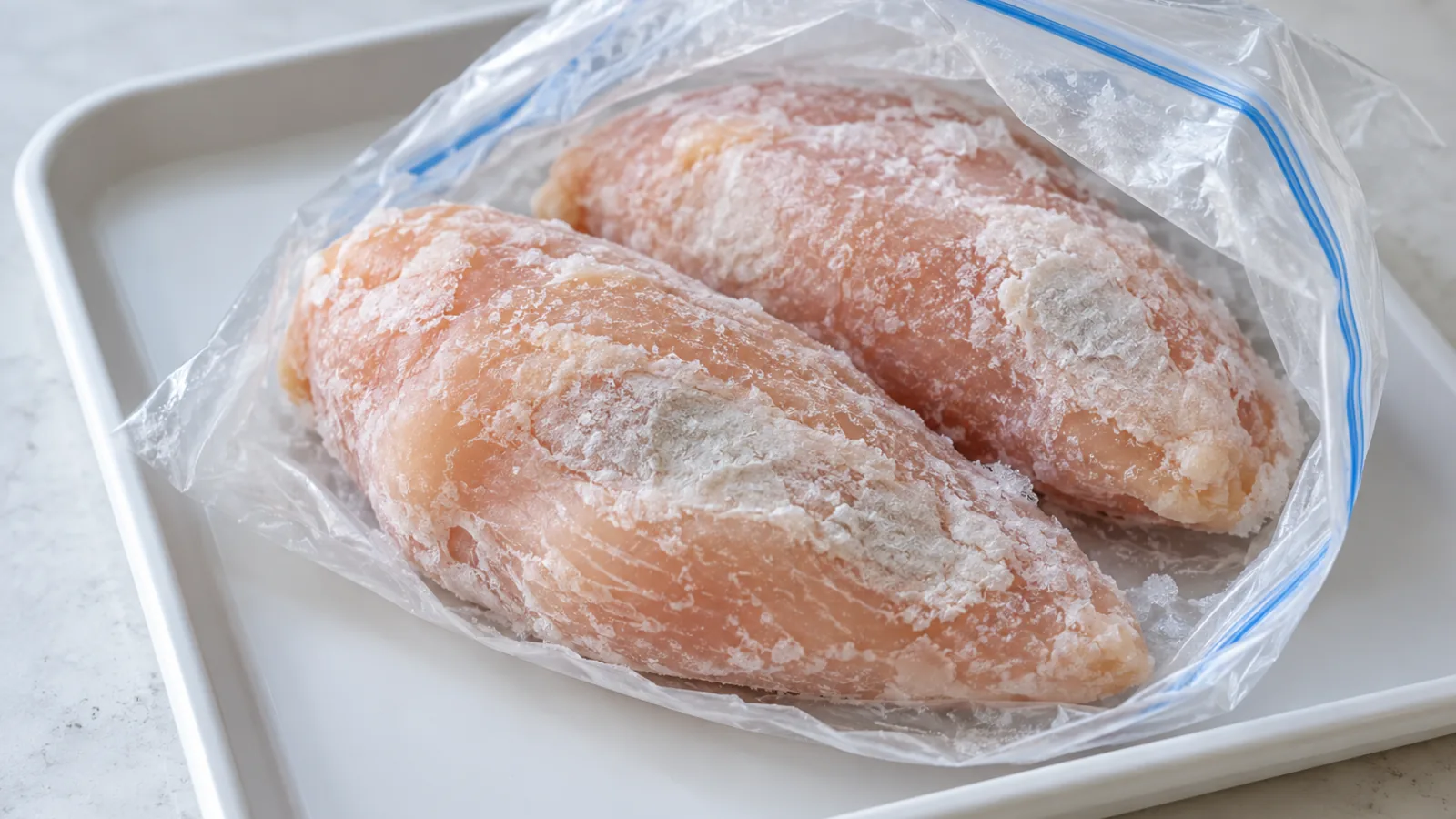
For food with a safe storage history, the bigger concern is how much good food you have left. A small patch could be trimmed off, but a severely discolored or damaged package might not be worth it.
Use the U.S. household guidance (below). Follow stricter local rules and the storage, thawing and cooking instructions on the food itself.
What does freezer burn look like?
Meat, poultry, and fish can have brown or grayish-white leathery spots. Cooked grains or baked goods may look rough or dry, and ice cream can be icy instead of smooth. This isn't a complete list or an assurance that your food is safe based on appearance; it's a brief description of quality defects. Texas A&M AgriLife Extension
The surface ice can turn directly into vapor during sublimation. Loss of moisture makes the food drier than before freezing. Meanwhile, oxygen can cause quality issues, such as rancidity of fats. Sealed freezer packaging limits moisture loss and air exposure. Iowa State University Extension · NCHFP freezing guidance
Can you eat freezer burned food? What should you do with it
Once you've confirmed safe handling and storage, the decision depends on how much damage has been done.
- Small dry spot: According to the USDA, you can cut away freezer-burned areas before or after cooking. Just remember to trim away the damaged parts, then follow safe handling procedures for the food you've trimmed. USDA Freezing and Food Safety
- Dryness throughout the food: It's reasonable to simply throw away heavily freezer-burned food, since its texture and flavor are often significantly compromised. There's no requirement to eat it just because it's still technically edible. Iowa State University Extension
- Suspicious smell, mold, or uncertain storage history: Assuming that it's freezer burn isn't a reason to eat potentially dangerous food. Throw out questionable-looking or -smelling food, and never taste-test it to check. Normal appearance and smell don't guarantee safety either. FDA storage guidance · FoodSafety.gov
- Trimming is only helpful for isolated spots of freezer dryness. It doesn't fix mishandled food or spots of mold, so don't cut away spots of mold and assume the food is otherwise fine.
Choose a cooking method based on the texture of the food
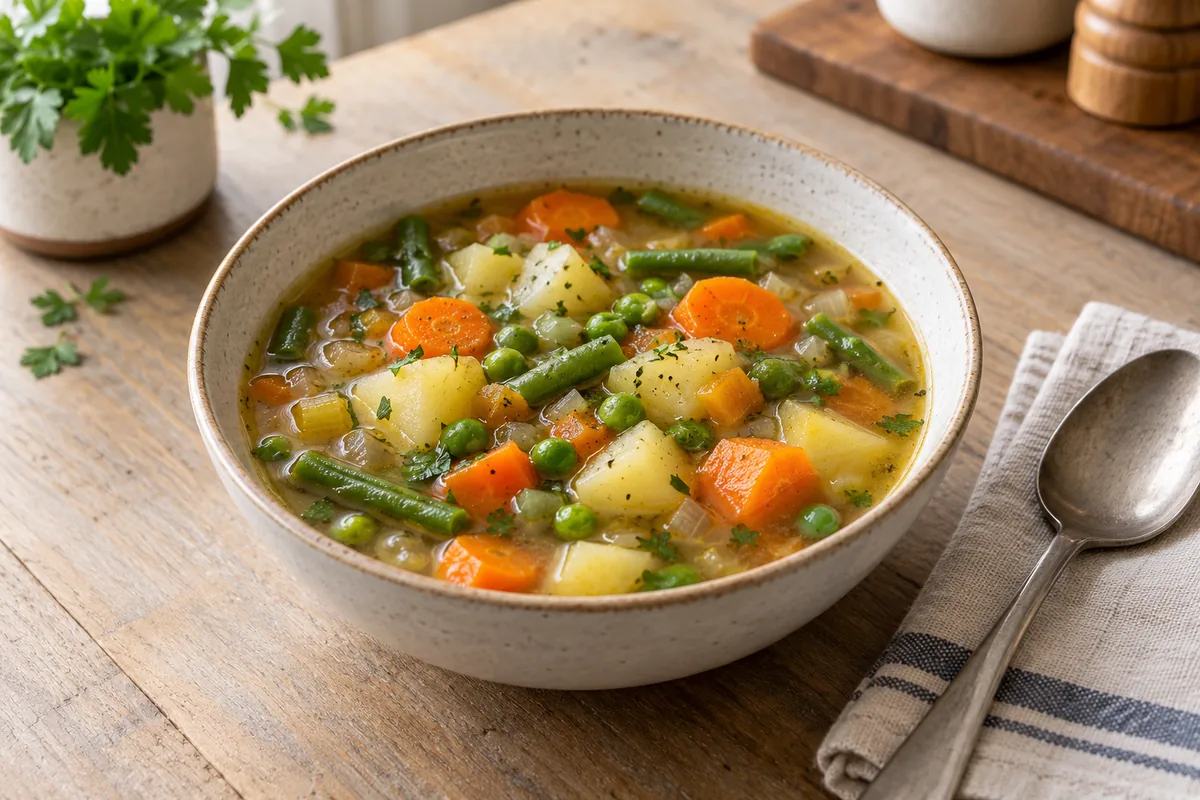
For safely stored veggies that have gone soft during freezing/thawing, a soup or stew could be a good option. The University of Minnesota Extension recommends this approach for thawed veggies that have lost their crunch. It's not that cooking fixes the damage, but rather that a soup or similar dish can accommodate softer textures. UMN Extension
For safely stored meat with isolated spots of freezer damage, a stew or curried dish might be another option if you're looking for a way to use it up. This is more of a practical suggestion for dealing with a partial loss of quality, not something that will restore the food to its original state. Don't use a sauce or other seasonings to disguise rancidity or other issues with the meat.
There's nothing wrong with roasting or other methods, but it's best to pick a dish that's appropriate to the condition of the food, rather than trying to use one particular technique to revive every food with freezer damage.
See our safe defrosting guide for meat, chicken, and fish. Commercially prepared frozen foods still require following the package instructions for cooking. FDA storage guidance
What if the freezer stopped working or the food thawed
An appliance failure requires checking individual items, and the guidance depends on the situation. Keep the door closed, check temps as the power returns, and see our power-outage guide and the official keep-or-discard chart for additional info. There are exceptions, including thawed or partially thawed ice cream and frozen yogurt. A later frozen surface can't tell you what happened before; toss potentially dangerous food when in doubt. FDA outage guidance
How to prevent future dry spots
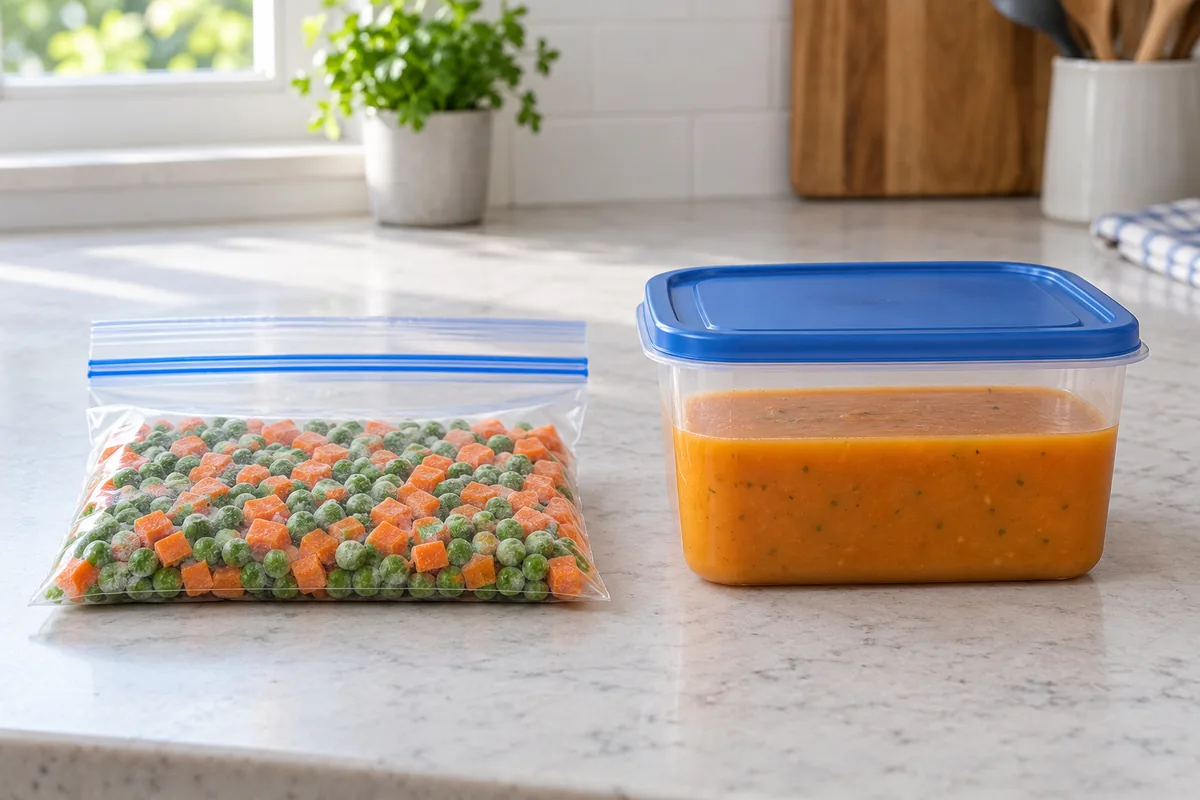
Use freezer bags or other recommended containers. Ordinary bread bags and wax paper aren't good enough to prevent moisture loss. Heavy duty aluminum foil can work, but punctures allow moisture to escape, so it's best to use a bag or wrap the food and put it in another container. NCHFP packaging guidance
Minimize air in the bag while leaving room for expansion. Push the air out around solid items. Leave the recommended space for liquids or other items that expand. Avoid getting moisture on the seals, and keep them clean and dry. AgriLife Extension · University of Georgia Extension
Cool leftovers quickly in small portions. Divide large portions into shallow containers so they cool faster. The hot food cooling guide explains how to do this without waiting for a large pot to cool on the counter. University of Georgia Extension
Labeling and rotating are important too. Write the date on the package, freeze meals in single-serving sizes, and use older items first. Keep an eye on the freezer temp and remember to keep it at 0° F or -18° C or colder. University of Georgia Extension · NCHFP general freezing guidance
Freezing doesn't kill all organisms or fix all quality concerns. Good packaging helps preserve the quality of the food you put in it, but won't rescue food that was mishandled before freezing. NCHFP general freezing guidance
Related guides
Sources
- FDA storage guidance
- Texas A&M AgriLife Extension
- Iowa State University Extension
- NCHFP freezing guidance
- USDA Freezing and Food Safety
- FoodSafety.gov
- UMN Extension
- FDA outage guidance
- NCHFP packaging guidance
- University of Georgia Extension
- NCHFP general freezing guidance
General food-safety information, not medical advice. This guide uses US household guidance. Follow stricter local rules and product instructions. When storage history is uncertain, discard the food.