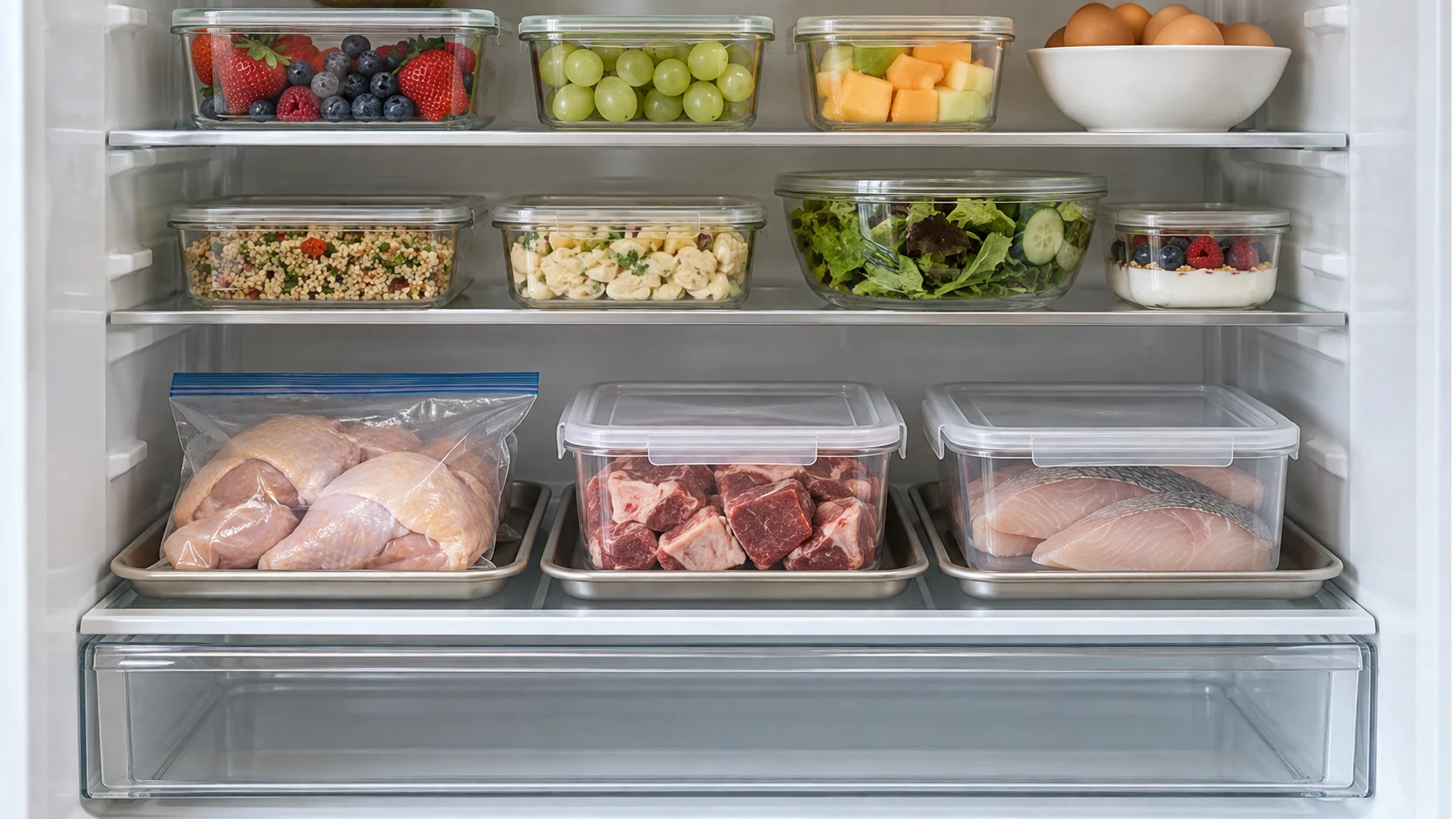
The three photos in this guide are AI-generated illustrations.
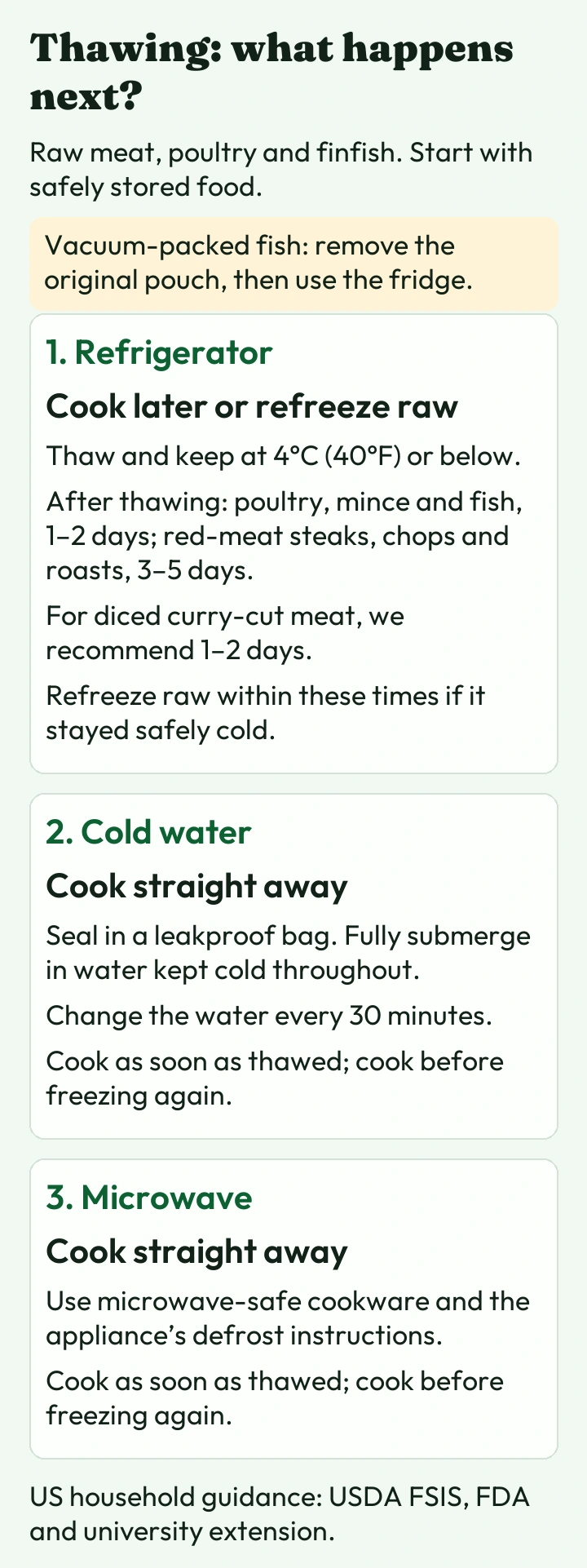
If dinner moves to tomorrow, the way you thawed the meat decides whether you can keep it raw.
This guide uses US household advice, with examples for Indian kitchens. It covers raw meat, poultry and finfish that you will cook; prawns and other shellfish are outside its scope.
How long can thawed meat stay in the fridge?
| Raw food | Cook within |
|---|---|
| Chicken and other poultry, including chicken keema (minced chicken) | 1–2 days |
| Mutton (goat or sheep), beef or pork keema (minced meat) | 1-2 days |
| Stew meat and diced curry-cut meat, including mutton | 1-2 days |
| Fish intended to be cooked | 1–2 days |
| Mutton/goat, lamb, beef or pork steaks, chops and roasts | 3-5 days |
For everyday poultry storage, see the raw chicken guide. “Mutton” may mean goat or sheep; choose the row by cut. For diced curry-cut meat, we recommend the shorter 1-2-day window used here for stew meat. These are after-thaw times, not extra days added to a fresh-purchase window.
Choose a method by what you can do afterward
Choose the fridge when plans may change. Use cold water or the microwave when you can go straight from thawing to cooking.
| Method | Next action | What to plan |
|---|---|---|
| Refrigerator | Cook within the table's time | Keep at 4°C (40°F) or below; raw refreezing is possible if it stayed safely cold. |
| Cold water: change every 30 min | Cook straight away | Seal in a leakproof bag and fully submerge in water kept cold throughout; cook before freezing again. |
| Microwave | Cook straight away | Use microwave-safe cookware and follow the appliance's defrost instructions; cook before freezing again. |
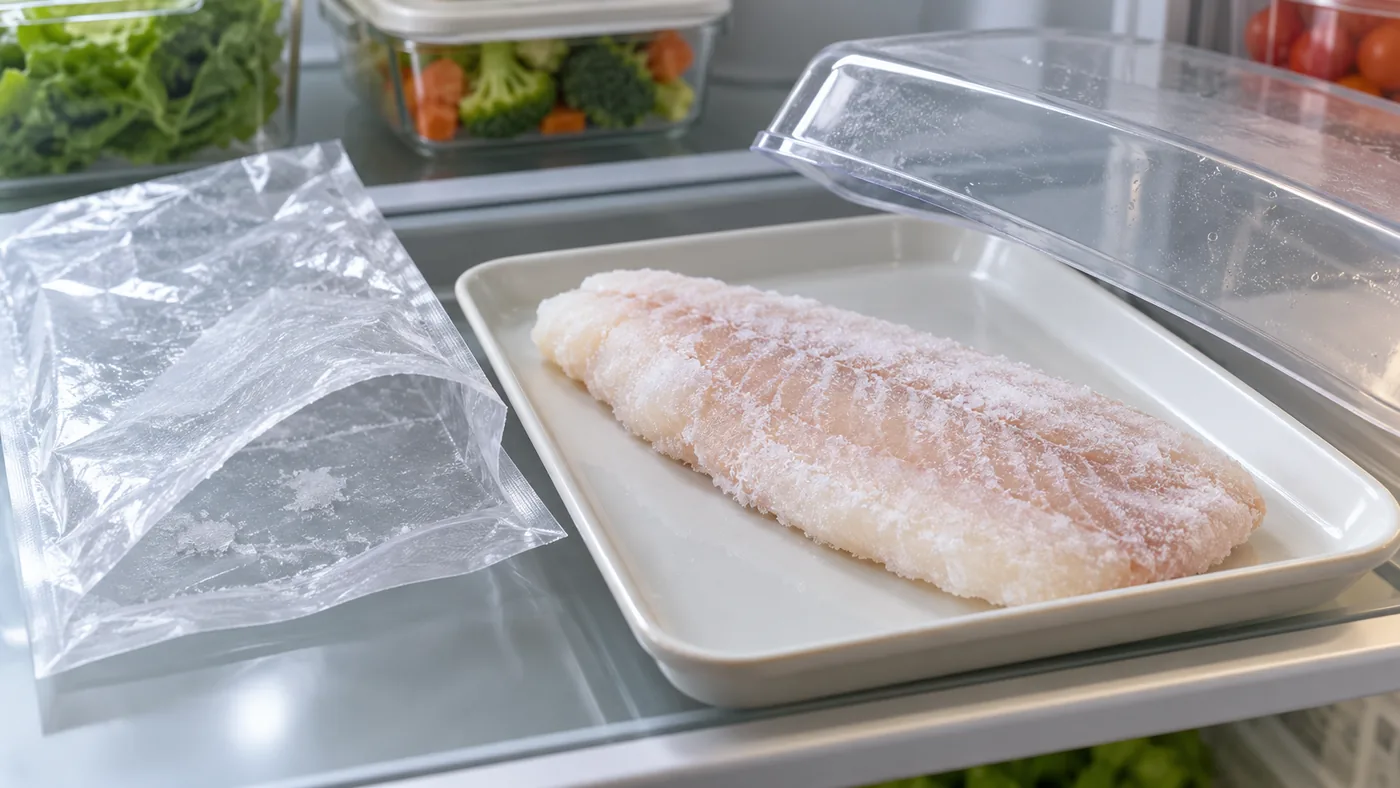
1. Refrigerator: plan ahead
- Check that the fridge stays at 4°C (40°F) or below. Put the covered food or sealed bag on a tray on the lowest shelf, below cooked food and produce.
- Leave it in the fridge to thaw. USDA says even a small pack can need a full day; chicken may need 1–2 days or longer. FDA suggests thawing fish overnight. Allow more time for thick blocks and large cuts.
- Note when thawing finishes, then use the table above to plan cooking.
These are planning estimates; pack size and thickness affect the time. [1] [3] [8] [10]
In a power cut, keep the door shut: a fridge that starts cold stays cold for about 4 hours if unopened. Use the power-outage guide before that time runs out. [12]
2. Cold water: stay with it
For vacuum-packed fish, remove the original pouch and use the fridge method above. [4]
- Seal the food in an intact, leakproof bag and fully submerge it in cold water.
- Change the water every 30 minutes, keeping it cold throughout.
- Cook straight away once thawed. Do not leave the raw food in the fridge overnight or refreeze it before cooking. [1]
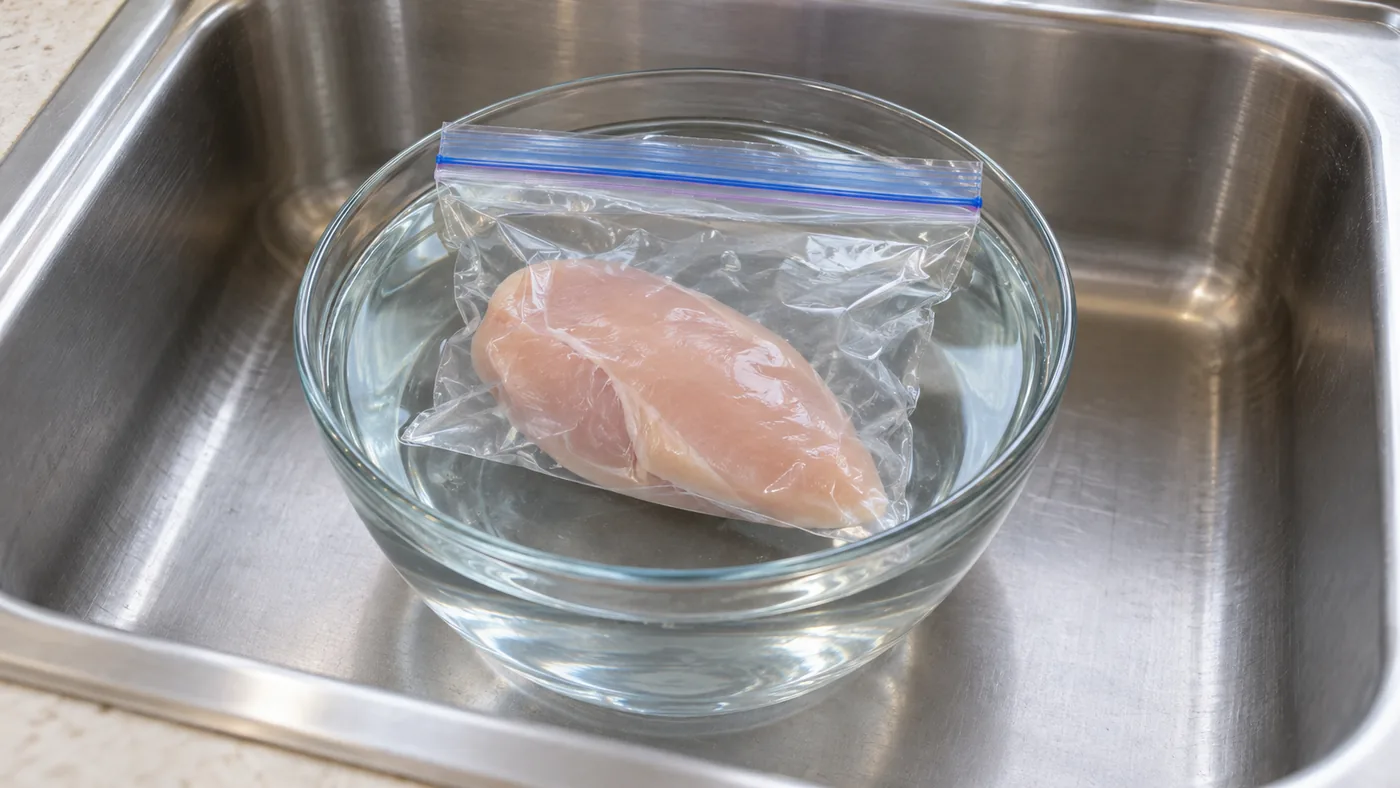
USDA estimates that a small 450 g (1 lb) pack may thaw in an hour or less. A 1.4-1.8 kg (3-4 lb) pack may take 2-3 hours. Thicker pieces can take longer; keep changing the water. [1]
3. Microwave: be ready to cook
Remove unsuitable wrapping and use microwave-safe cookware. Follow the appliance's defrost settings for power, turning and timing. Some parts may warm or start cooking, so cook immediately afterward. Do not put the raw or partly cooked food back in the fridge for tomorrow. [1] [3]
Cook, cool or refreeze: make the next decision
If plans change, you can refreeze raw food thawed entirely in the fridge, provided it stayed at 4°C (40°F) or below and is still within the table's time. Properly stored meat sold as “previously frozen” can also be refrozen. Its texture may suffer. For food thawed in cold water or the microwave, cook it before freezing again. [1] [2]
| Food | Cooking temperature |
|---|---|
| Chicken and other poultry, including chicken keema | 74°C (165°F) |
| Mutton (goat or sheep), beef or pork keema | 71°C (160°F) |
| Mutton/goat, lamb, beef, pork or veal steaks, chops and roasts | 63°C (145°F) + 3-minute rest |
| Fish | 63°C (145°F) |
Fish flesh also becomes opaque and separates easily with a fork. Use the thermometer for the temperature check. [6]
Divide cooked leftovers into shallow containers and refrigerate within 2 hours, or 1 hour above about 32°C (90°F). The refrigerated safety limit is 3-4 days. Reheat safely stored leftovers to 74°C (165°F) throughout; bring soups, sauces and gravies to a rolling boil. [6] [11]
Keep raw juices away from cooked food and salads. Wash hands, utensils and surfaces after handling meat. Do not rinse raw meat or poultry: splashes can spread bacteria to the sink and nearby food. Marinate in the fridge. Before freezing, portion fresh food for meals, protect it with freezer packaging and label the freeze date. Keep the freezer at −18°C (0°F) or below. [2] [3] [7] [9]
FAQs
Can I thaw chicken on the counter if the middle is still frozen?
No. The outside can warm while the middle stays frozen. Use one of the methods above. [1]
Can cold-water-thawed chicken stay raw in the fridge until tomorrow?
Does partially thawed food always need cooking before refreezing?
No. Previously safely stored meat, poultry and finfish can be refrozen raw if they still have ice crystals or read 4°C (40°F) or below, checked as power returns, before recooling. Discard if the food was above 4°C (40°F) for 2 hours or more, or for 1 hour when the surrounding air is above about 32°C (90°F). A later cold reading cannot prove earlier safety. The vacuum-fish packaging warning still applies. Use the power-outage guide; water- or microwave-thawed food still needs immediate cooking. [3] [4] [12]
Can I cook chicken while it is still frozen?
Yes, in suitable oven or stovetop methods. Allow about 50% longer and check that chicken reaches 74°C (165°F). Thaw chicken before slow cooking or microwave cooking. Follow the packet’s directions for purpose-designed frozen meals. [10]
Bottom line
Choose your cooking time before taking the pack out of the freezer. For fridge thawing, write down when it finishes; for cold water, set a 30-minute timer and have your cooking ingredients ready.
Related guides
Sources
- USDA FSIS — The Big Thaw: Safe Defrosting Methods
- USDA FSIS — Freezing and Food Safety
- FDA — Refrigerator Thermometers: Cold Facts about Food Safety
- University of Maine Extension — Vacuum Sealing Safely at Home
- University of Illinois Extension — Thawing
- FoodSafety.gov — Safe Minimum Internal Temperatures
- CDC — Preventing Food Poisoning
- FDA — Selecting and Serving Fresh and Frozen Seafood Safely
- FoodSafety.gov — 4 Steps to Food Safety
- USDA FSIS — Chicken from Farm to Table
- USDA FSIS — Leftovers and Food Safety
- FoodSafety.gov - Food Safety in a Disaster or Emergency
- USDA FSIS - Goat from Farm to Table
- USDA FSIS - Lamb from Farm to Table
General food-safety information, not medical advice. This guide uses US household guidance. Follow stricter local rules and product instructions. When storage history is uncertain, discard the food.