You do not need to wait for leftovers to reach room temperature. The useful question is: how much food are you cooling, and how long has it been out?
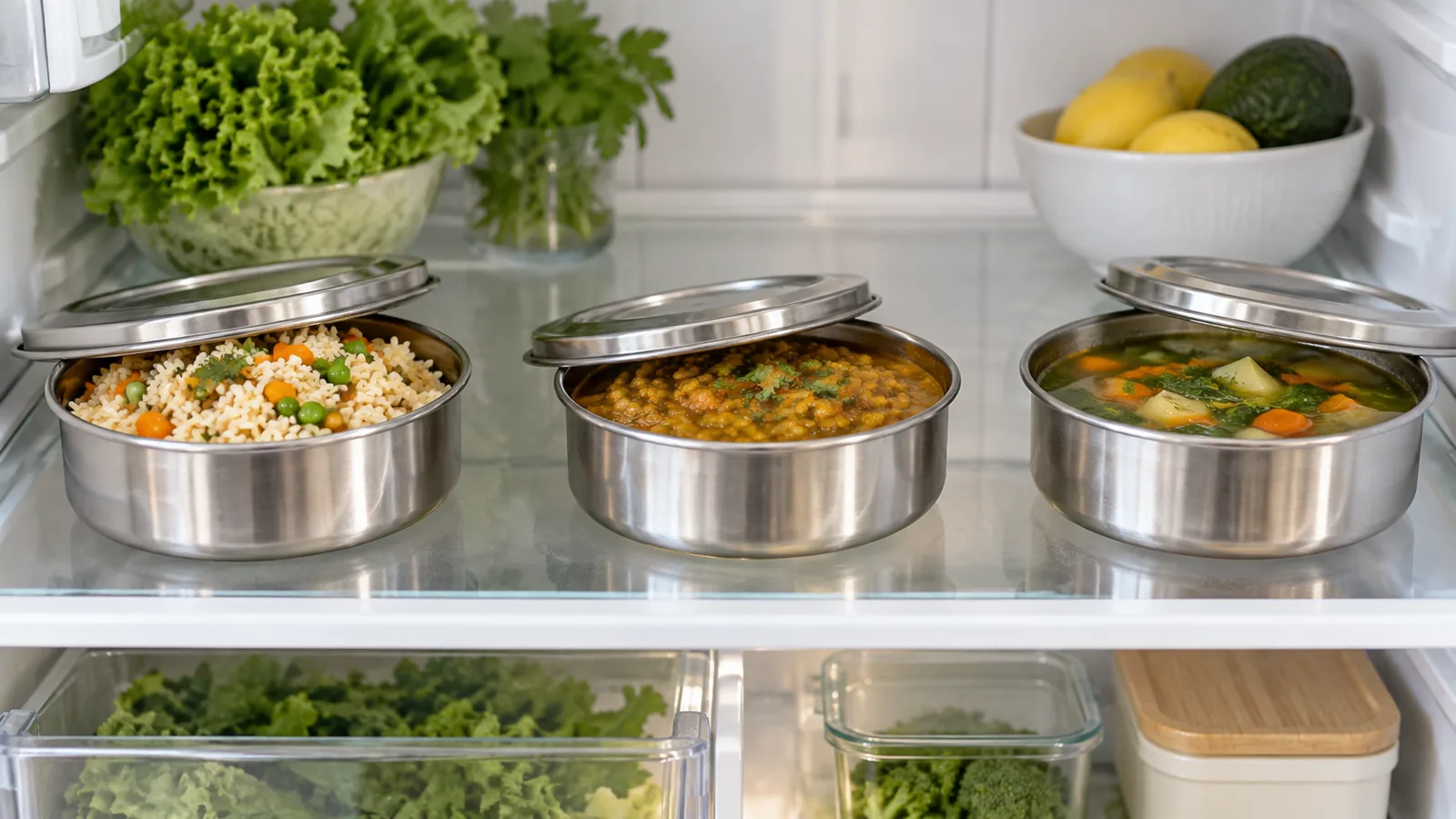
Refrigerate now—or throw it away?
| Your situation | What to do |
|---|---|
| A small portion is freshly cooked and still hot | Refrigerate now in a shallow container. |
| A large pot of soup, curry or dal is still hot | Divide into shallow containers and refrigerate promptly. |
| Food has been out for an hour in a room below 90°F/32°C | Refrigerate now; don't wait longer. |
| Food has been out for more than 2 hours | Discard. |
| Food has been out for more than 1 hour above 90°F/32°C | Discard. |
| Left out overnight, or storage history is uncertain | Discard; don't taste-test it. |
These are safety limits, not suggested cooling times. They apply outside refrigeration or reliable hot holding at 140°F/60°C or above. Count serving and transport time too. If you are at the limit and unsure of the timing, our conservative advice is to discard. [2]
Why shouldn't you wait for food to cool?
Bacteria can multiply while perishable food sits between 40°F and 140°F (about 4–60°C). A deep pot can stay warm in the middle even when its surface feels cooler. Smaller, shallower portions release heat more quickly. [1]
That applies to rice, pasta and vegetable dishes as well as meat. For rice-specific advice, see how long cooked rice can sit out.
How to cool a large batch safely
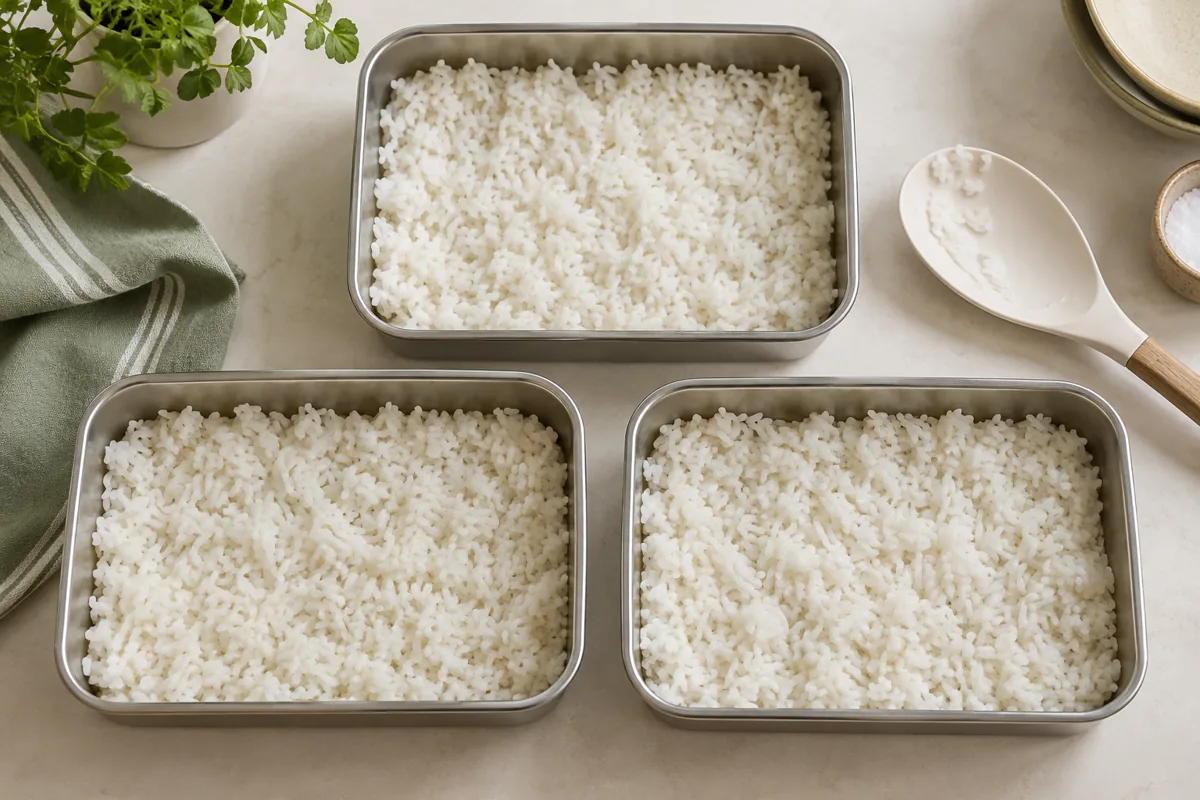
- Divide it. Transfer soup, curry, rice or pasta into several clean, shallow containers. As a practical home-kitchen guide, keep the food layer no deeper than 2 inches (5 cm); this is the depth of the food, not the height of the container. Refrigerate promptly—depth alone does not guarantee safe cooling. [8]
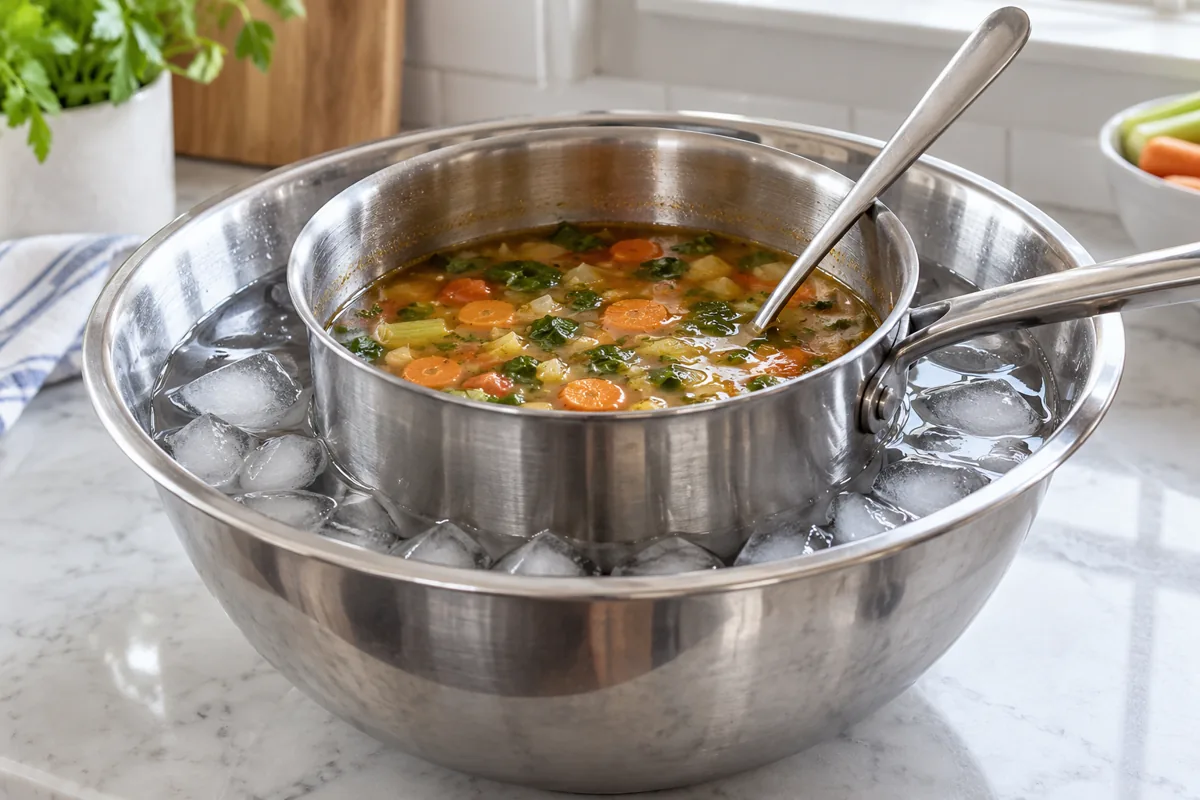
- Use an ice-water bath if helpful. Set a metal pot of soup inside a larger bowl of ice water. Keep the water below the rim and stir the soup with a clean utensil. Then portion and refrigerate promptly.
- Leave space in the fridge. Don't pack containers tightly together; cold air needs to circulate.
- Protect, then seal. Loosely cover food during cooling and keep it above and away from raw meat or other sources of contamination. Once chilled, close lids fully and label with the cooking date.
Choose a suitable container. Clean, shallow metal containers are a practical option for hot leftovers. With glass or plastic, follow the manufacturer’s temperature limits. Even heat-resistant glass can break with sudden temperature changes: Pyrex instructs users to let hot glassware cool before refrigeration. Transfer the food to suitable shallow containers instead of leaving a hot glass dish of food on the counter to cool. [9]
An ice bath is an optional cooling method—not extra time on the counter. These techniques are supported by [3] and [4]. The FDA document covers food service; its longer monitored cooling schedule is not permission to leave household leftovers out for six hours.
What changes in hot weather?
In India or any hot climate, use the one-hour limit when food is exposed to air temperatures above 90°F/32°C. This article uses U.S. consumer guidance; the shorter limit depends on the actual temperature, not the country. [1]
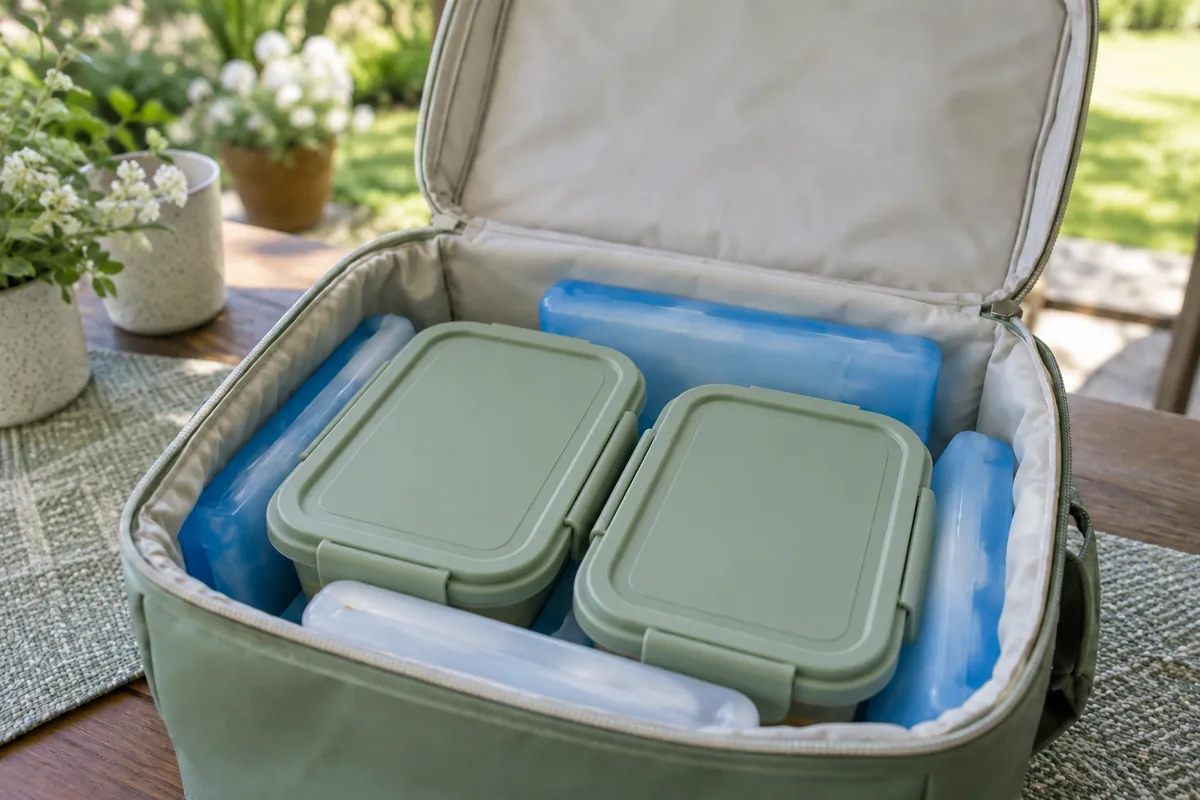
Portion large batches of biryani, dal and curry promptly. For transport, pack already-chilled food in an insulated cooler with ice packs and keep it at 40°F/4°C or below. A lunch bag alone does not establish that food stayed cold. [5]
If the fridge loses power, follow our power-outage food-safety guide.
How long will refrigerated leftovers last?
For a common homemade example, see cooked dal storage, freezing and reheating guidance.
For many leftovers—including soups, stews, cooked meat and poultry—the recommended refrigerator window is 3–4 days, provided they were handled safely and kept at 40°F/4°C or below. Freeze portions sooner if you won't finish them. [6]
Check the specific food: our guides cover cooked pasta, curd rice and cooked chicken. Follow stricter package instructions where applicable.
Softer texture or condensation is a quality issue; it isn't a reason to delay refrigeration. Conversely, mold or a suspicious smell means discard—but a normal smell cannot prove safety. Never taste leftovers to check. [7]
Quick questions
Will hot food damage the refrigerator?
FDA says hot food will not harm your refrigerator. The practical concern is cooling the food quickly: divide large amounts into shallow containers, leave space for cold air to circulate, and use an appliance thermometer to check that the fridge stays at 40°F/4°C or below. [5]
Can I reheat food that sat out overnight?
No—discard it. Reheating does not reliably reverse every hazard from improper storage; some bacterial toxins survive cooking. [10] The 165°F/74°C reheating target is for properly stored leftovers, not a way to rescue food left out too long. [1] · [4]
Can I freeze leftovers instead?
Yes, if they were handled safely. Portion and chill promptly, then freeze. Freezing cannot rescue food already mishandled; freezer storage times mainly describe quality when food stays continuously frozen at 0°F/−18°C. [6]
Sources and approach
This guide uses U.S. household guidance from CDC, FDA, USDA and FoodSafety.gov, plus Mississippi State University Extension’s practical food-depth advice and the container manufacturer’s care instructions. Unknown storage history is treated conservatively. All four images are AI-generated editorial illustrations, not official agency photographs.
- CDC — Preventing Food Poisoning.
- FoodSafety.gov — 4 Steps to Food Safety.
- FDA — Cooling Cooked Time/Temperature Control for Safety Foods (food-employee guidance, PDF).
- USDA FSIS — Leftovers and Food Safety.
- FDA — Tips to Chill Food.
- FoodSafety.gov — Cold Food Storage Chart.
- FDA — Are You Storing Food Safely?.
- Mississippi State University Extension — Cooling and Refrigerating Food.
- Pyrex — Product Warranties, Safety and Usage.
- CDC — About Staph Food Poisoning.
Sources checked September 23, 2026. Follow stricter local, package or appliance instructions.