Quick answer
Refrigerate Thanksgiving leftovers within 2 hours, or within 1 hour when the surrounding air is above 32°C (90°F). Most cooked turkey, stuffing, casseroles, and other leftovers have a 3–4-day refrigerator safety limit, but the FDA gives homemade gravy and meat broth a shorter 1–2-day window. Freeze portions you will not use soon. [2] [4] [5]
The meal may be over, but the storage clock starts while people are still serving themselves. Treat the table, packing, and drive home as part of the same clock.
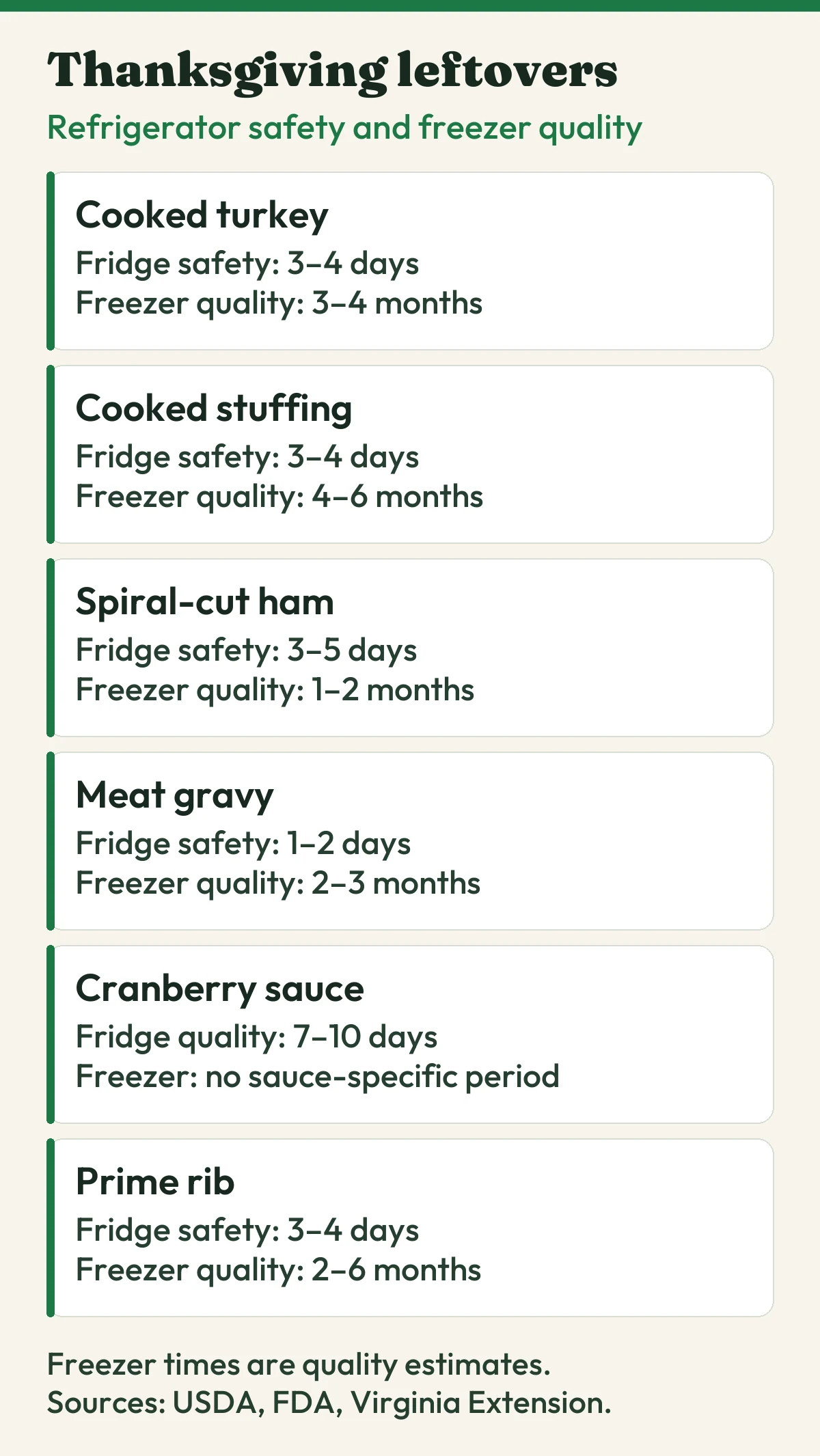
Thanksgiving leftovers storage chart
| Dish | Refrigerator guidance | Freezer guidance | Next action |
|---|---|---|---|
| Cooked turkey | 3–4 days — safety limit at 4°C (40°F) or below | 3–4 months — site quality target; the federal range is broader | Carve and portion promptly |
| Cooked stuffing or dressing | 3–4 days — safety limit | 4–6 months — quality estimate from Virginia Cooperative Extension | Store separately in a shallow container |
| Spiral-cut or sliced cooked ham | 3–5 days — safety limit | 1–2 months — quality estimate | Follow the pack if stricter |
| Homemade meat gravy | 1–2 days — safety limit | 2–3 months — quality estimate | Chill promptly |
| Homemade cranberry sauce | 7–10 days — quality estimate when refrigerated | No sauce-specific freezer period assigned | Keep the preparation date |
| Cooked prime rib or roast beef | 3–4 days — safety limit | 2–6 months — quality range | Wrap portions well |
The refrigerator entries are safety limits unless labelled as a quality estimate. Freezer durations describe best quality, not a moment when continuously frozen food becomes unsafe. FoodSafety.gov says frozen food held continuously at −18°C (0°F) or below can remain safe indefinitely, although texture and flavor decline. The current cooked-stuffing reference uses Virginia Cooperative Extension’s 4–6-month quality range; this hub keeps that source-specific range rather than the older one-month row found in some general tables. [1] [8]
Why one holiday meal has several clocks
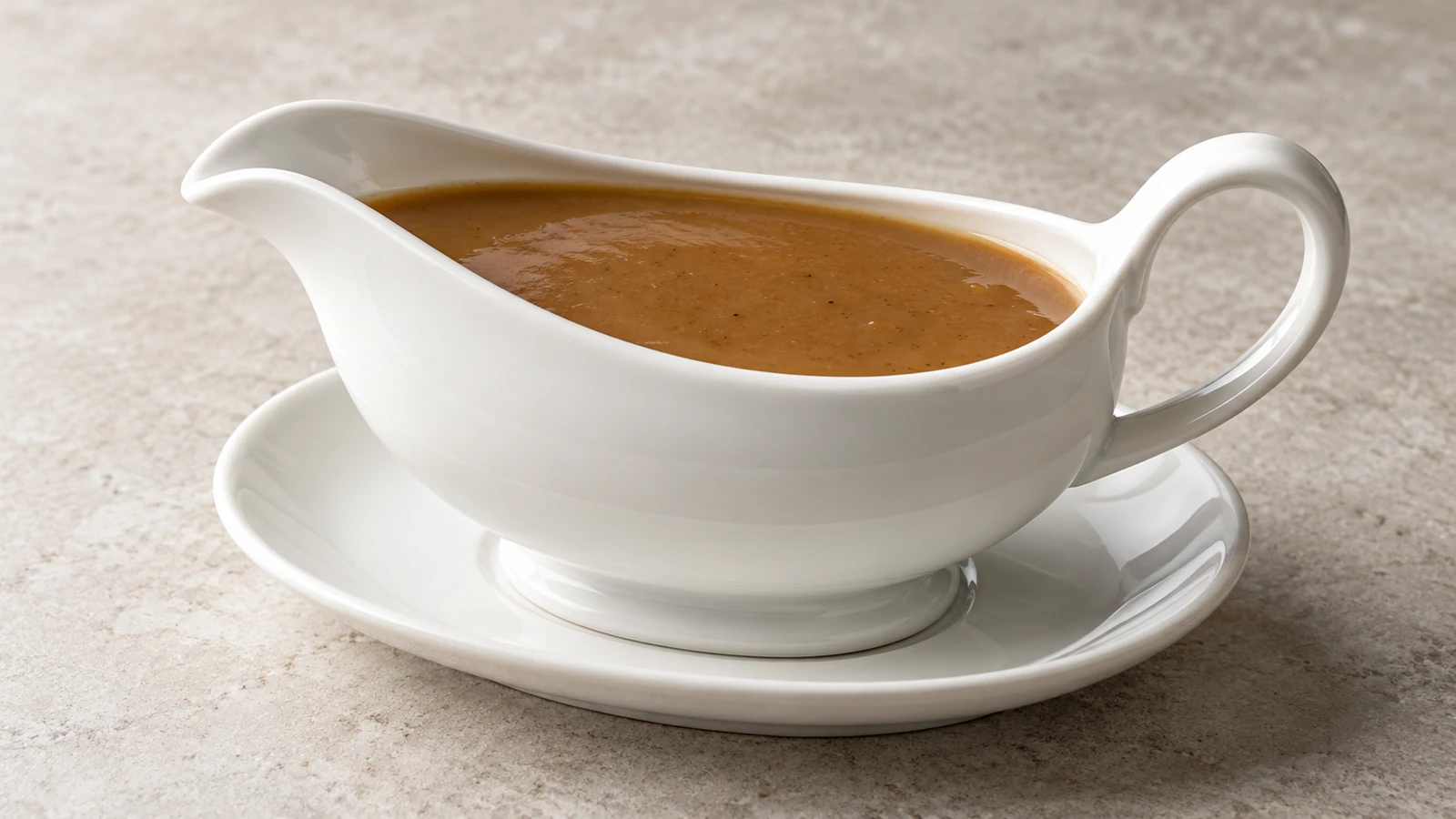
Turkey and stuffing fit the general cooked-leftover guidance when they were cooked and chilled safely. Gravy is different in this chart because the FDA’s storage table gives gravy and meat broth 1–2 days in the refrigerator. That dish-specific number is the conservative choice for homemade gravy, even though other cooked leftovers use 3–4 days. [5]
Cranberry sauce is another separate case. FoodKeeper’s homemade entry is a 7–10-day quality estimate, not a promise that every recipe or batch is safe for that long. A recipe containing fresh dairy, raw egg, or other perishable additions needs its own storage instructions. [6]
Cool the food before the clock runs out
- Separate dense foods. Carve turkey off the bones and remove stuffing from the cavity. Divide gravy, casseroles, and mashed foods into clean, shallow containers rather than leaving a large pot or whole bird to cool on the counter.
- Refrigerate or freeze promptly. FoodSafety.gov says hot food can go directly into the refrigerator when portioned for quick cooling. Leave space around containers so cold air can circulate, and keep lids closed once the food is chilled. [2] [3]
- Label the preparation date. A serving dish does not get a new start time when you transfer leftovers to it. After cooking, count cooling, serving, packing, and travel time together whenever food is outside safe hot or cold holding. Time under controlled cooking or safe holding is not part of this room-temperature clock.
If the food sat out beyond the applicable limit, do not try to reset the clock by refrigerating, freezing, or reheating it. Normal smell and appearance cannot prove that it is safe, and you should never taste food to test it. [4]
Reheat and freeze only safely handled portions
Reheat refrigerated or frozen leftovers to 74°C (165°F) throughout. Cover and rotate food in a microwave, check several spots with a thermometer, and bring sauces, soups, and gravy to a rolling boil. Reheating is for food that stayed within its storage limits; it is not a repair for food left out too long. [3] [4]
Freeze portions while they are still inside the refrigerator window. Use freezer-safe packaging, remove excess air from solid-food packages, and mark the freezing date. If you will not use turkey or stuffing by day three, freezing it earlier is simpler than hoping the fourth day will be convenient.
Plan the first leftovers meal
Start with the foods that have the shortest or most specific window. Homemade gravy belongs at the front of the queue because the FDA chart gives it 1–2 refrigerated days. If you made gravy on Thursday, plan it for Friday or Saturday, or freeze it promptly while the storage history is known.
Turkey and stuffing can share a Friday meal when they were portioned and chilled promptly. Keep stuffing separate from the carcass and from raw-food juices. A clean container and serving utensil reduce the chance that a ready-to-eat portion picks up contamination while you assemble sandwiches or a casserole.
Ham’s 3–5-day guidance depends on the form. The FoodSafety.gov table separates store-wrapped whole ham from slices, halves, and spiral cuts, so do not use the longest whole-ham number for a sliced holiday portion. Follow a package instruction that is shorter than the category table.
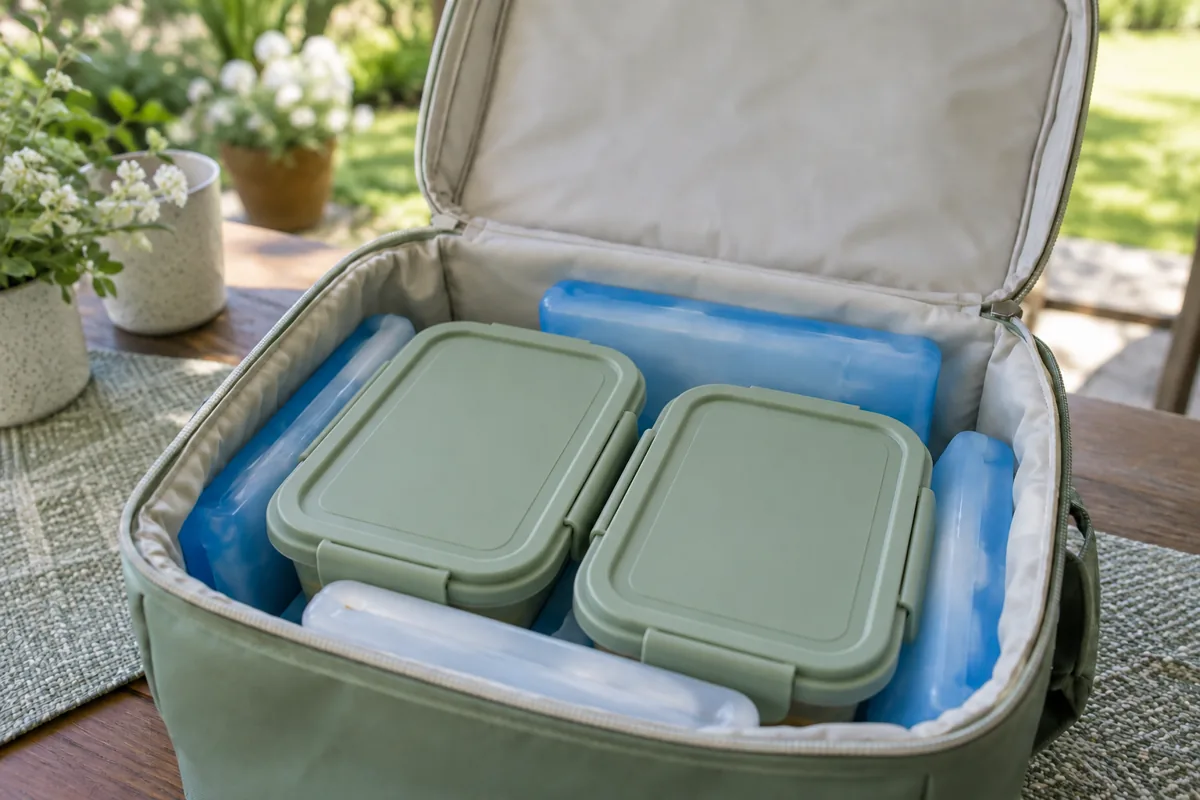
The same planning rule helps with a guest’s takeaway box. Pack already-chilled food in an insulated cooler with enough ice to keep it at 4°C (40°F) or below. A short drive is not a temperature measurement, and a container that feels cool does not prove the food stayed cold. If the time or temperature history is unknown, discard it instead of trying to recover it later.
FAQs
Can I keep Thanksgiving leftovers until next weekend?
Not in the refrigerator under the US baseline. Use the dish-specific table, and freeze portions before their refrigerator safety limit. FoodSafety.gov’s general guidance is 3–4 days for cooked leftovers. [1]
Does reheating restart the leftover clock?
No. Serving and cooling time still count. Reheat safely handled food to 74°C (165°F), then refrigerate any remaining portion promptly; do not use heat to rescue food that exceeded its unrefrigerated limit. [2]
Why does gravy have a shorter refrigerator window?
The FDA’s refrigerator chart gives gravy and meat broth a 1–2-day safety limit. Follow that dish-specific guidance for homemade meat gravy instead of automatically applying the general 3–4-day leftover range. [5]
Can I freeze cooked stuffing and turkey?
Yes, when they were cooked, chilled, and held safely. Freeze them before the refrigerator window ends, package them well, and reheat to 74°C (165°F) later. Discard food with an unsafe or uncertain storage history. [3]
Bottom line
Write the preparation date on every container now. Keep the first portions for the next few days, freeze the rest before the limit, and discard any dish whose time or temperature history you cannot establish.
Search another food in the WillItExpire directory
Sources
- FoodSafety.gov — Cold Food Storage Chart
- FoodSafety.gov — 4 Steps to Food Safety
- FoodSafety.gov — Thanksgiving Leftovers for Safe Keeping
- FDA — Food Safety Tips for Healthy Holidays
- FDA — Refrigerator and Freezer Storage Chart
- FoodSafety.gov / USDA FoodKeeper data
- USDA FSIS — Stuffing and Food Safety
- Virginia Cooperative Extension — Food Storage Guidelines for Consumers
This guide uses US household food-safety guidance. Follow stricter local, package, or recipe instructions. General information is not medical advice. When storage history is uncertain, discard the food.