Quick answer
Use homemade meat or poultry gravy within 1–2 days in a refrigerator at 40°F (4°C) or below, or freeze it promptly. The FDA’s storage chart gives gravy and meat broth 2–3 months in the freezer for quality. These times assume safe preparation and prompt chilling; they cannot rescue gravy that sat out too long. FDA storage chart
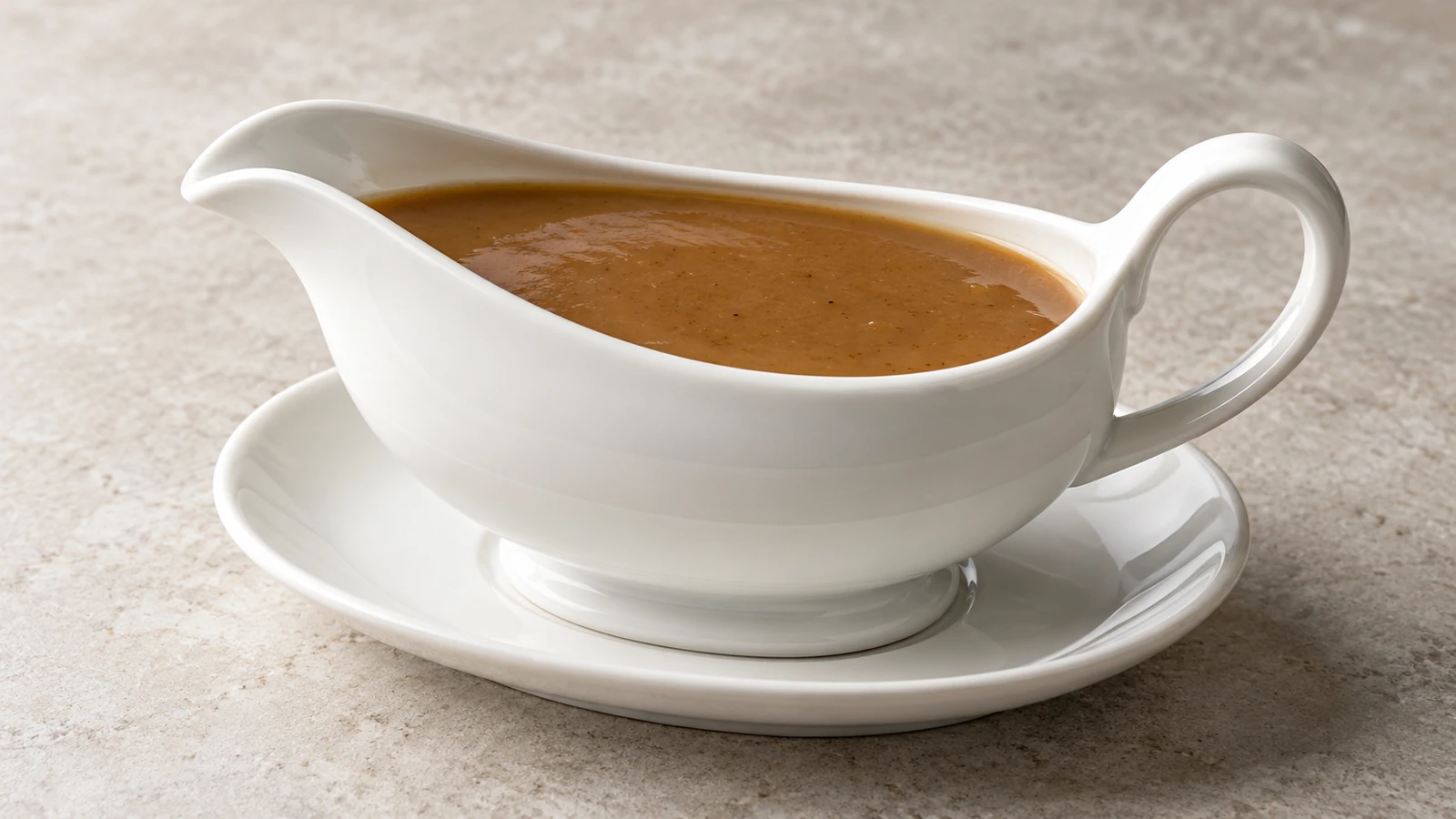
The gravy boat is easy to overlook while clearing a holiday table. Decide what you want to save before it becomes the last dish waiting beside the sink.
Storage times by condition
| Gravy’s condition | Temperature | What to do | What the number means |
|---|---|---|---|
| Freshly cooked, promptly refrigerated | 40°F (4°C) or below | Use or freeze within 1–2 days | Conservative FDA gravy-specific refrigerated guidance |
| Safely handled, continuously frozen | 0°F (−18°C) or below | Aim to use within 2–3 months | Quality target, not a frozen-food safety deadline |
| Sitting out without temperature control | Room temperature | Refrigerate within 2 hours; discard if left longer | Handling limit, not extra storage time |
| Sitting out in hot conditions | Above 90°F (32°C) | Refrigerate within 1 hour; discard if left longer | Shorter hot-weather handling limit |
| Being kept hot for serving | 140°F (60°C) or above | Verify the food’s temperature | Hot holding, not room-temperature storage |
Sources: FDA storage chart, FDA safe handling, and FoodSafety.gov serving guidance.
You may have seen the usual 3–4-day advice for leftovers. FDA uses that range in its holiday guidance, but its separate chart gives gravy a shorter window. We use the shorter, gravy-specific recommendation here. FDA holiday guidance
Cool it promptly, without waiting for room temperature
Divide the gravy into smaller, shallow containers rather than storing a large potful. Put it in the refrigerator promptly. FDA says hot food can go into the refrigerator; leaving it on the counter until completely cold is unnecessary. Leave room for cold air to circulate around the containers. FDA refrigerator guidance
Label each container with the cooking date. If you have enough for three later meals, make three portions now. That makes the next decision straightforward: keep the portion you will use soon and freeze the others, instead of moving one large container in and out of the refrigerator.
Keep the original cooking date if you transfer the gravy to another container.
Made ahead, left on the table, or taken home?
You made it the day before dinner. Count that advance preparation in your plan. Do not begin a new 1–2-day period when the guests leave. Gravy made a day ahead already has a day of storage behind it.
The gravy boat stayed out all afternoon. If it was not kept at a verified safe hot or cold temperature and exceeded the table’s limit, discard it. A warm-looking gravy boat is not a thermometer. For extended service, use equipment that actually keeps the gravy at 140°F or higher. FoodSafety.gov
You are taking leftovers home on a hot day. Include the time spent packing, serving, and traveling when assessing unrefrigerated exposure. Use a cooler that keeps the food cold rather than assuming a short drive is the only time that matters. Above 90°F, apply the one-hour limit. FDA safe handling
Freeze for later, not to fix bad storage
Freeze portions you will not use within the refrigerated window. Use suitable sealed containers, and mark the preparation and freezing dates. The 2–3-month target concerns quality: properly handled food held continuously at 0°F can remain safe beyond a freezer quality recommendation. Freezing does not kill most bacteria or undo earlier unsafe handling. FDA freezer guidance
Thaw in the refrigerator, not on the counter. When reheating, bring gravy to a rolling boil. Stir so the contents heat evenly, and reheat only the amount you intend to serve. FDA holiday guidance
When to throw gravy away
Discard gravy with mold or a suspicious smell or appearance, and discard it when its storage history is unsafe or uncertain. Do not taste it to investigate. Normal smell and appearance cannot establish safety. FDA storage guidance
FAQs
Can boiling save gravy left out overnight?
No. Reheating is not a repair for unsafe storage. FDA explains that some organisms can produce toxins that survive cooking. Discard the gravy. FDA refrigerator guidance
Does this cover an unopened jar or dry gravy mix?
No. Follow the product label for an unopened jar or dry mix. This guide covers gravy you have made at home.
Is gravy automatically unsafe after three months frozen?
No. Three months is the upper end of this quality target, not an automatic discard date. Safe handling before freezing and continuous freezer temperature still matter. FDA storage chart
Sources
This article uses US food-safety and university extension guidance. Follow stricter local advice and product instructions. Sources checked October 23, 2026. How we research our guides.