Quick answer
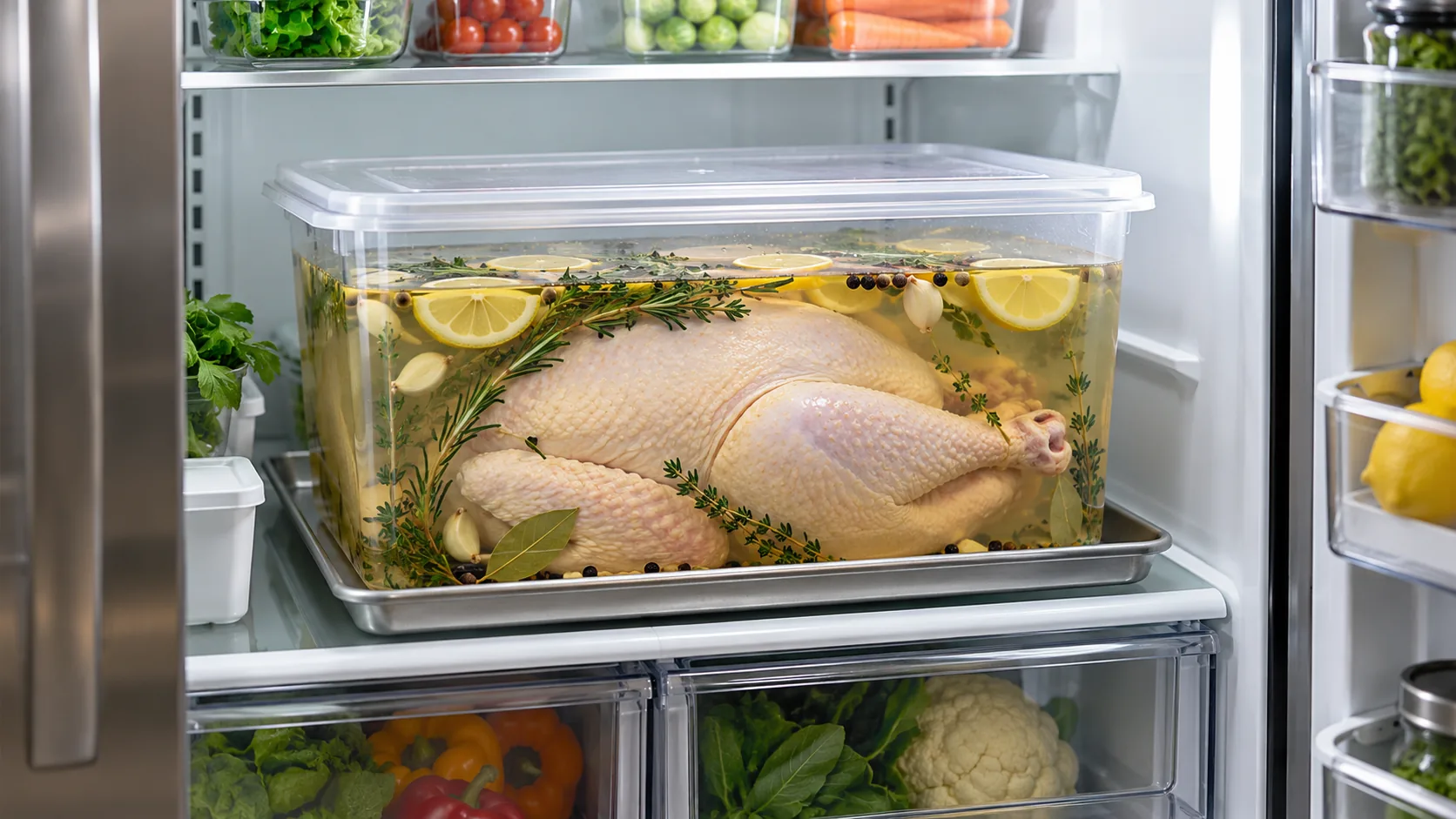
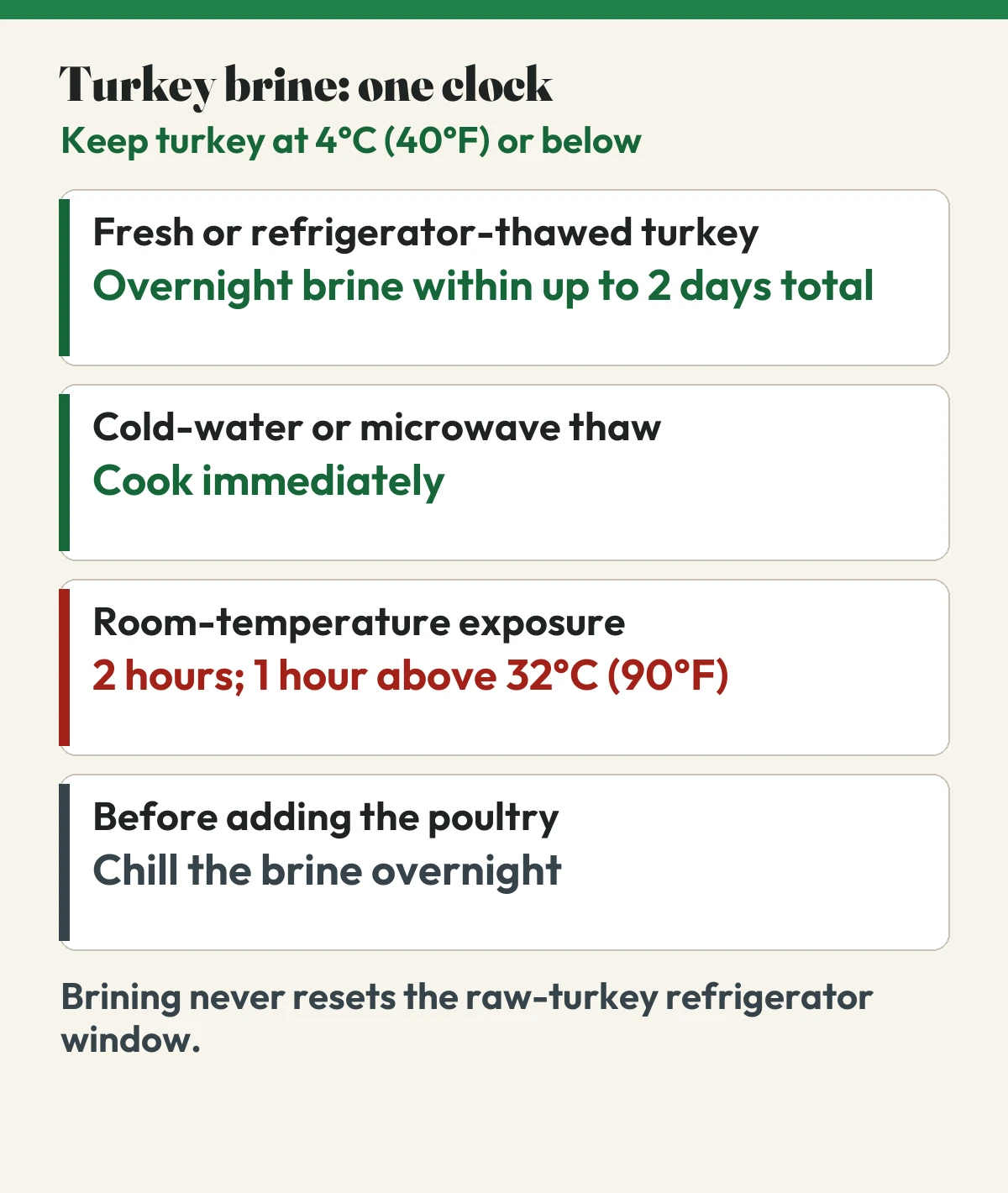
USDA FSIS says to refrigerate the brining solution overnight before adding poultry, then keep the whole bird refrigerated in the brine for at least overnight. The same FSIS guidance says poultry may remain refrigerated for up to 2 days after thawing or purchase when fresh.[1] Use the shortest recipe direction, keep the turkey at 4°C (40°F) or below, and count brining inside that 1–2-day raw-turkey window. Brining does not give you two new days.
The turkey is thawed, the brine is cold, and dinner is still a day away. The important detail is that the turkey’s refrigerator time already started: brine is part of the raw-poultry window, not a reset button.
Keep raw turkey refrigerated. If it is left out, refrigerate within 2 hours, or 1 hour above 32°C (90°F); discard it if it exceeded the limit or its storage history is uncertain. Never taste it to judge safety.[3]
Turkey brine timing by condition
| Turkey state | Storage or method | Time and evidence label | Next action |
|---|---|---|---|
| Fresh or fully thawed in the refrigerator | Covered food-safe container, brine at 4°C (40°F) or below | Brine at least overnight — FSIS process guidance[1] | Cook while the total fresh/thawed refrigerator period remains within 2 days |
| Fresh or refrigerator-thawed bird | Refrigerator at 4°C (40°F) or below, brining included | Up to 2 days after purchase or thawing — FSIS safety limit[1] | Use the brine time as part of this same clock; do not restart it when brine is removed |
| Still frozen | Move from freezer to refrigerator; thaw fully | No brining period yet — method requirement[1][2] | Thaw first; plan the brine inside the post-thaw window |
| Thawed in cold water or microwave | Approved rapid-thaw method | Cook immediately after thawing — FSIS handling guidance[5] | Cook immediately; do not move it to an overnight brine |
| Turkey or turkey in brine left out | Room temperature | No more than 2 hours, or 1 hour above 32°C (90°F) — household safety limit[3] | Discard if the exposure limit or temperature history is uncertain |
The “overnight” wording is a process recommendation, not a universal permission to soak for 48 hours. Salt concentration, turkey size, recipe and texture goals vary. FSIS gives the refrigerator boundary for the poultry; a recipe can require a shorter brine for quality.
Why the post-thaw clock matters
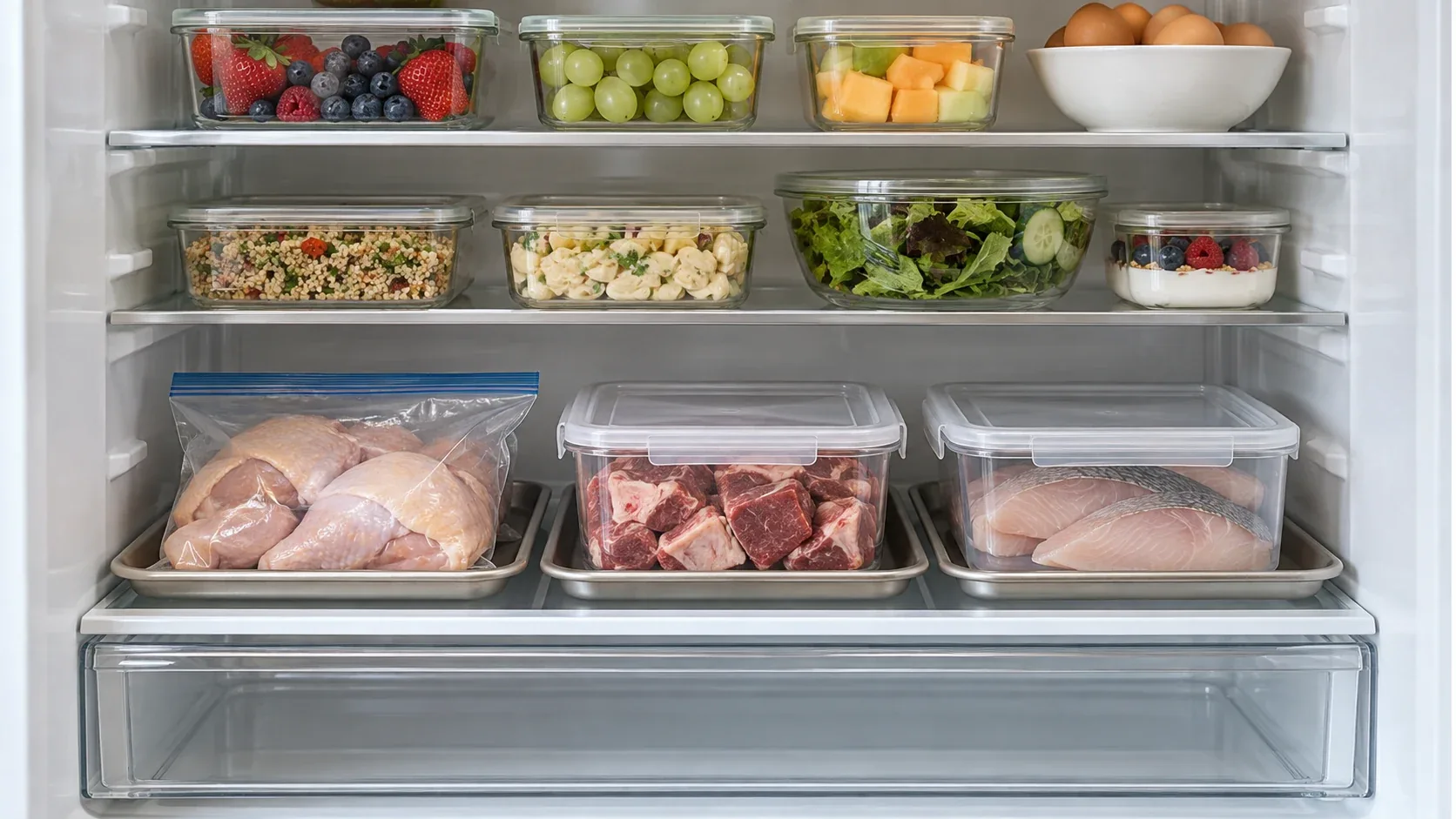
FSIS says a whole turkey takes about 24 hours per 4–5 pounds to thaw in the refrigerator, then can stay refrigerated for 1–2 additional days before cooking.[2] That allowance is tied to the bird being thawed, not to the moment it enters brine. If the turkey finished thawing Monday morning, an overnight brine Monday night uses part of the same allowance.
Brine also does not make a turkey safer to hold at room temperature. FoodSafety.gov says the safest way to thaw or marinate meat and poultry is in the refrigerator, and the refrigerator should be 4°C (40°F) or below.[3] A cooler or cold garage is not a controlled substitute unless you can verify the food temperature and protect it from contamination.
How to brine it safely
- Thaw in the refrigerator. Keep the wrapped turkey on a tray that can catch leaks. Do not start a wet brine while the center is still frozen.
- Prepare and chill the brine. FSIS advises putting the solution in a food-grade plastic, stainless-steel or glass container, covering it and refrigerating it overnight before adding the poultry.[1]
- Submerge and cover. Keep the turkey completely under the cold liquid in the refrigerator. Use a container that will not leak and keep raw juices away from ready-to-eat food.
- Write down the thawing or purchase date. Count the brine hours from that existing start point. Removing the bird from brine does not create a fresh allowance.
- Discard used brine and cook. FSIS says to discard the brine after use. Cook immediately after stuffing, and use a thermometer to verify poultry reaches 74°C (165°F).[1][4]
Plan the brine around the cooking day
Before you make the solution, check when the bird finished thawing or when you bought it fresh. Write down that time and work backward from the cooking time. If an overnight soak would push the bird beyond the refrigerator window, skip the soak and cook within the remaining safe window instead. A longer soak does not make a bird that has been held too long safe.
Make room for a covered container on a refrigerator shelf before preparing the brine. Keep the raw bird and its liquid below ready-to-eat food, and use a tray to contain leaks. Check that the refrigerator stays at 4°C (40°F) or below; a container’s lid keeps spills contained but cannot keep the contents cold by itself.[3]
Handle raw turkey with clean utensils, then wash your hands and the surfaces that touched raw juices. FoodSafety.gov advises against washing raw poultry because splashes can spread germs.[3] Discard the used brine; do not pour it over cooked food or reuse it for another bird.[1]
If the turkey or turkey in brine sits out, count the whole time spent preparing and handling it. Refrigerate within two hours, or within one hour when the surrounding air is above 32°C (90°F). Discard a bird that exceeded the limit or has an unknown storage history. Never taste it to decide whether it is safe.[3]
FAQs
Can I brine a turkey for two full days?
That is not a universal FSIS recommendation. FSIS says brine at least overnight and keep poultry no more than 2 days after it is thawed or purchased fresh. The two-day figure is the total raw-poultry refrigerator window, not a guaranteed brining duration.[1]
Does brining restart the turkey’s shelf life?
Can I brine a turkey on the counter if the brine is salty?
No. Salt does not replace temperature control. Keep the container refrigerated, and discard the turkey if it exceeded the room-temperature limit or its history cannot be established.[3]
What if I thawed the turkey in cold water?
Cook it immediately after thawing under FSIS guidance. Do not move it to an overnight brine. The same immediate-cooking instruction applies after microwave thawing.[5]
Bottom line
Check the thawing or purchase time before you add the brine. Keep the bird cold, use the recipe’s shorter brine direction, and schedule cooking before the single 1–2-day post-thaw refrigerator window runs out.
Sources
- USDA FSIS: How do you brine poultry? (refrigerate brine overnight, brine at least overnight, and keep poultry up to two days after thawing or purchase).
- USDA FSIS: How long can a thawed turkey remain in the refrigerator after thawing? (24 hours per 4–5 pounds and 1–2 days after thawing).
- FoodSafety.gov: 4 Steps to Food Safety (refrigeration, marinating in the refrigerator and 2-hour/1-hour limits).
- FoodSafety.gov: Turkey roasting charts (safe poultry cooking temperature).
- USDA FSIS: How do you thaw food safely? (cook immediately after cold-water or microwave thawing).
Times are U.S. household guidance. Follow a stricter package or recipe instruction. Brine duration is process guidance; the 1–2-day refrigerated post-thaw period is the cited raw-poultry safety limit. General information, not medical advice.