After making a few drinks, you may have most of a can of cream of coconut left. A cupboard-safe unopened can doesn’t tell you how to store those leftovers.
Quick answer: Sweetened cream of coconut can spoil. Refrigerate opened Coco López as its label directs. The Coco Reàl bottle label reviewed for this guide recommends refrigeration after opening for optimal freshness. Check your own package for an opened-use period: there isn’t one verified number of days that covers both products, every formulation and every country. [1][2]
This guide covers commercially made, sweetened cream of coconut for drinks and desserts. It does not cover unsweetened coconut cream, coconut milk, a solid creamed-coconut block or a homemade coconut-and-sugar mixture.
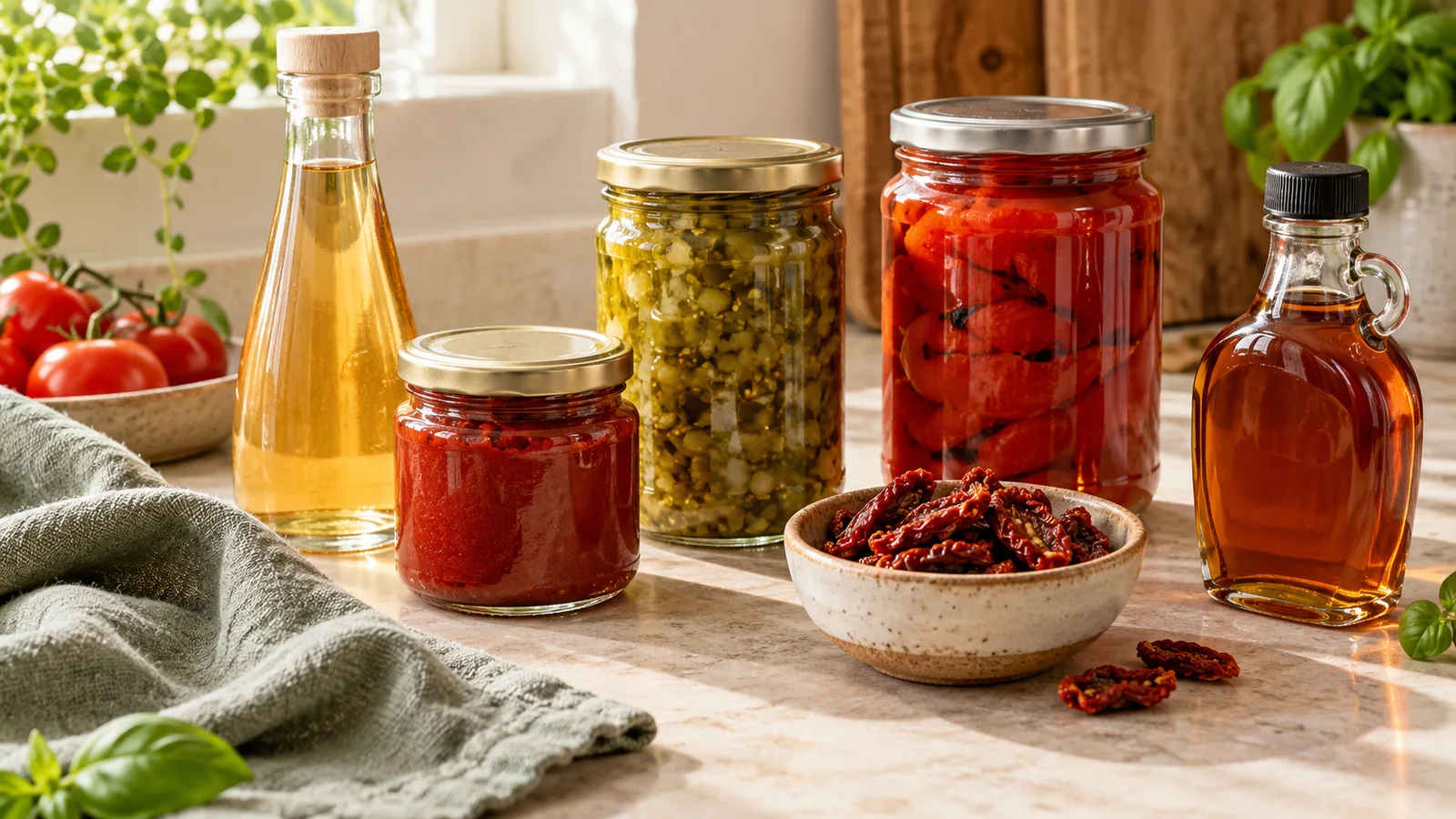
Start with the product, then the date
“Cream of coconut” and “coconut cream” are easy to mix up on a shopping list. In the products discussed here, coconut is combined with sugar and other ingredients. Reàl describes its product as a blend of cane sugar, coconut meat and coconut milk, formulated for minimal separation. The Coco López product specification also lists coconut and sugar, alongside emulsifiers and stabilizers. [3][4]
A refrigerated carton of unsweetened coconut cream and a sweetened cocktail ingredient are not interchangeable storage categories. Homemade versions also have different processing and formulations.
| What you have | What to do |
|---|---|
| Unopened commercial cream of coconut sold from an ordinary shelf | Follow its storage directions. Check the printed date wording and keep the intact package away from heat. |
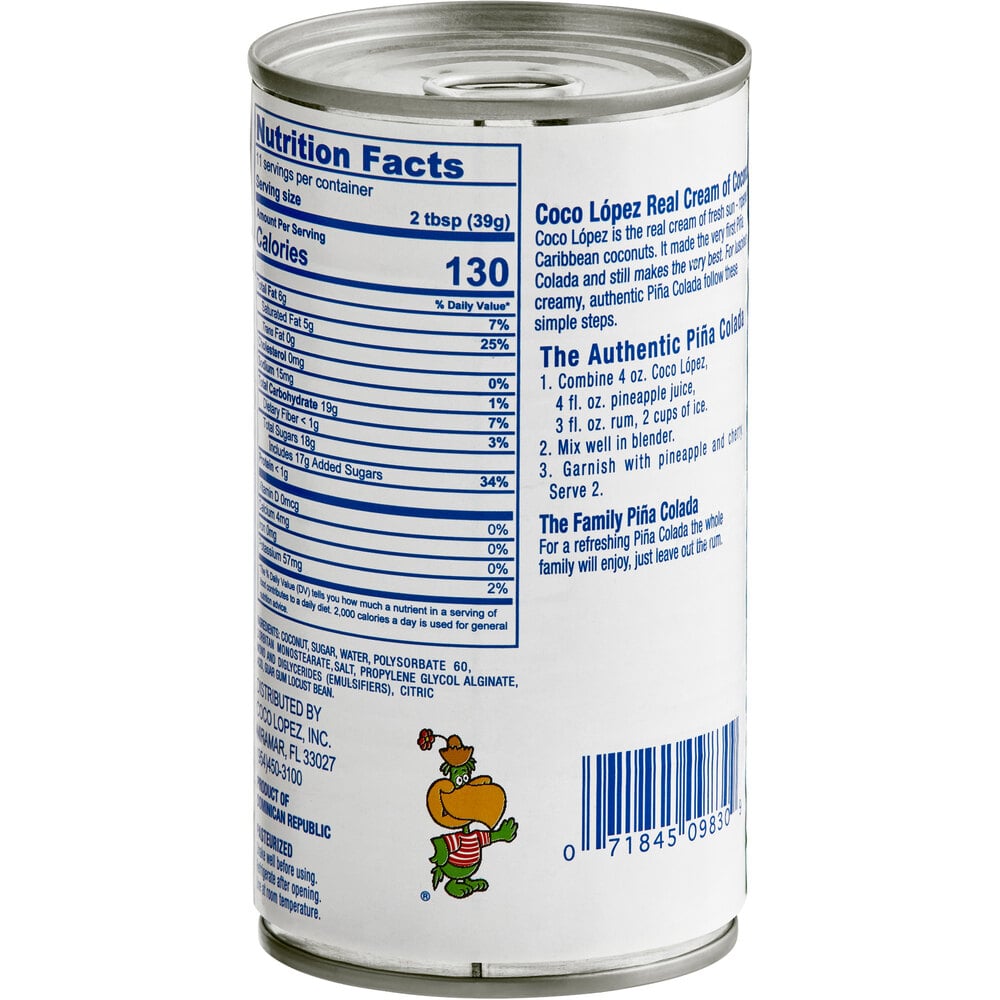
| Opened Coco López cream of coconut | Refrigerate. Follow any opened-use instruction on your can or supplied by its maker. |
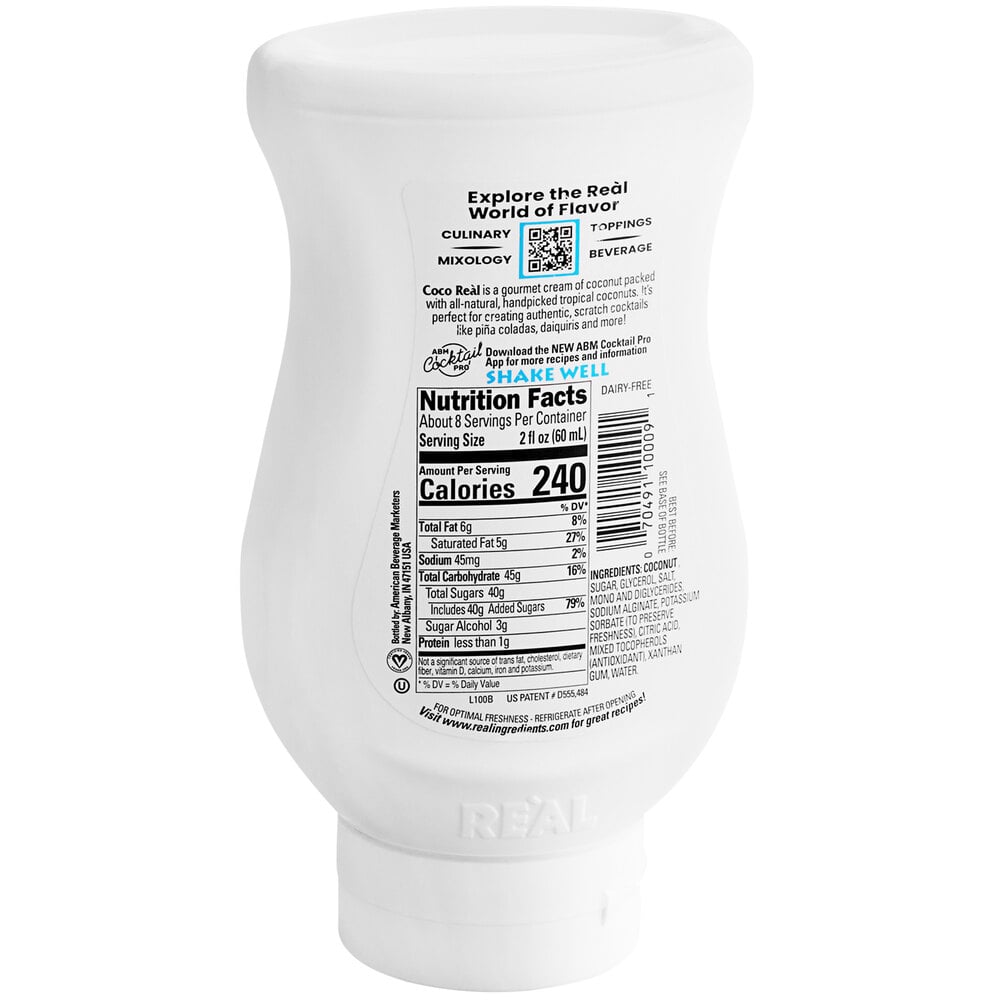
| Opened Coco Reàl cream of coconut | Follow your bottle. The photographed label reviewed here recommends refrigeration for freshness; it supplies no opened-day limit. |
| Cream of coconut already mixed into a drink or dessert | Follow the finished recipe’s storage needs. The original ingredient’s shelf life no longer answers the question. |
Sources: product labels and specifications, USDA canned-food guidance and the manufacturer’s fresh-fruit colada recipe. [1–4][5][7]
How long does it last after opening?
The most useful number is the one tied to your exact product. If the label says to finish it within a certain period after opening, write the opening date on the container and follow that instruction.
The Coco López and Coco Reàl label photographs checked for this article give storage directions but no number of days after opening. The product pages reviewed did not fill that gap. Without a matching manufacturer instruction, online estimates are not a reliable basis for deciding how long to keep yours. [1–4]
If you want to keep an opened package for another occasion, ask the manufacturer about its opened life, giving the product name, pack size and lot code. Keep the original label or take a photo before transferring the contents. Refrigerating the product is useful handling, but it doesn’t create a proven storage period where none has been supplied.
To reduce waste, choose a smaller pack or plan a recipe that uses most of the can.
Does the unopened date tell me it is safe?
A best-before date generally describes quality, while storage instructions still apply. A printed date cannot make a damaged or badly stored package safe. [7][8]
One supplier specification for Coco López lists an unopened shelf life. That is not an opened-storage allowance, and it does not mean you can start that entire period again on the day you buy the can. Use the date on the package rather than calculating a new deadline from a supplier catalogue. [4]
Do not use a bulging, leaking, deeply rusted or badly damaged can. USDA also warns that high storage temperatures harm canned goods. A cupboard away from the stove is a better place than a hot garage. [7]
How to store the leftovers
For a product that needs refrigeration, put it away promptly and keep your fridge at 4°C (40°F) or below. Use a clean, covered food-storage container for leftover canned contents. A squeeze bottle can remain in its original packaging with its lid properly closed. [2][6]
Label the opening date, not just the date you moved it into a jar. Use clean utensils, avoid touching the bottle opening to a used glass, and don’t pour unused drink mixture back into the original container. These simple habits help keep serving separate from storage. [9]
Do not add water to the storage bottle merely to make it pour more easily. Once you change the formulation, the manufacturer’s instructions for the undiluted product no longer establish how long your mixture will keep. If you need a thinner consistency for a recipe, measure out only that recipe’s portion.
What if it separates or becomes thick?
Thickness alone does not settle whether it is spoiled. Reàl’s manufacturer says its formula is designed to minimize separation, and both product labels instruct users to shake before use. Coco López also directs use at room temperature. [1–3]
Those are mixing instructions, not permission to leave a refrigerated product on the counter all day. Take out the amount you need and return the rest to storage. Follow the maker’s instructions for getting the portion ready to use.
Discard cream of coconut with mold, an unusual odor or other suspicious changes. Do not skim mold away and use the rest. Conversely, a normal smell and appearance cannot prove that an old or mishandled product is safe. Never taste a questionable batch to decide. [6][7]
Common questions
Can opened cream of coconut stay out overnight?
Not if its directions require refrigeration. US household guidance for foods needing refrigeration is a maximum of two hours at room temperature, or one hour above 32°C (90°F). Discard a refrigeration-required product left out overnight. This rule is not a reason to declare every properly formulated shelf-stable syrup perishable; follow the actual product’s directions. [9]
Can I freeze the rest?
Check the maker’s instructions before choosing freezing as a storage plan. The brand information checked here does not supply a freezer-quality period. A freezer recommendation for unsweetened coconut milk does not establish how long this sweetened product will retain its quality. Freezing does not kill all harmful germs and cannot fix unsafe handling that has already happened. [9]
Does a drink made with it keep as long as the bottle?
No. The manufacturer’s fresh-fruit colada recipe says to serve immediately and refrigerate leftovers. Fresh fruit, milk, eggs or other additions bring their own storage requirements. A shelf-stable ingredient does not make the finished drink or dessert shelf-stable. [5]
Is a forgotten opened container worth keeping?
If you can’t establish when it was opened or whether it was stored as directed, discard it. An opening-date label is a better tool for next time than a taste test this time. [7]
Related guides
Sources
- Coco López can label photograph, hosted by WebstaurantStore.
- Coco Reàl bottle label photograph, hosted by WebstaurantStore.
- Reàl Ingredients: Coco Reàl product description.
- Roland Foods: Coco López Cream of Coconut, SKU 71205.
- Coco López: Fresh Fruit Colada.
- FDA: Are You Storing Food Safely?.
- USDA: Kitchen Companion, shelf-stable food guidance, printed page 14, PDF page 16.
- University of Maine Extension: Understanding Food Product Dating Labels.
- FoodSafety.gov: Four Steps to Food Safety.
General US household guidance, not an assessment of your particular container. Follow the product’s storage directions and stricter local food-safety guidance. Sources checked November 4, 2026.
Sources checked 2026-11-04. Manufacturer advice applies to the named product; follow the instructions on your package. How we research our guides.