Best By vs. Use By vs. Expiration Date
What each food date really means, when the date is about safety, and how storage and opening the package change the answer.
“Best By” usually tells you about quality, not safety. For most ordinary U.S. foods, “Use By” is also the manufacturer’s peak-quality date; infant formula is the important federal exception and should never be used after its required Use By date. “Sell By” is for store inventory, while “Freeze By” tells you when to freeze for best quality. An “expiration date” on ordinary food has no single, universal federal meaning.
This is a U.S. food-label guide. Other countries—and now California—can assign different legal meanings to the same words. Follow the rule where the food is sold and any stricter package directions. Medicines, sunscreen and other non-food products have separate rules.
The labels at a glance
The phrase matters, but it is only the first part of the decision. Food type, whether the package is open, storage temperature and local law can matter more than the calendar date.
| Label | What it usually communicates | Is it a safety cutoff? | What to do |
|---|---|---|---|
| Best By / Best if Used By | Peak flavor, texture or overall quality. | Usually no. | After the date, check the food’s storage history, package condition and item-specific guidance. |
| Use By | The manufacturer’s last recommended date for peak quality. | Usually no under federal guidance. For infant formula, the date is required and the product must not be used after it. California now also uses it for safety dates on covered foods. | Identify the product and jurisdiction before deciding. |
| Sell By | Store inventory rotation. | No. | Do not treat it as the number of days you have at home. Use the food’s storage guidance. |
| Freeze By | When to freeze for best quality. | No. | Freeze while the food is still sound; freezing does not reverse earlier mishandling. |
| Expiration / Expires On | Meaning varies by product and jurisdiction. | Sometimes. | Do not assume. Follow regulated dates and clear discard instructions; otherwise verify the product’s rules. |
What does the date on your food say?
Start with the exact words, then check the food and how it was stored.
A printed date cannot make improperly stored perishable food safe. Storage history matters.
Check a specific food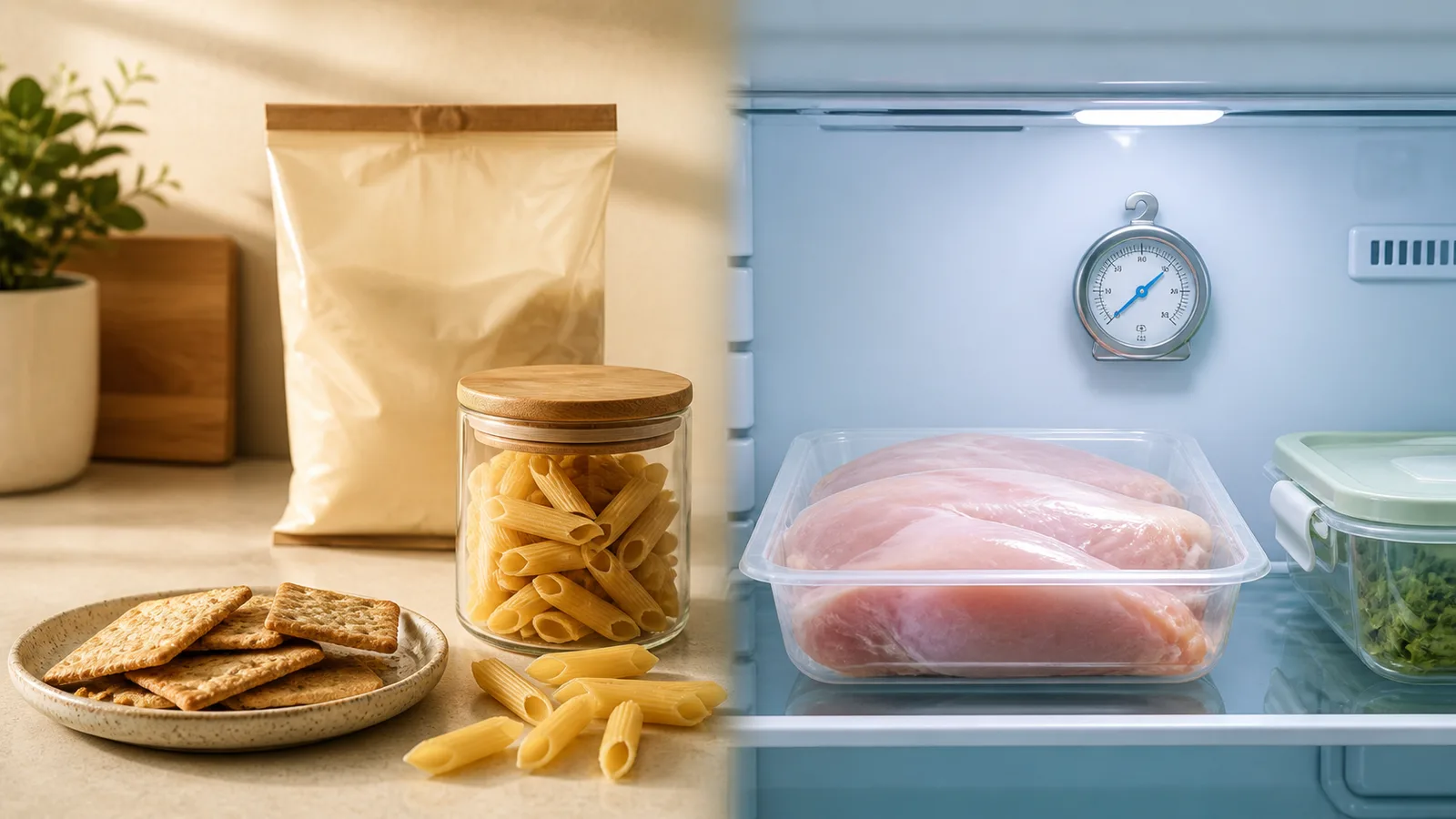
What does Best By mean?
“Best By,” “Best Before” and the federally recommended “Best if Used By” generally indicate when the manufacturer expects the food to be at its best quality. The USDA says this is not a purchase or safety date.[1]
A food does not suddenly become unsafe at midnight after its Best By date. A properly stored box of pasta and refrigerated deli meat still require very different decisions, however. The date cannot replace the storage limits for the specific food.
What does Use By mean?
For most foods under current U.S. federal guidance, “Use By” is the last date recommended while the product is at peak quality—not a universal safety deadline.[1] There are two important situations where that shorthand is not enough:
- Infant formula: FDA regulations require a Use By date on every container. Do not buy or use formula after that date; the declared nutrient amounts and acceptable quality are assured only through the date.[3]
- Covered food sold in California: for food manufactured on or after July 1, 2026, California uses “USE by” or “USE by or Freeze by” to communicate a safety date.[4]
Never apply the ordinary-food rule to infant formula. The formula date is required, and the FDA says not to use the product after it passes.
Sell By, Freeze By and expiration dates
Sell By
A Sell By date tells a retailer how long to display a product for inventory management. It is not a consumer safety date.[1] It also does not give every shopper the same number of days after purchase: the answer depends on the food, how cold it stayed, and when the package was opened.
Freeze By
A Freeze By date indicates when to freeze the food to preserve peak quality. It is not a safety date.[1] Food held continuously at 0°F / −18°C can remain safe indefinitely, although quality declines over time; freezing does not make food safe again if it was already mishandled.[2]
Expiration / Expires On
“Expiration date” sounds definitive, but on ordinary U.S. food it is not one nationally standardized phrase. FDA notes that manufacturers may use wording such as Sell By, Best By and Expires On at their discretion for quality-based dating.[5] Treat a clear “do not use after” direction as a discard instruction, and always follow regulated dates such as infant formula’s Use By date.
What changed in California in 2026?
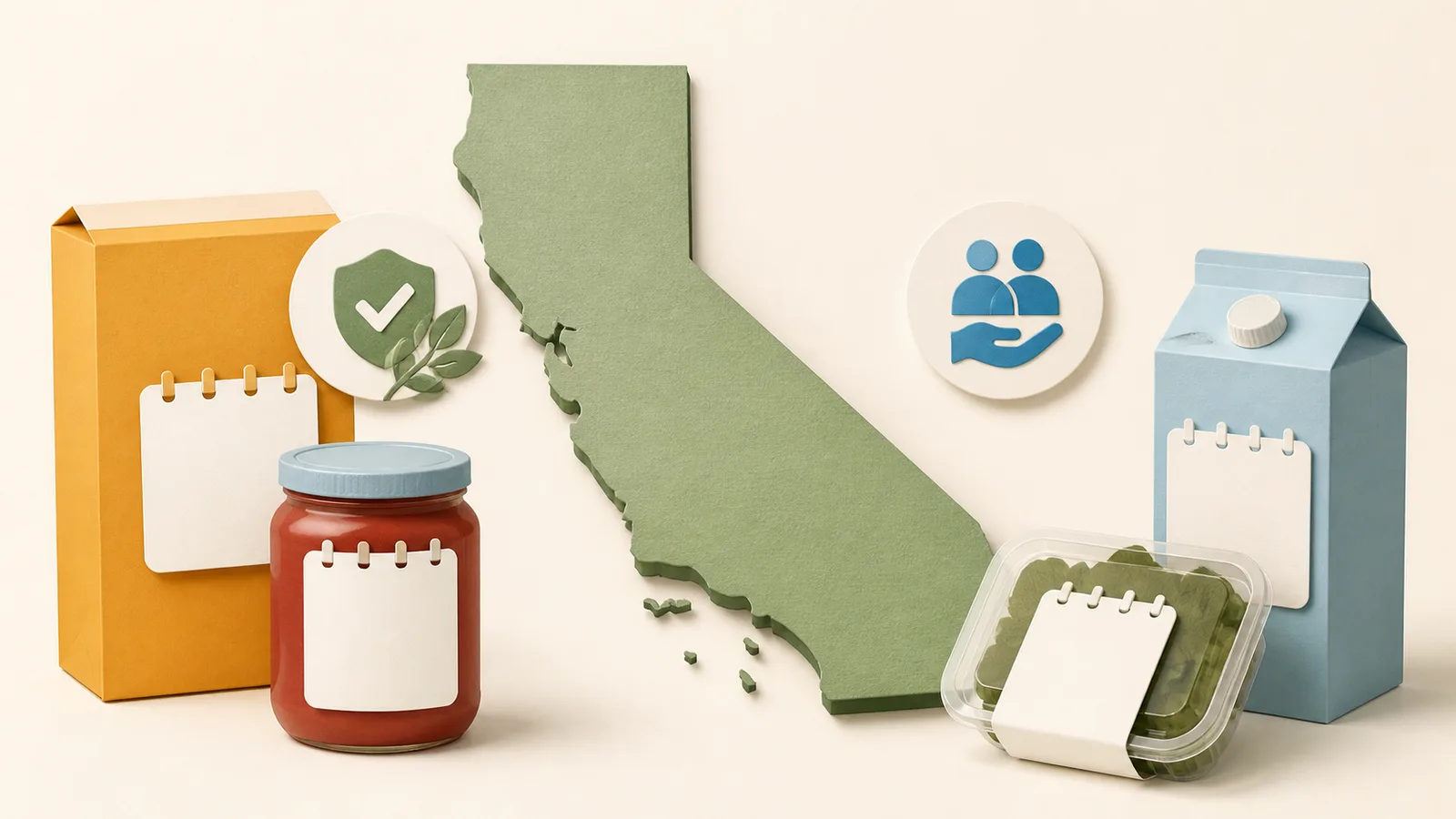
California standardized the wording, not a universal shelf life. The law tells labelers which phrases communicate quality and safety; it does not mean every food needs a date or that every product lasts the same amount of time.
California Assembly Bill 660 applies to covered food manufactured on or after July 1, 2026 and sold in the state. If a manufacturer, processor or retailer puts a quality or safety date on that food, the label must use:
- “BEST if Used by” or “BEST if Used or Frozen by” for quality;
- “USE by” or “USE by or Freeze by” for safety.
The law also prohibits a consumer-readable “Sell By” phrase on covered products. It does not require a date where another law does not already require one. Infant formula, eggs, pasteurized in-shell eggs, beer and other malt beverages are exempt from this section.[4] The rule is California law, not a new nationwide federal standard.
Can you eat food after the date?
Often, but there is no safe universal number of days after a Best By date. Shelf-stable food in an intact package, opened refrigerated food and raw poultry have different risks and storage windows. A printed quality date cannot tell you whether a perishable food sat warm in a car or whether an opened package has been in the refrigerator too long.
FDA advises keeping the refrigerator at or below 40°F / 4°C and the freezer at 0°F / −18°C. Refrigerated perishables should not sit at room temperature for more than two hours—or one hour when the air temperature is above 90°F / 32°C.[2] Those time-and-temperature rules matter even when the printed date is still in the future.
Opened vs. unopened changes the clock
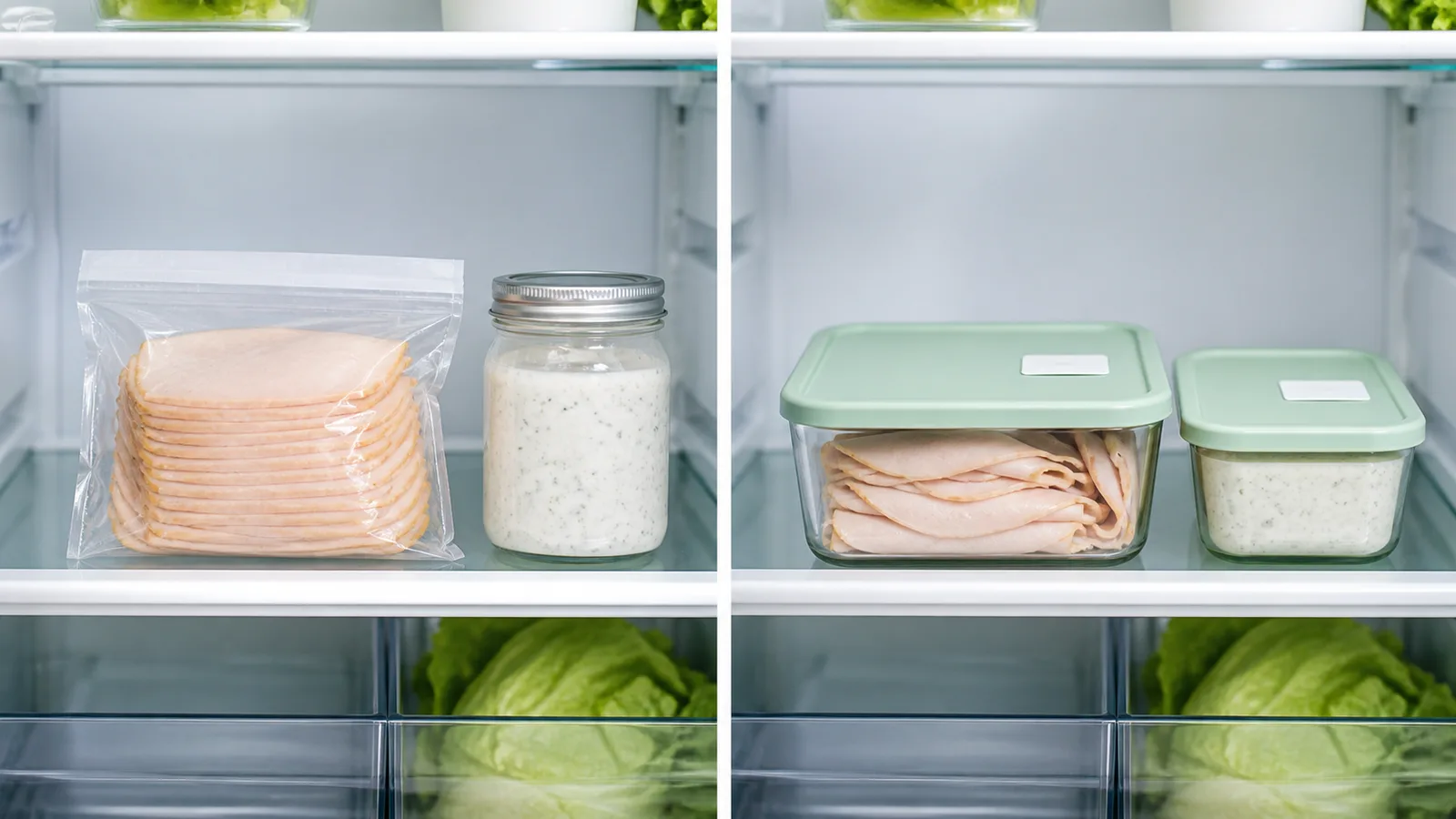
The printed date is usually based on the product in its original sealed package. Opening it introduces air, moisture and handling, and can shorten its useful life. Follow any “use within X days after opening” instruction and the storage guide for the opened food.
For example, the federal cold-storage chart gives different refrigerator windows for unopened and opened luncheon meat: two weeks unopened, but three to five days after opening or deli slicing.[6] The point is not to reuse those numbers for every food; it is to stop treating the original package date as the only clock.
How to decide what to do with past-date food
- Read the exact phrase and the jurisdiction. Best By, Sell By and Use By do not always mean the same thing. Follow a regulated safety date or explicit discard direction.
- Identify the food and package state. Is it shelf-stable or perishable? Opened or sealed? Raw or cooked? The answer determines which storage guidance applies.
- Reconstruct the storage history. If a perishable food spent too long above safe refrigeration temperatures—or you do not know—discard it regardless of the printed date.[2]
- Inspect the package and food. Discard leaking, swollen or badly damaged containers and food with mold or obvious spoilage. Do not taste questionable food to test it.[2]
- Check an item-specific source. Use WillItExpire’s food search, the USDA FoodKeeper, or the package manufacturer’s guidance rather than guessing a generic “days past date” allowance.
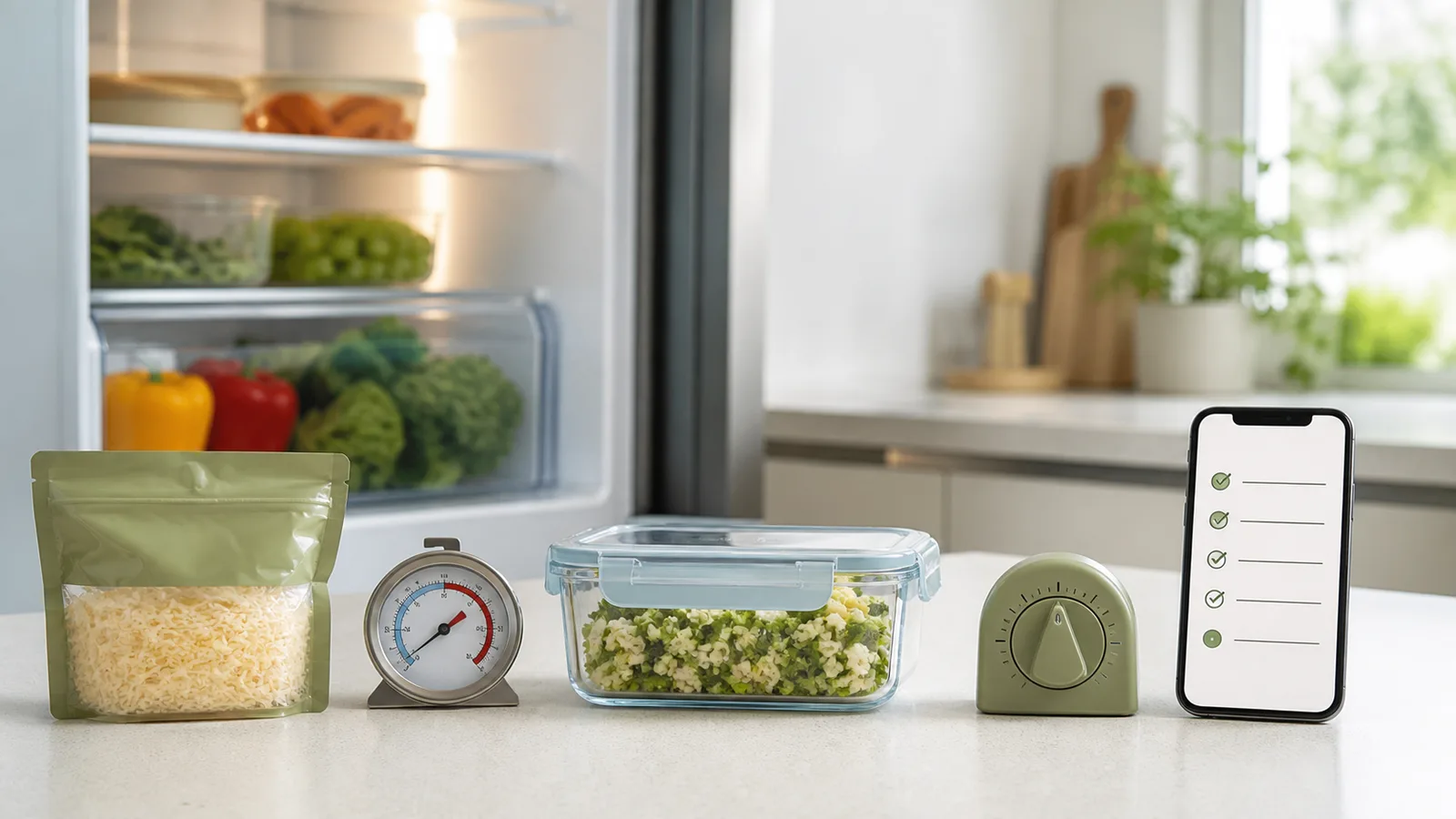
Appearance and smell can identify spoilage, but they cannot prove a mishandled perishable food is safe. FDA notes that pathogenic bacteria can cause illness even when food does not look, smell or taste spoiled.[2]
Common questions
Does Best By mean expired?
No. Under U.S. federal guidance, Best By or Best if Used By generally marks peak quality, not a safety deadline. The food still needs appropriate storage and item-specific evaluation.
Is Use By more serious than Best By?
It depends on the product and jurisdiction. For most ordinary U.S. food, Use By is generally about peak quality. It must be followed for infant formula, and California now reserves Use By for safety dates on covered foods.
How long after a Best By date is food safe?
There is no universal number. The food type, opened state, package condition and storage history determine which guidance applies.
Can food go bad before the printed date?
Yes. Package damage, improper refrigeration, too much time at room temperature or contamination can make food unsafe or spoiled before any printed date.
Should I trust the smell test?
Use smell and appearance to detect spoilage, but not to prove safety. Harmful pathogens may be present without an off odor or visible change.
Did the federal date-label rules change in 2026?
No nationwide standard equivalent to California AB 660 took effect. California’s rules apply to covered products sold in that state; the federal baseline remains different.
Bottom line
A printed date is one input, not the whole safety decision. Best By usually concerns quality, Sell By is for inventory, and Freeze By is about preserving quality. For most ordinary U.S. food, Use By also marks quality, but it is mandatory for infant formula and identifies safety dates on covered California foods. When the date is not a regulated cutoff, use the food type, opened state, storage history and item-specific guidance to decide.
Related WillItExpire guides
Sources
- USDA Food Safety and Inspection Service — Food Product Dating
- U.S. Food and Drug Administration — Are You Storing Food Safely?
- U.S. Food and Drug Administration — Questions & Answers for Consumers Concerning Infant Formula
- California Legislative Information — AB 660: food date-label requirements
- U.S. Food and Drug Administration — How to Cut Food Waste and Maintain Food Safety
- FoodSafety.gov — Cold Food Storage Chart
Last reviewed: August 31, 2026. U.S. federal guidance with a California AB 660 update. Follow stricter package and local instructions. This article provides general food-safety information, not medical or legal advice.