Quick answer
Refrigerate fresh raw duck at 40°F (4°C) or below and cook or freeze it within 1–2 days. An archived USDA duck fact sheet lists six months in the freezer for quality. That is a quality target, not a safety expiration date. This guide covers ordinary fresh domestic duck, including whole birds and raw cuts, rather than smoked breast, confit, pâté, or canned products. USDA duck fact sheet, pages 3–4, preserved by GovInfo
If duck is the centerpiece of a weekend dinner, buy it fresh close to cooking day or keep it frozen until you are ready to thaw it.
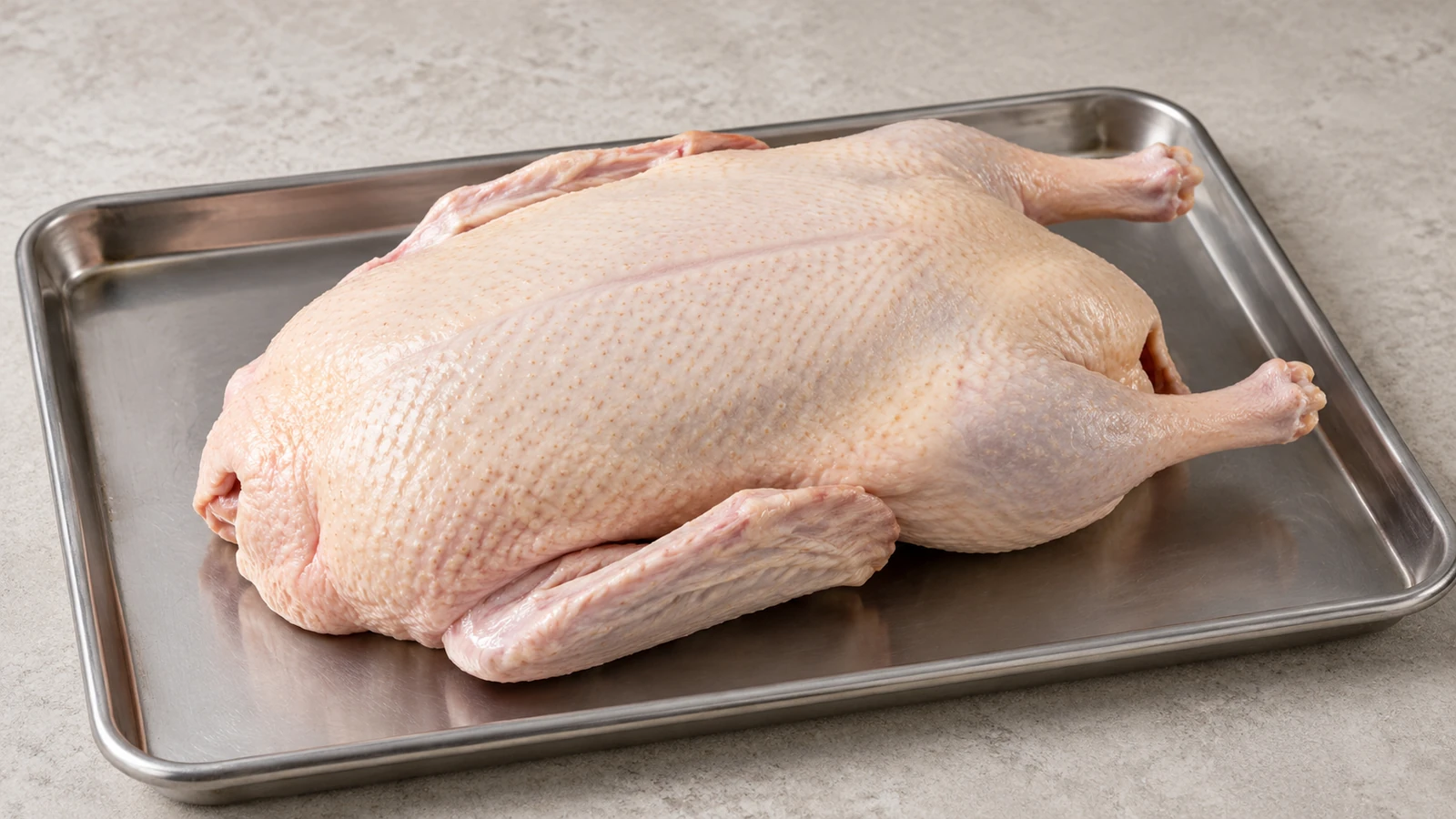
Duck storage at a glance
| State | Temperature or condition | Guidance |
|---|---|---|
| Fresh raw duck | Refrigerator at or below 40°F (4°C) | 1–2 days |
| Raw duck, frozen | Freezer at or below 0°F (−18°C) | Six months for quality in USDA's duck-specific fact sheet |
| Duck thawed entirely in the refrigerator | Kept at or below 40°F (4°C) | Cook within a further 1–2 days |
| Cooked duck leftovers | Promptly chilled; refrigerator at or below 40°F (4°C) | 3–4 days |
| Raw duck left out | No effective refrigeration | Maximum 2 hours, reduced to 1 hour above 90°F (32°C) |
Sources: USDA duck fact sheet, FoodSafety.gov leftover storage, FoodSafety.gov time and temperature guidance.
Plan backwards from dinner
For a frozen whole duck, leave room in the schedule for refrigerator thawing. USDA notes that a whole bird can take one to two days or longer; parts may take about a day. These are planning estimates, not promises for every package size or refrigerator. USDA duck thawing guidance, page 4
Set a reminder to check the bird before cooking day. Write down when it has thawed, and leave the package's instructions available. Buying frozen duck can be useful when the occasion is still some way off, but only if the freezer actually maintains the required temperature.
If a recipe calls for overnight salting, marinating, or drying the skin, do that work under refrigeration. Include that preparation in the duck’s refrigerated storage time. FoodSafety.gov refrigerated preparation guidance
Keep raw duck away from ready-to-eat food
Put the duck in a leakproof container or bag, with a tray underneath to catch drips. Have a separate board ready for the raw bird and a clean plate for it after cooking.
Do not rinse the bird. Wash your hands and tools after handling it, keep raw meat away from food that will not be cooked, and use a clean serving plate. A sauce reserved before contact with raw duck avoids the complication of a used marinade; a marinade that has touched raw food must be boiled before reuse. FDA home food-safety guidance
Common situations
The fresh duck arrived on Monday for Friday dinner. That is longer than the recommended refrigerated window. Freeze it while it is still suitable, then plan a safe thaw closer to the meal.
You forgot to thaw the duck. Do not use a warm countertop or hot water. Cold-water thawing, with the water replaced every 30 minutes, or microwave thawing are alternatives. Cook immediately after either method rather than refrigerating the raw bird for another day. FDA safe-thawing advice
It sat beside the barbecue in hot weather. Above 90°F (32°C), one hour without effective refrigeration is the maximum. Keep the bird cold until preparation, and discard it if that limit has been exceeded. Take it out of the cooler only when you are ready to prepare it. FoodSafety.gov hot-weather rule
Freezer quality and discard decisions
A six-month freezer label is a useful planning target, not a reason to throw away every older frozen duck. Properly handled food kept continuously at 0°F (−18°C) remains safe indefinitely, though flavor and texture can deteriorate. Freezer burn alone is a quality problem. Freezing does not make a previously mishandled bird safe. FDA freezer guidance
Discard duck that appears spoiled or has an unsafe or unknown storage history. Do not rely on a normal smell, and do not taste raw meat to investigate it. Cooking is not a dependable way to rescue temperature-abused food because some toxins survive heating. FDA temperature and food-safety explanation
FAQs
Does dark duck meat use the steak cooking temperature?
No. Duck is poultry. The consumer safe-cooking target is 165°F (74°C), measured with a food thermometer. A pink center or a restaurant recipe is not a substitute for checking the temperature. FDA cooking guidance, FoodSafety.gov temperature chart
Can I use the one-year freezer guidance for whole chicken?
Not as a duck-specific quality recommendation. The familiar one-year entry explicitly covers chicken and turkey. This article uses USDA's separate duck guidance instead. FoodSafety.gov chart
Does marinating make an older duck keep longer?
Do not extend its storage deadline because you added a marinade. Marinate under refrigeration and plan the preparation within the original safe-storage window, rather than treating seasoning as preservation.
Sources
- USDA: Duck and Goose from Farm to Table, archived official PDF, pages 3–4
- FoodSafety.gov: Cold Food Storage Chart
- FoodSafety.gov: 4 Steps to Food Safety
- FDA: Food Safety at Home
- FDA: Food Safety Education Month handling guidance
- FDA: Are You Storing Food Safely?
- FDA: Refrigerator Thermometers and Food Safety
- FoodSafety.gov: Safe Minimum Internal Temperatures
This article uses US food-safety and university extension guidance. Follow stricter local advice and product instructions. Sources checked October 23, 2026. How we research our guides.