Quick answer
As a conservative home-storage plan, cook live oysters within two days and use refrigerated shucked oysters within three days, observing any shorter product instruction. Keep them at 40°F (4°C) or below. These planning limits come from extension guidance; they are not a promise that raw oysters are safe to eat. Alabama Cooperative Extension; UConn Extension.
First identify what you bought. A bag of living oysters, a refrigerated tub of commercially shucked meat, and a shelf-stable can are different products. This article covers the first two, plus cooked leftovers and freezing.
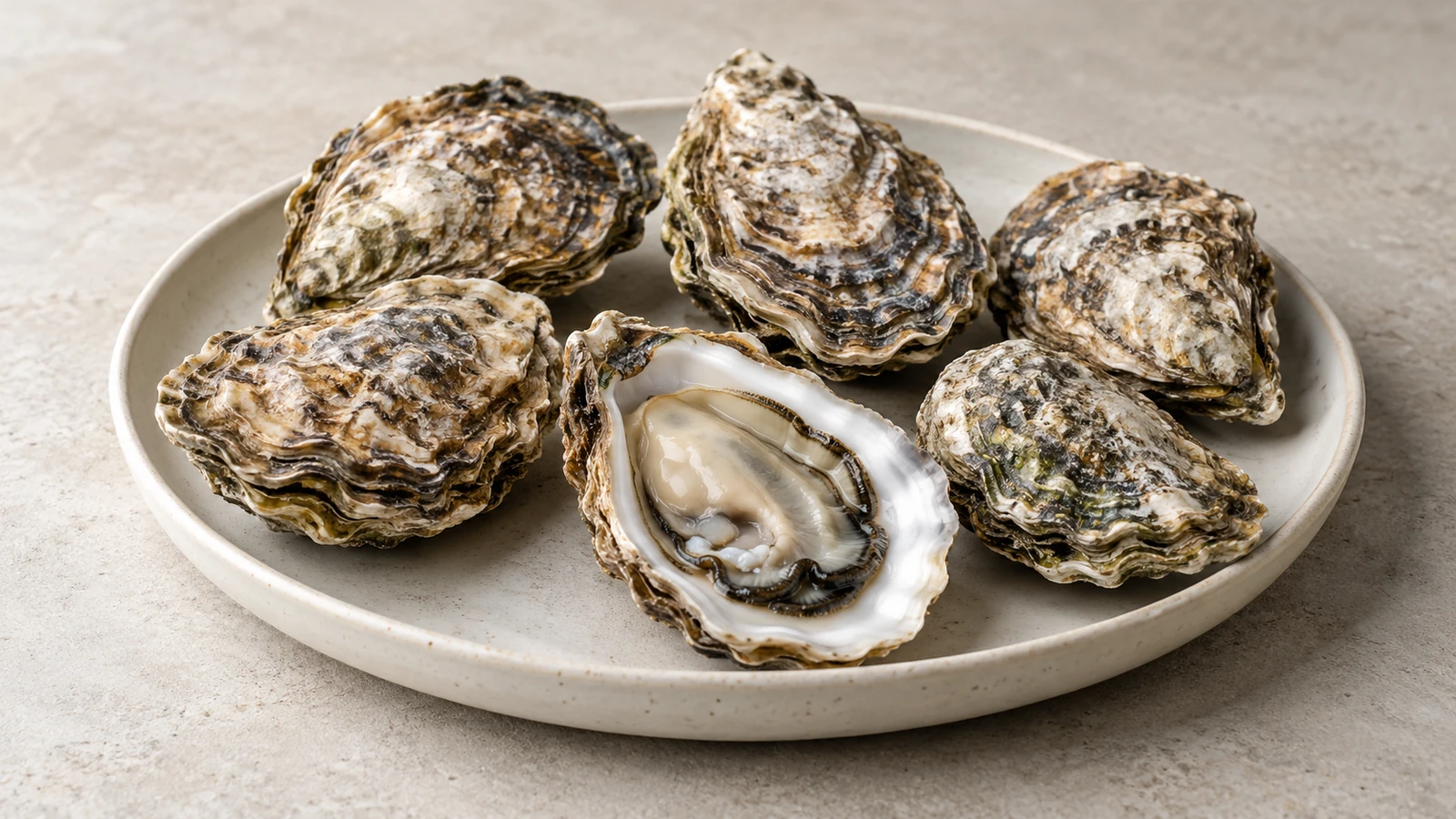
Live versus commercially shucked oysters
| Product | Refrigerator handling | Home-planning guidance |
|---|---|---|
| Live oysters in intact shells | Ventilated container, damp covering, no standing water | Use within two days as a conservative extension recommendation |
| Commercially shucked refrigerated oysters | Keep cold in their labeled container; reseal after opening | Plan to use within three days; follow shorter label instructions |
| Cooked oyster dish | Chill promptly in covered, smaller containers | Use within 3–4 days |
| Shucked oysters frozen for later cooking | Freezer at 0°F (−18°C) or below | 3–4 months is a quality guideline |
Sources: Alabama Extension, UConn Extension, Illinois Extension, and FoodSafety.gov.
Why not simply say ten days? FoodSafety.gov lists 5–10 days for its grouped live-shellfish category and 3–10 days for grouped shucked shellfish. UConn gives live oysters seven days, while Alabama Extension recommends two. A broad chart cannot tell you the age or handling history of your particular batch. For a home meal, we recommend using them sooner.
For a tub of shucked oysters, note when you bought it and when you opened it. Opening the lid does not give you another three days. Keep the label and follow any shorter product instruction.
Store each type correctly
Live oysters need a ventilated container with a damp cloth or paper towel over it. Keep them out of standing water. Shucked meat instead belongs in a leakproof refrigerated container, protected from contamination. A tub of shucked meat does not need the airflow that live oysters do. Alabama Extension; UConn Extension.
Look for harvest tags on live shellfish and certification information on shucked-shellfish labels. Reject broken shells or live oysters that do not close when tapped. Closing after a tap tells you the oyster is alive, not that it is free of Vibrio. FDA seafood guidance.
Fresh-looking oysters can still carry harmful germs
CDC warns that contaminated oysters can look, smell, and taste normal. Illness can occur in any month, not only summer. Lemon juice, hot sauce, and alcohol do not kill Vibrio. Refrigeration is essential handling, but it does not turn a raw oyster into a risk-free food. CDC: Vibrio and Oysters.
For cooking, CDC specifies:
- In the shell: boil until shells open, then boil another 3–5 minutes; alternatively, place in an already-steaming steamer and cook 4–9 minutes.
- Shucked: boil at least 3 minutes, fry at 375°F for at least 3 minutes, broil 3 inches from the heat for 3 minutes, or bake at 450°F for 10 minutes.
Discard shellfish that stay open before cooking or fail to open fully during cooking. CDC particularly emphasizes this for people at increased risk, including those with liver disease. FDA also advises pregnant people, children, older adults, and people with weakened immune systems to avoid raw or undercooked seafood. CDC prevention guidance; FDA seafood guidance.
Freezing is for future cooked dishes
The National Center for Home Food Preservation provides an oyster-freezing method even though the general FoodSafety.gov chart does not recommend freezing its live-shellfish category. For a home option, wash the shells and discard dead oysters. Shuck suitable live oysters into a strainer while saving their liquid. Remove shell fragments or sand; rinse the meat if needed to remove remaining sand. Freeze the meat with its saved liquid in freezer packaging, leaving ½ inch of headspace. Commercially shucked oysters can be frozen this way too. Expect texture and flavor changes, making stews or casseroles a better destination than a raw bar. NCHFP oyster-freezing directions.
Freeze while the oysters are still suitable, not to salvage questionable seafood. Freezing does not sterilize food. NCHFP freezing guidance.
Taking oysters to a gathering or saving stew?
An outdoor gathering: transport oysters in a properly chilled cooler, and serve small batches. Discard seafood left unrefrigerated more than two hours, or one hour above 90°F (32°C). A hot car is not temporary cold storage. Clemson Extension.
An unfinished oyster stew: divide it into smaller containers and refrigerate promptly. Label it, use within 3–4 days, and reheat to 165°F (74°C). Illinois Extension.
FAQs
Does an unopened tub last as long as live oysters?
Do not transfer one product's storage allowance to the other. Follow the shucked product's instructions and the conservative plan above.
Are oysters safer in months containing the letter R?
That rule cannot establish safety. CDC reports oyster-related Vibrio infections year-round.
Can I keep oysters that open in the refrigerator?
Tap live oysters and discard any that fail to close. Even a closed shell does not establish that an oyster is safe to eat raw.
Sources
- Alabama Cooperative Extension: Grilling Alabama Seafood
- UConn Extension: Seafood Prepping Tips
- FoodSafety.gov: Cold Food Storage Chart
- FDA: Selecting and Serving Fresh and Frozen Seafood Safely
- CDC: Vibrio and Oysters
- CDC: Preventing Vibrio Infection
- NCHFP: Freezing Oysters
- NCHFP: Freezing
- Clemson Extension: Safe Handling of Seafood
- Illinois Extension: Leftovers
This article uses US food-safety and university extension guidance. Follow stricter local advice and product instructions. Sources checked October 23, 2026. How we research our guides.