Quick answer
Plan to cook live mussels within 1–2 days of purchase for best quality, keeping them refrigerated at 40°F (4°C) or below. Use a breathable container covered with a damp cloth, not a sealed tub or a bowl of freshwater. Maine Sea Grant gives this short quality target specifically for mussels. Check them before cooking, even if you bought them only yesterday. Maine Sea Grant; FDA seafood guidance.
This guide covers mussels bought alive in their shells. Commercially frozen mussels, cooked vacuum-packed products, and canned mussels need their own package instructions.
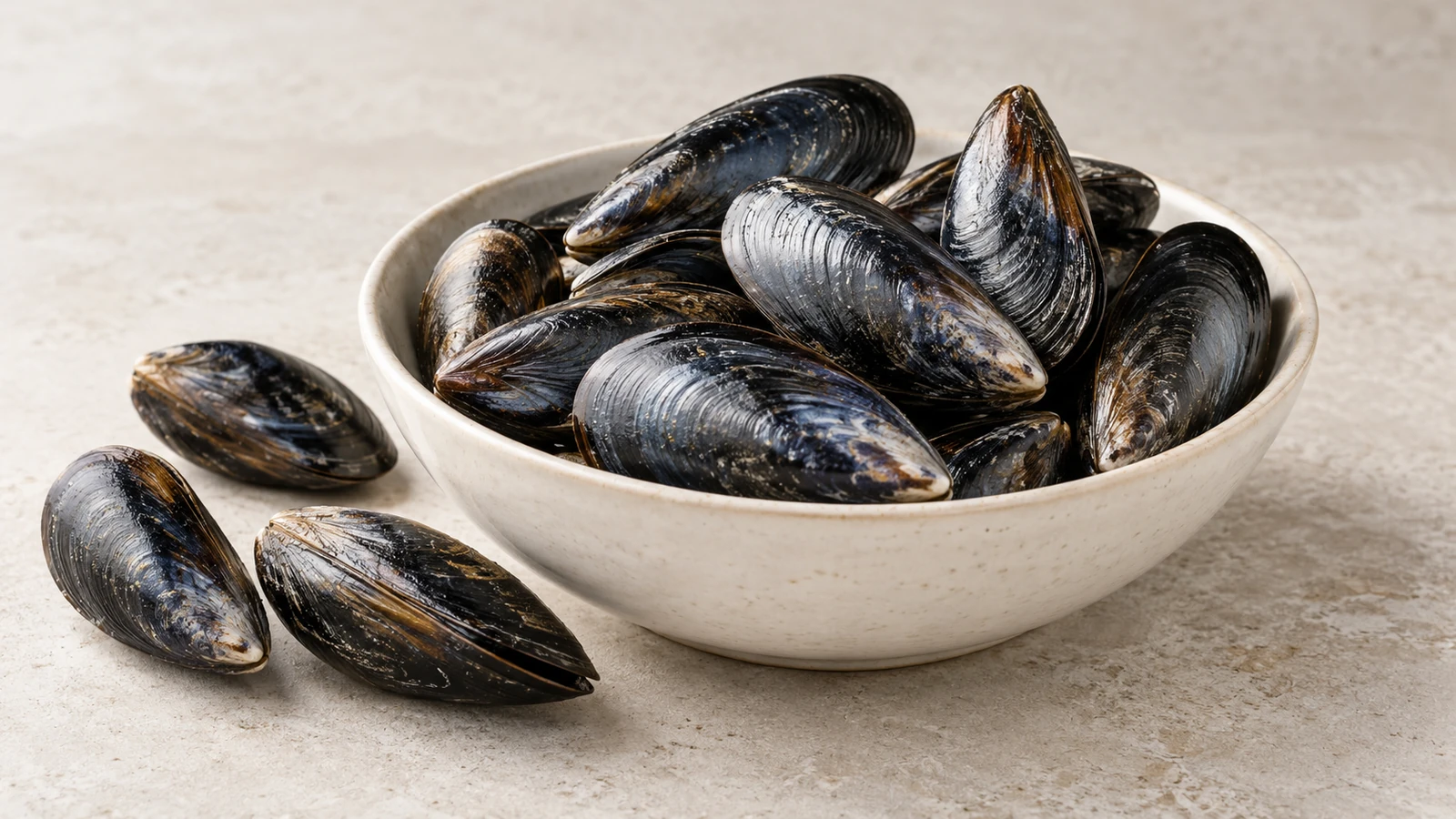
Storage guide by state
| State | Storage | Practical limit or instruction |
|---|---|---|
| Live, in-shell mussels | Refrigerator at 40°F (4°C) or below; breathable container | Aim for 1–2 days for best quality |
| Cooked mussels or a cooked mussel dish | Promptly refrigerated in covered containers | Use within 3–4 days |
| Cooked mussels frozen while still suitable | Freezer at 0°F (−18°C) or below | General leftover guidance is 3–4 months for quality; texture may decline |
| Commercially frozen mussels | Keep frozen as directed | Follow the product's thawing and cooking instructions |
For cooked dishes, the table uses general Illinois Extension leftover guidance, rather than a mussel-specific freezer estimate.
You may find a longer number elsewhere: FoodSafety.gov groups live clams, mussels, oysters, and scallops at 5–10 refrigerated days. That broad category is not a reason to postpone a mussel dinner for ten days. Maine Sea Grant’s mussel advice is shorter, and you usually do not know how long the batch was held before sale. Plan the earlier dinner.
How to keep mussels alive until cooking
Put them in the refrigerator as soon as you arrive home. A shallow container that allows airflow, covered loosely with a clean damp cloth, is a useful setup. Keep any drips away from foods that will be eaten without cooking. Do not seal live mussels into an airtight storage box, and do not leave them submerged in freshwater. Maine Sea Grant; UConn Extension.
Buy shellfish from a reputable seller with the appropriate harvest tags or package labels. Reject cracked or broken shells. If a shell is open, tap it: FDA advises choosing live mussels that close in response. The tap test helps you reject dead mussels; it does not test for harmful germs. FDA seafood guidance.
Just before cooking, rinse and scrub the shells, then remove the fibrous beard. Leave them in the fridge until you are ready to do this. Maine Sea Grant.
Cook thoroughly, rather than stopping at the first opening
CDC gives two methods for shellfish in their shells:
- Boil until the shells open, then continue boiling for another 3–5 minutes.
- Put them into a steamer that is already steaming and cook for 4–9 minutes.
Discard shells that remain open before cooking or do not open fully during cooking. Keep raw juices away from the finished meal and wash your hands after handling shellfish. CDC Vibrio prevention.
Cooking is not a rescue for recalled shellfish or a prohibited harvest. Algal toxins can remain despite cooking or preservation, so recreational collectors must check current local advisories. CDC harmful-algal-bloom guidance.
Common situations
Dinner moves from tonight to tomorrow. If the mussels have stayed properly refrigerated, retain the breathable storage setup and inspect them again before cooking. If plans keep slipping, do not rely on the longest number in a general chart.
The shopping trip includes a hot car. Take a cooler and go home promptly. Discard seafood left unrefrigerated longer than two hours, or one hour when the air temperature exceeds 90°F (32°C). If you cannot establish that it stayed safely cold, do not keep it on the strength of its smell. Later chilling cannot erase earlier mishandling. FDA storage guidance.
There is cooked seafood left in the pot. Transfer it into smaller containers for prompt chilling rather than leaving a large pot on the counter. Date the container; reheat leftovers to 165°F (74°C). Illinois Extension.
Can you freeze them?
FoodSafety.gov does not recommend freezing live shellfish as a storage method. If longer storage is necessary, a practical alternative is to cook suitable mussels, chill promptly, and freeze portions as leftovers. Freezing preserves food but does not sterilize it, and thawed mussels may lose the texture you wanted from a freshly cooked dish. FoodSafety.gov; National Center for Home Food Preservation.
FAQs
Does an open shell always mean the mussel is dead?
An open shell that closes when tapped passes FDA's live-shellfish selection check. Discard one that does not close; do not cook it to find out.
Can I soak mussels overnight to clean them?
Do not store live mussels submerged in freshwater. Keep them cold and ventilated, and clean them when preparing the meal.
Is a normal smell enough to show they are safe?
No. Reject suspicious seafood, but normal smell cannot certify safety. Source, refrigeration, live-shell checks, and thorough cooking all matter. FDA storage guidance.
Sources
- Maine Sea Grant: Mussels
- FDA: Selecting and Serving Fresh and Frozen Seafood Safely
- FoodSafety.gov: Cold Food Storage Chart
- UConn Extension: Seafood Prepping Tips
- CDC: Preventing Vibrio Infection
- CDC: Preventing Illnesses Caused by Harmful Algal Blooms
- FDA: Are You Storing Food Safely?
- Illinois Extension: Leftovers
- National Center for Home Food Preservation: Freezing
This article uses US food-safety and university extension guidance. Follow stricter local advice and product instructions. Sources checked October 23, 2026. How we research our guides.