Quick answer
Commercial dry puffed rice cakes can become stale, rancid or contaminated. Follow their package date and storage instructions; there is no verified after-opening deadline that fits every brand. Keep opened cakes tightly closed, cool and dry.
These are snack-aisle cakes, not moist Korean tteok, mochi, refrigerated rice cakes or homemade cooked-rice snacks.
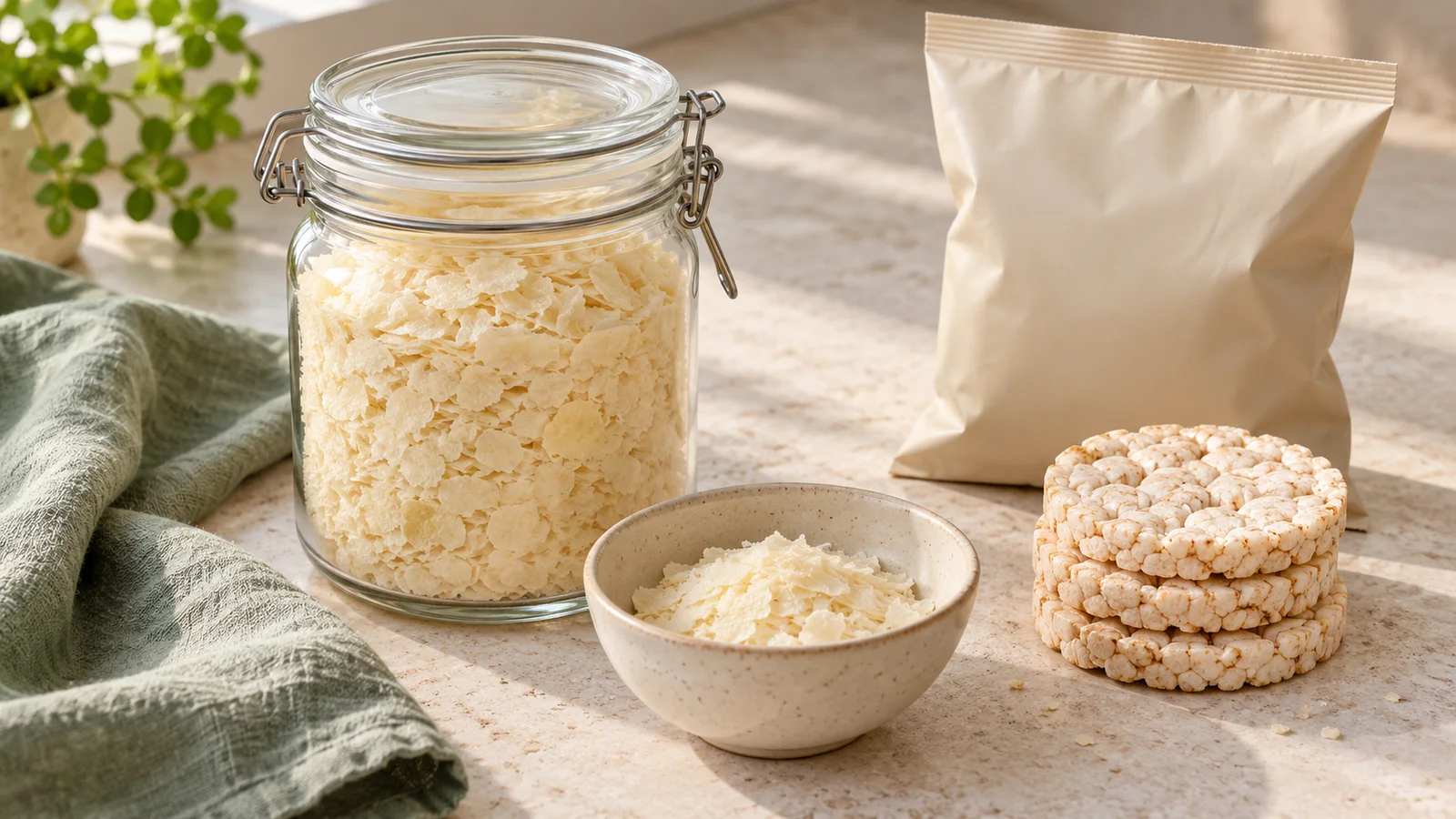
Check the packet
| Condition | Practical decision |
|---|---|
| Unopened, undamaged dry cakes | Follow the label’s date and storage directions. |
| Opened plain dry cakes | Close tightly; protect from moisture, heat and pests. |
| Mold, insects, webbing or suspicious odor | Discard the affected food. Do not taste-test it. |
| Perishable topping added | Follow the prepared snack’s refrigeration needs. |
What does the date mean?
In US guidance, “Best if Used By” describes expected quality. It is not proof that a badly stored packet is safe before that date, or permission to ignore the manufacturer afterward.
Lundberg lists 12 months for Rice Cakes and Thin Cakes, and 10 months for Rice Cake Minis. Those periods are reflected in the printed Best Before date. They are not extra months after purchase or opening. Lundberg recommends using its products before that date because quality can deteriorate, including rancidity.
For another brand or flavor, read that packet. Do not silently copy a storage period from crackers, breakfast cereal or uncooked rice. The sources reviewed here do not establish one opened-bag timer for all dry rice cakes.
Keep moisture out
Use a cool, dry cupboard away from the stove and sunlight. Close the food package securely after serving, or use a clean container with a tight-fitting lid. Retain the product name, date and any opening instructions. An opening date can help you rotate snacks, but it does not restart the manufacturer’s shelf life.
Dry foods can absorb moisture and lose crispness. Staleness is different from mold or suspected contamination. If water entered damaged packaging, do not assume that drying the cakes will make them safe.
Discard moldy food rather than picking around a spot. Pantry insects, larvae or webbing also call for disposal of the affected food, inspection of nearby packages and cleaning the cupboard. Some pests can enter packages that appear unopened. A future best-before date does not prevent infestation.
Toppings change the storage question
A cake spread with cream cheese, tuna salad or yogurt is now a perishable snack. Keep those ingredients refrigerated at 40°F (4°C) or below. Do not leave the prepared snack out for more than two hours, or one hour above 90°F (32°C). These limits concern the perishable topping, not plain dry cakes.
FAQs
Can I eat a rice cake that has lost its crunch?
A stale texture alone is a quality change. First rule out moisture damage, mold, pests, suspicious odor or a recall, and follow the actual manufacturer’s recommendation.
Should I refrigerate opened dry rice cakes?
Follow the label. This guide does not establish a refrigerator or freezer extension for every dry snack product.
Does dry mean sterile?
No. Bacteria can persist in low-moisture foods. Normal appearance cannot override known contamination or a product recall.
Sources
Sources and draft evidence reviewed October 31, 2026. Manufacturer advice applies to the named product; follow stricter local guidance and your package. How we research our guides.