Quick answer
USDA FoodKeeper lists fresh pâté at 1–2 days in the refrigerator and frozen at 1–2 months, but its separate meat and poultry pâté entries say 7 days. Our application: when you cannot tell which applies, use the shorter 1–2 days. Pregnant people should avoid refrigerated pâté. FoodKeeper; FoodSafety.gov.
The two FoodKeeper figures look like a contradiction, but they come from different entries, and the agency does not explain the gap. We say so rather than pick one without telling you.
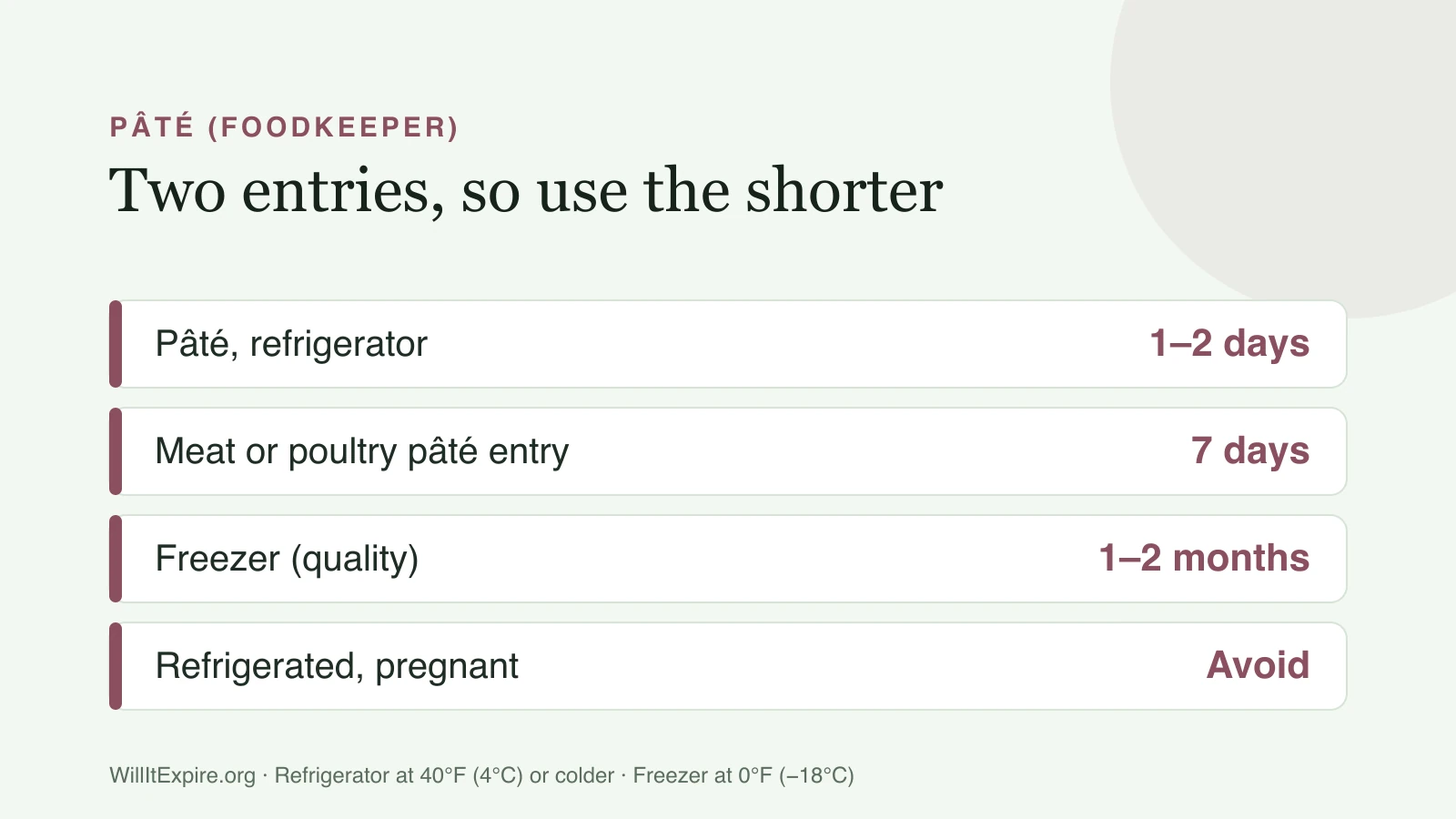
What FoodKeeper says
| FoodKeeper entry | Refrigerator | Freezer |
|---|---|---|
| Pâté | 1–2 days from purchase | 1–2 months |
| Pâté, meat (listed under smoked or processed) | 7 days | Not listed in that entry |
| Pâté, poultry (listed under cooked or processed) | 7 days | Not listed in that entry |
FoodKeeper's tip for the meat and poultry entries is that leftover pâtés should be wrapped in plastic film. Source: USDA FoodKeeper (data checked 2026-11-23).
Which number should you follow?
Pâté is eaten without further cooking. Our reading: a short window is the simplest protection. Our application: for a deli or fresh pâté, use FoodKeeper's 1–2 days. If the package carries a use-by date, do not go past it. We did not find a primary source that explains why the meat and poultry entries differ, so we do not choose the 7-day figure for you.
Pâté and pregnancy
FoodSafety.gov says not to eat refrigerated pâtés or meat spreads from a deli or meat counter, or from the refrigerated section of a store, because they can contain Listeria. Pâté and meat spreads that do not need refrigeration before opening, such as products in cans, jars or sealed pouches, are a safer choice, and you should refrigerate them after opening. FoodSafety.gov
CDC gives the same choice: avoid refrigerated pâté or meat spreads, and choose pâté or meat spreads in sealed, airtight containers that do not need to be kept refrigerated before opening. CDC
The NHS lists vegetable pâté as a lower-risk food that can still contain Listeria: keep it chilled and eat it before the use-by date. NHS. The NHS lists meat pâté as a food to be careful with, not one to avoid: keep it chilled and eat it before the use-by date. NHS. That is less strict than the US advice above, so our application is to follow the stricter US advice unless your own midwife or doctor says otherwise.
Storing and freezing pâté
- Keep it refrigerated. FoodKeeper's tip on its meat and poultry pâté entries is to wrap leftovers in plastic film, which is a sensible habit for any pâté (our reading).
- FoodKeeper gives 1–2 months in the freezer for pâté. This is a quality limit.
- For shelf-stable pâté in a can or jar, we did not find a primary-source number for how long it lasts once opened. FoodSafety.gov says to refrigerate it after opening. Follow the label (our advice).
FAQs
How long does opened pâté last in the fridge?
USDA FoodKeeper gives 1–2 days for pâté and 7 days for meat and poultry pâté. We use the shorter 1–2 days when unsure. Wrap leftovers in plastic film.
Can you freeze pâté?
Yes. USDA FoodKeeper lists 1–2 months in the freezer for pâté. That is a quality guide.
Can you eat pâté when pregnant?
Avoid refrigerated pâté and meat spreads, say FoodSafety.gov and CDC. Pâté sold in cans, jars or sealed pouches that do not need refrigeration before opening is a safer choice; refrigerate it after opening.
Sources
This article uses US, UK and Canadian food-safety and university extension guidance. Follow stricter local advice and product instructions. Sources checked November 23, 2026. How we research our guides.