Quick answer
For juice you press at home, USDA FoodKeeper gives 2–3 days in the refrigerator for orange juice and 6 days for apple, carrot or lemon juice. For bottled cold-pressed juice we found no agency figure, so follow the label. FDA says pregnant women and young children should drink only juice that has been pasteurized or otherwise treated. FoodKeeper; FDA.
Our reading: "cold-pressed" describes how juice is made, not whether it was treated. Look for a pasteurized or treated statement on the label.
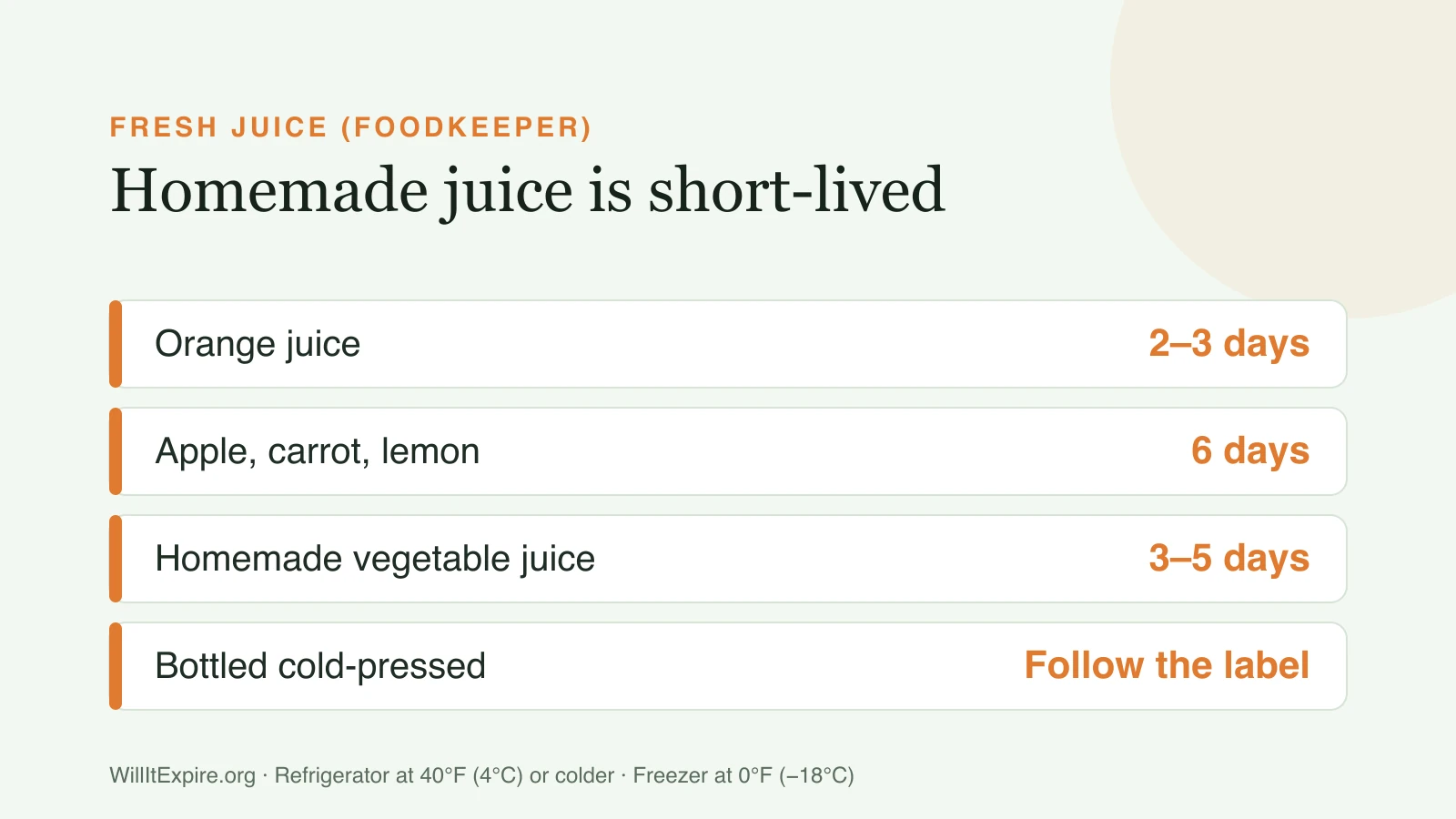
Juice storage times
| Juice | Refrigerator | Source |
|---|---|---|
| Orange juice, freshly squeezed | 2–3 days | FoodKeeper |
| Apple, carrot or lemon juice, fresh squeezed | 6 days | FoodKeeper |
| Vegetable juice, homemade | 3–5 days | FoodKeeper |
| Vegetable juice, commercial, sold refrigerated | Package use-by date, and FoodKeeper also lists 1 month | FoodKeeper |
| Bottled cold-pressed juice | Follow the label date | Our reading; no agency figure found |
Sources: USDA FoodKeeper (data checked 2026-11-23).
Why juice carries a warning label
FDA says most juice sold in the United States is pasteurized or treated by non-heat methods to kill harmful bacteria. However, some grocery stores, health food stores, cider mills, farmers' markets and juice bars sell packaged juice made on site that has not been treated. These untreated products should be kept under refrigeration and must carry a warning that they may contain harmful bacteria that can cause serious illness in children, the elderly and people with weakened immune systems. FDA: Juice Safety
FDA does not require the warning on juice or cider sold by the glass, for example at orchards, farmers' markets, roadside stands, juice bars and some restaurants. FDA: Juice Safety. That means a fresh juice bar glass may carry no label at all. FDA's advice is to ask if you are unsure whether a juice is treated.
Who should avoid untreated juice
FDA says children, older adults, pregnant women and people with weakened immune systems risk serious illness from untreated juice, and its warning label names children, the elderly and people with weakened immune systems. FDA: Juice Safety
FDA's pregnancy guidance says that when fruits and vegetables are peeled, cut or fresh-squeezed, harmful bacteria on the outside can spread to the inside, so only drink juices that have been pasteurized or otherwise treated. FDA: Fruits, Veggies and Juices. FDA also says not to give unpasteurized juice to infants or young children. FDA: Once Baby Arrives
Making juice at home
FDA says to wash your hands for at least 20 seconds before and after, wash all produce thoroughly under running water before cutting, including produce you grew yourself, scrub firm produce with a clean brush even if you will peel it, and dry it with a clean towel. Washing with soap, detergent or commercial produce wash is not recommended. FDA: Juice Safety
Why we give no bottled cold-pressed time
Commercial bottled juice is sold with its own date, and we did not find a primary-source figure for how long bottled cold-pressed juice lasts. Our application: follow the label date, keep it refrigerated, and follow any opened-bottle instruction on the label. FoodKeeper lists opened commercial orange juice at 7–10 days, but that is for pasteurized carton juice, so we do not apply it. FoodKeeper
FAQs
How long does homemade juice last in the fridge?
Per USDA FoodKeeper, 2–3 days for freshly squeezed orange juice and 6 days for apple, carrot or lemon juice. Homemade vegetable juice is listed at 3–5 days.
Is cold-pressed juice pasteurized?
Not necessarily. FDA says juice sold on site may be untreated, and the warning label is not required for juice sold by the glass. Look for a label saying it was pasteurized or treated, or ask.
Is cold-pressed juice safe in pregnancy?
FDA's pregnancy guidance says to drink only juice that has been pasteurized or otherwise treated to kill harmful bacteria.
Sources
This article uses US, UK and Canadian food-safety and university extension guidance. Follow stricter local advice and product instructions. Sources checked November 23, 2026. How we research our guides.