Quick answer
Refrigerate fresh Belgian endive at 40°F (4°C) or below, protect it from light, and use it while the heads are firm and sound. Oregon State reports leaf-edge deterioration after roughly 1–2 weeks at 40°F, but this is a postharvest observation, not a promise of another two weeks after you buy it. By the time it reaches your kitchen, it has already spent time in packing and transport. Oregon State horticulture guidance; FDA produce guidance.
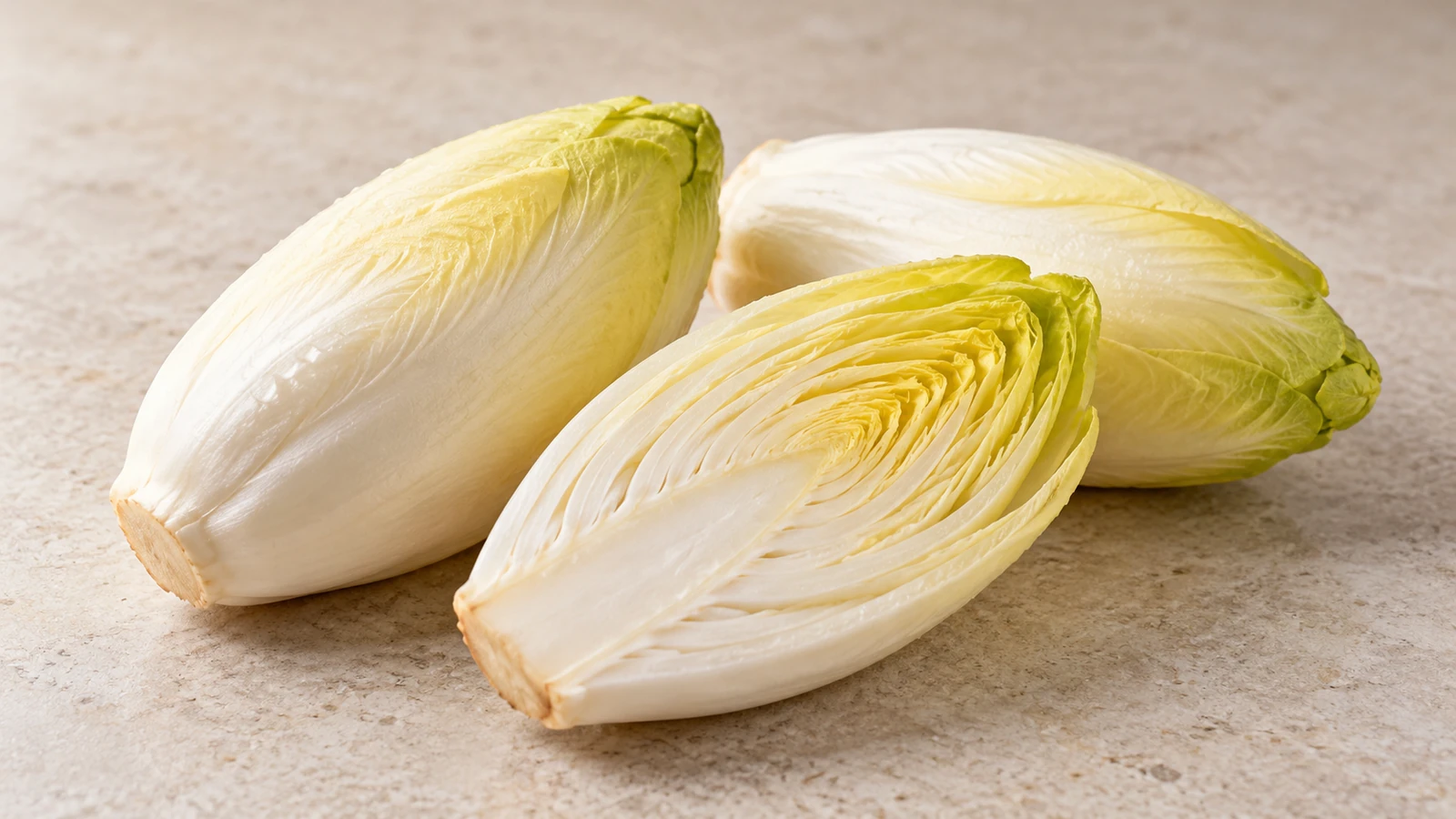
Look for the compact, pale heads also called witloof chicory. Curly endive, escarole, and bagged mixed salads are different products.
Storage guide by condition
| Condition | Best approach | What the timing means |
|---|---|---|
| Whole, fresh head | Refrigerate, protect from light, avoid crushing | Use promptly; the 1–2 week research benchmark is not a new clock at purchase |
| Cut or chopped leaves | Refrigerate in a clean covered container | No product-specific home-storage duration verified; prepare near serving |
| Cooked endive dish | Chill promptly in smaller covered containers | Use within 3–4 days under general leftover guidance |
| Frozen endive | Expect loss of fresh salad texture | No verified endive-specific freezer duration supplied here |
The cooked-food entry comes from Illinois Extension. The distinction between whole and cut greens matters: FDA explains that damaged, cut leaf surfaces can support pathogen growth even before visible spoilage appears. FDA cut-leafy-greens guidance.
Why darkness matters
A pale endive head can turn green after exposure to light, with a change in flavor. This is a quality issue described by UC Davis, not a standalone test for food poisoning. It explains why leaving a decorative bowl of endive on a bright kitchen counter is poor storage. UC Davis produce fact sheet.
Keep the protective wrapper if it is clean and appropriate for refrigerated storage. You can also shield the heads with paper and use a loosely closed or perforated produce bag to reduce drying. Oregon State recommends protective paper and perforated wrapping; avoid trapping the heads in a sealed, wet bag. Avoid wetting the heads before storage. Oregon State.
Store them where they will not be crushed by heavier groceries. Choose firm, compact heads rather than ones with torn leaves or obviously damaged edges. If you discover an older head behind a fresh purchase, plan to inspect and use the older one first rather than mixing them without dates.
Green tips, brown edges, or slime?
Light-related greening and a little dry edge browning are different from wet, collapsing tissue. UC Davis describes browning associated with physical damage and slimy tissue breakdown associated with bacterial rot. Discard a head with slime, spreading decay, or a rotten appearance; a rinse is not a way to restore it. UC Davis; FDA produce guidance.
For an otherwise sound head, remove damaged or bruised areas during preparation. Wash under running water, not with soap or detergent, then dry with a clean towel. Keep the leaves and cutting board separate from raw meat and seafood. Washing reduces surface contamination but cannot guarantee removal of every harmful organism. FDA produce guidance.
Can you freeze Belgian endive?
Do not expect a thawed head to become the same crisp salad ingredient. UC Davis documents freezing injury in endive leaves, and the National Center for Home Food Preservation explains that freezing affects food quality without sterilizing it. UC Davis; NCHFP.
If you have more sound heads than you can use in salads, plan a cooked dish while they are still fresh. If you freeze a prepared dish, follow a recipe with suitable freezing directions and label it. The sources reviewed here do not give an endive-specific blanching method or freezer storage period.
Also avoid the freezing-cold spot against a refrigerator's back wall. Endive can suffer freezing damage just below its freezing point; keeping the whole refrigerator colder is not helpful if the leaves themselves freeze.
Hot-weather and meal-prep situations
Chopping for a party: keep the prepared leaves refrigerated until close to serving. Cold storage becomes a food-safety issue for cut leafy greens, not simply a way to keep them crisp. FDA cut-leafy-greens guidance.
Serving outdoors: do not leave cut endive or a prepared endive dish unrefrigerated for more than two hours, or one hour above 90°F (32°C). Use a cooler and put out small portions. FDA storage guidance.
FAQs
Are green tips proof the endive is unsafe?
No. Light can cause greening and alter flavor. Assess decay and handling separately; color alone cannot certify safety either.
Can I wash it several days ahead?
For whole heads, keep storage dry and wash during preparation. If you buy a product labeled ready-to-eat or prewashed, follow its directions.
Why do some sources say three or four weeks?
Longer figures describe controlled postharvest conditions near freezing with high humidity. A supermarket purchase has already spent time in distribution, and a home refrigerator does not reproduce that entire process.
Sources
This article uses US food-safety and university extension guidance. Follow stricter local advice and product instructions. Sources checked October 23, 2026. How we research our guides.